


 Shkruar nga Pamfleti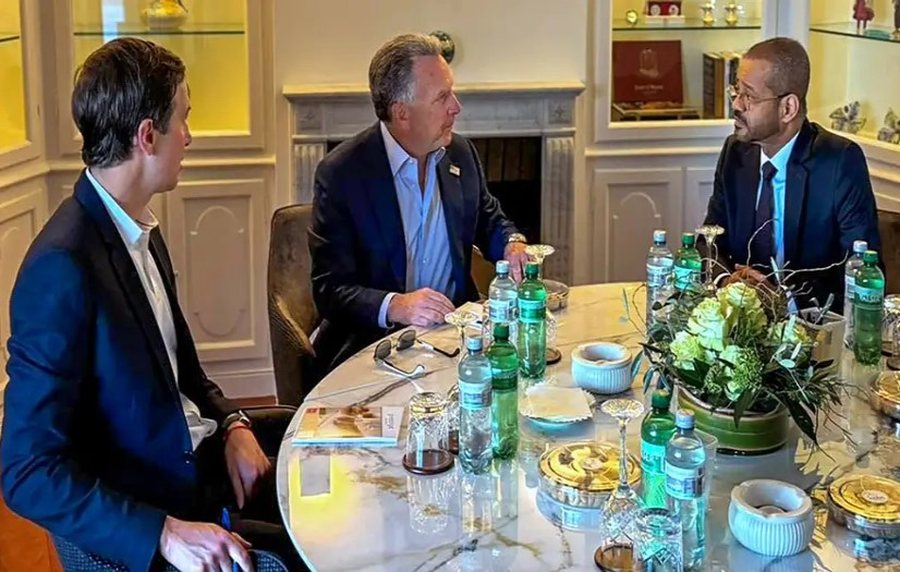
Geneva meeting ends, Witkoff and Kushner disappointed with talks; new round in Vienna...
The latest round of negotiations between the United States and Iran in Geneva ended for the day with what Omani Foreign Minister Badr bin Hamad al-Busaidi called “significant progress.” Oman is mediating the diplomatic process between the parties.
According to his statement, the delegations will return to their respective capitals for consultations and the talks will resume soon. Technical discussions are expected to take place in Vienna next week, with the participation of experts and the International Atomic Energy Agency (IAEA). Al-Busaidi thanked the negotiators, the IAEA and the Swiss government for their logistical support.
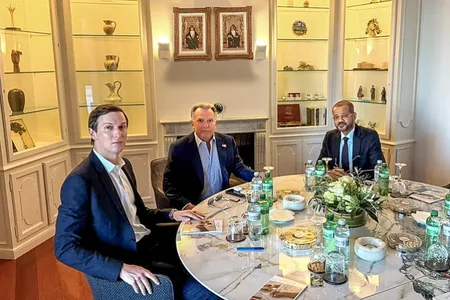
However, according to the American portal Axios, White House envoys Jared Kushner and Steve Witkoff expressed disappointment with the proposals presented by the Iranian side during the morning session of the third round of negotiations. Journalist Barak Ravid reported that the evening session continued in a more reserved climate.
The "knot" of the negotiations: uranium enrichment
According to Al Jazeera, the main point of contention remains whether Iran will be allowed to maintain its uranium enrichment program. For Iranian officials, this constitutes a “national right earned through sacrifices.” For Western countries, the ability to enrich uranium poses a potential threat to global security.
Uranium enrichment is a complex technical process that consists of increasing the percentage of the U-235 isotope, the only one that can be used for a nuclear reaction. The process is carried out through centrifuges that rotate at very high speeds, separating the isotopes and gradually increasing the concentration of U-235.
This technology has a dual use:
-At low enrichment levels, uranium is used as fuel for nuclear power plants to produce energy.
-If enriched to about 90%, it can be used to produce nuclear weapons.
This fine line between civilian and military use makes the technical phase of the negotiations in Vienna crucial. The international community is seeking verification mechanisms that allow for energy production but ensure that the program does not deviate towards weapons.
American demands: "zero enrichment" and dismantling of the plants
According to the Wall Street Journal, the US delegation has demanded that Iran dismantle its three main nuclear facilities: Fordow, Natanz and Isfahan, and hand over all its enriched uranium. Washington insists on a "zero enrichment" principle, unlike the 2015 agreement (JCPOA), which provided for temporary restrictions.
According to the newspaper's sources, the US wants any new agreement to have no expiration date and that the restrictions be permanent. As a possible compromise, Washington could allow the operation of a research reactor in Tehran for medical purposes, with very low levels of enrichment.
On the economic front, the American offer foresees minimal and initial relief from sanctions, while any further steps would be conditioned by lengthy verifications of Iran's implementation of obligations.
Diplomatic moves and economic signals from Tehran
According to the Financial Times, Iran is considering offering financial incentives and trade deals to persuade the Trump administration to avoid a military confrontation. The New York Times reported that Supreme Leader Ayatollah Ali Khamenei has allowed American companies to enter Iran, reversing a previous ban on their activities. The signal is being interpreted as an attempt to create room for compromise and reduce tensions.
Meanwhile, diplomatic developments are accompanied by visible military moves. The Israeli portal i24NEWS reported that six American tanker planes have departed for Ben Gurion Airport, as part of the reinforcement of the American military presence in the Middle East, following the deployment of F-22 and F-35 fighter jets.
According to Politico, Pentagon officials and members of Congress have warned that a prolonged conflict with Iran could deplete U.S. military reserves and increase U.S. strategic vulnerability. The report cites concerns about a shortage of air defense interceptors, including the Patriot and THAAD systems, after significant use in recent operations.
On the other hand, Mohammad Mokhber, an advisor to the Iranian supreme leader, stated that American aircraft carriers are within range of Iranian missiles and that their presence in the region increases the risk and cost for Washington.
A decisive moment
The negotiations are taking place in a climate of domestic pressure in the US, where the Trump administration faces criticism for failing to reach an agreement that is perceived as weak, while the military option remains in the background in case of failure.
The next technical round in Vienna is expected to determine whether the parties can bring their positions closer on the core issue of uranium enrichment and permanent guarantees. Until then, diplomacy and a show of force will continue in parallel, keeping the process in a delicate balance between agreement and escalation. /Pamphlet



Si shume e ka rritur pordhen Trapi. Ne fillim ta filloje nga krushqina e dhendurret.