


 Shkruar nga Pamfleti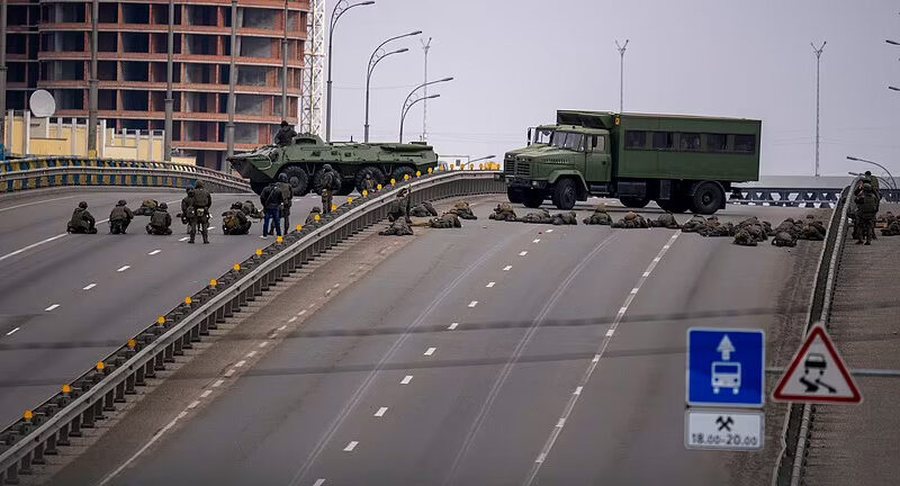
This philosophy translates into concrete practices...
With Russia, you can never let your guard down. That is the rule that Finland has learned over the decades and that Ukraine is now studying as it seeks a just peace, not just a temporary handover of occupied territories. Since the end of the Cold War and the restoration of full sovereignty in 1991, Helsinki has built a model that combines military rigor and diplomatic prudence: total protection of society, reliable deterrence, and a measured but not submissive language in its relations with Moscow. This balance has grown from the experience of a small country forced to coexist with a larger and more hostile neighbor.
This philosophy is translated into concrete practices. One of the most striking is the use of the E75 highway, the axis that runs through Finland from south to north, connecting Helsinki with Lapland and then to Norway. In peacetime, it is a corridor of commercial and tourist traffic; in wartime, it would become a runway for fighter jets. Six miles of asphalt, with retractable streetlights and infrastructure ready to be transformed into an air base, are part of the Baana exercises, organized since the 1960s. There, NATO pilots learn that survival depends not only on technology, but also on the ability to surprise the enemy and avoid easy targets.
In the 1990s, with the collapse of the USSR, Finland chose neither disarmament nor absolute neutrality. While officially maintaining a non-aligned profile until its recent entry into NATO, Helsinki developed a strategy of total defense: compulsory military conscription, large reserves mobilized within weeks, an arms industry capable of supporting defense efforts for a long period of time, and a civilian system of underground shelters covering a large part of the population. At the same time, it pursued a pragmatic foreign policy, avoiding provocations towards Moscow but never giving up on freedom and democracy.
The other lesson, learned after joining the European Union in 1995 and consolidated with NATO membership, is that critical mass is built by creating networks with neighboring states: Sweden with its advanced military industry, Norway with its Arctic capabilities, Finland with one of the largest reserves in Europe, Denmark with the operational experience of its special forces and its leading role in European cooperation.
Nordic cooperation is not just a political understanding, but a true military integration. Since 2023, the air forces of Finland, Sweden, Norway and Denmark have operated under a joint command that coordinates combat fleets, bases, radar systems and air defense, transforming them into a single force capable of controlling space from the North Sea to the Arctic. Through Nordefco, the governments have created a common agenda until 2030, including common training standards, joint weapons procurement and integrated defense planning. Together, these four middle powers are building a critical mass that allows them to influence more than the sum of their parts: a regional capability capable not only of imposing costs on Moscow in the event of a crisis, but also of sitting at diplomatic tables with greater authority.
As The Economist explains in an interesting study, the strength of the Finnish approach has been its ability to combine cold calculation and institutional continuity, without confusing prudence with surrender. Helsinki's credibility stems from a balance built over decades of confrontation with Soviet and post-Soviet Russia, which has allowed it to remain independent while accepting tactical compromises.
The Kremlin does not respond to symbolic gestures or theatrical declarations, but to demonstrated consistency over time. Continuous training, continuous supplies, and the ability to maintain a layered defense system are elements that matter more than any proclamation. Now is the time for resistance; once peace is achieved, learning from Finland is one of the best diplomatic paths to follow. And Kiev, like Helsinki, must maintain a strong and credible line, based on daily preparation and strategic clarity. Speak little, prepare much: this is the true form of deterrence.
Ukraine has already put some of these Finnish lessons to the test. In just a few months, its air defense system has gone from a legacy Soviet-era network to a layered system of Western sensors and interceptors. The results were visible starting in 2023, when Ukraine began neutralizing mixed barrages of missiles and drones, including the Kh-47M2 Kinzhal, thanks to the use of Patriots integrated with NASAM, IRIS-T SLM, SAMP/T, and cannon-based platforms like the Gepard for low-level combat. This mix, supported by scaled supply and more agile command, has reduced the effectiveness of Russian campaigns against energy infrastructure and destroyed the myth of an unstoppable weapon.
The distribution of capabilities was another decisive factor. The Ukrainian Air Force survived not because it was larger in numbers, but because it adopted extreme mobility: rapid deployment of fighter jets and air defense systems, improvised bases, and the combined use of drones and mobile artillery. Russia has never managed to neutralize all of Ukraine’s air power in a single attack. It’s the same principle that the Finns apply with the E75: making it impossible for the enemy to hit a single vital core.
However, the relationship between Helsinki and Kiev is not a one-way street. If Finland offers Ukraine a model of resilience built over time, today it is Ukraine that is teaching the Finns concrete lessons. Helsinki's armed forces recently began building underground complexes inspired by the experience of the Ukrainian war: fortified shelters that integrate combat zones and living spaces, with passages protected from kamikaze drones, advanced fire-fighting systems and even launch sites for UAVs directly from underground. This is the fruit of three years of resistance to a large-scale invasion: the push for a veteran country like Finland to update its doctrine and infrastructure. In Europe's security laboratory, lessons travel both ways./ Adapted from "Pamphlet" by "Linkiesta"






Lini një Përgjigje