


 Shkruar nga Pamfleti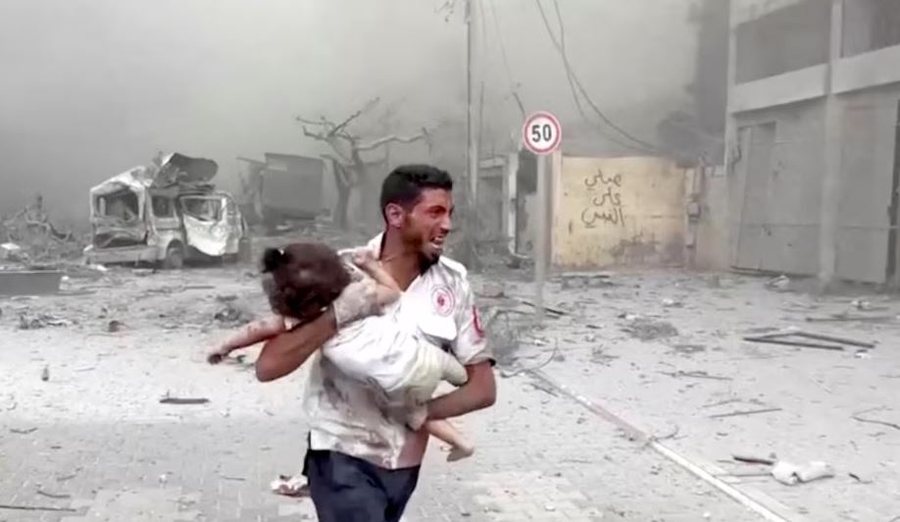
The already uneasy coexistence between Israel and Hamas for more than 16 years will not survive the current conflict.
Israeli Prime Minister Benjamin Netanyahu has vowed to eradicate the militant group from the face of the earth.
"The images of the destruction and destruction of Hamas strongholds in Gaza are just the beginning. We have killed hundreds of terrorists. And we won't stop there. Any place where Hamas operates will be in ruins," he said.
The Palestinian militant group Hamas launched an unprecedented attack on Israel on October 7, killing more than 1,400 people and taking hundreds of hostages.
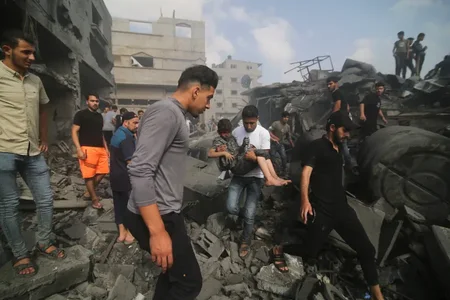
At least 3,300 people have been killed so far in Gaza as Israel launched retaliatory airstrikes on the same day, and is expected to launch a ground offensive.
Israel has also surrounded the enclave of 2.2 million people, blocking most of its food, water and electricity supplies.
Most of the hospitals there are not functioning, while some of them have also been badly damaged by the explosions. At least 500 people were reported killed on the evening of October 17 alone, when an explosion hit the packed Al-Ahli Arab hospital.
Hamas - designated a terrorist group by the United States and other powers - has ruled Gaza since 2007. It has vowed to destroy Israel and wants to replace it with an Islamic state. He has fought several wars with Israel since taking power, which have ended in a kind of fragile peace.
But this time it's different - this isn't just another round with Hamas, Susannah Heschel, a lecturer in Jewish studies at Dartmouth College in New Hampshire, tells Radio Free Europe's Expose program.
"Hamas has carried out the most horrific attacks against a sovereign nation since 9/11 [of 2001], perhaps. And compared to the size of the population, I'd say that Hamas's destruction of Israelis exceeds the 9/11 attacks [in the US]. So this was a disaster in every aspect of being human," says Heschel.
The sight of Hamas slaughtering Israeli families and kidnapping children has put an end to the status quo, says Nimrod Goren of the Middle East Institute.
Speaking to Expose from Jerusalem, he described the group's actions as "terrorist" and unprecedented.
"Israel has never had such a large number of people killed, wounded or kidnapped since its founding. The attack is unprecedented. The damage is enormous. Every Israeli knows someone who has been killed, wounded or taken hostage. It's very personal. So it's something on a whole different scale," says Goren.
What would replace the status quo so far is hard to predict, analysts say. According to them, future Israel-Gaza relations may also depend on what remains of Hamas and Gaza when the fighting ends.
Israeli officials themselves do not seem willing to discuss the possibilities publicly. Israel's Minister of Intelligence, Gila Gamliel, told the media:
"We have to see how long it will take to destroy Hamas. And, then, I believe there will be an international understanding with Israel for tomorrow. But, now, we must concentrate all our power to win this war".
Hamas "will pay the price and remember," Netanyahu said. The Israeli public seems to be behind this goal.
"I feel like we're pretty strong and we're getting international support. We will defeat our enemies, we will fight them. They will never have the ability to do something like this again," Livia Shuwaks, a resident of Tel Aviv, told the Reuters news agency.
"I don't want to say things like that, but I think Gaza needs to clean them all up. It's not up to me to say these things, but we have no other choice, I think," said her fellow citizen, Nicol Mori.
Experts say that even if Israel kills every Hamas leader in Gaza, destroying the organization may be mission impossible. According to them, Hamas is an ideology that has supporters everywhere - from Lebanon to Qatar.
Goren, of the Middle East Institute, says the vacuum left by the group's ouster would have to be filled by a governing body that would rebuild the devastated enclave.
"This is a chance to restore Palestinian unity. Hamas took over the Gaza Strip 16 years ago. Earlier it was controlled by the Palestinian Authority. The division between the West Bank and the Gaza Strip has always been an obstacle to efforts to make progress towards peace. If there is a moderate, unified person in the leadership, with whom negotiations can take place, it would bring a better result than the situation where we were before the war", says Goren.
Goren adds that it is possible that some "other actors" will take responsibility for Gaza - at least for a certain time. He doesn't specify who he's talking about, but some options floating around are: international peacekeepers, the return of the Palestinian Authority that currently governs the West Bank, or Israeli governance.
The columnist of the Israeli newspaper Haaretz, Yossi Melman, has also mentioned the scenario where the political wing of Hamas would survive, although he has admitted that the chances of this are small.
"The Israeli Defense Forces have said that all Hamas leaders are now targets... that their fate will be death," Melman wrote on the X platform.
But, according to him, a disarmed Hamas that would remain in power has always been the strategic priority of Netanyahu, who would like to see the continuation of the division of the Palestinian people between Hamas on one side and the Palestinian Authority on the other.
Susannah Heschel, of Dartmouth College, suggests that every step after the end of the war, be done in coordination with the international factor.
"This is a situation that requires many people to be involved, to make Gaza a livable place for the people there. It is a beautiful part of the world right on the Mediterranean coast. It can flourish. However, the engagement of government agencies and the United Nations alone will not be enough. It will also require a cultural change of the Palestinians as well as the Israelis. A cultural shift that says: let's put down our guns and see what we can do to achieve peace," says Heschel.
The West has expressed support for Israel in its fight against Hamas. "You are not alone", was the message of the American president, Joe Biden, during his stay in Tel Aviv on October 18.
"I want to say to the people of Israel: Their courage, their dedication, their bravery are amazing", he said.
But human rights activists draw attention to the humanitarian agony in Gaza and the indiscriminate attacks on areas populated by civilians. Kenneth Roth, former director of the Human Rights Watch organization, speaks for Radio Free Europe:
"Many people see the horrific attacks by Hamas and say that Israel has the right to respond. This is true. But the right to respond militarily does not give you the freedom to do whatever you want. The issue is how Israel is responding. He has an absolute legal duty to respond in accordance with the principles that are designed to spare civilians as much as possible."
Analysts say violence between Israel and Hamas is likely to escalate in the coming weeks, but that it will not determine who wins the war. The winner will be determined at the negotiating table, they say.
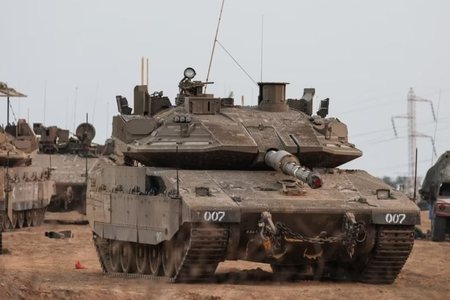
According to the International Institute for Strategic Studies, Israel has 169,000 active soldiers, while the Hamas brigades have up to 20,000. Israel also believes that Iran-backed Hamas has powerful weaponry, including anti-tank missiles.
Neighboring countries are anxiously following the course of the war between them, while two American aircraft carriers have already been sent to the eastern Mediterranean./Rel




Lini një Përgjigje