


 Shkruar nga Pamfleti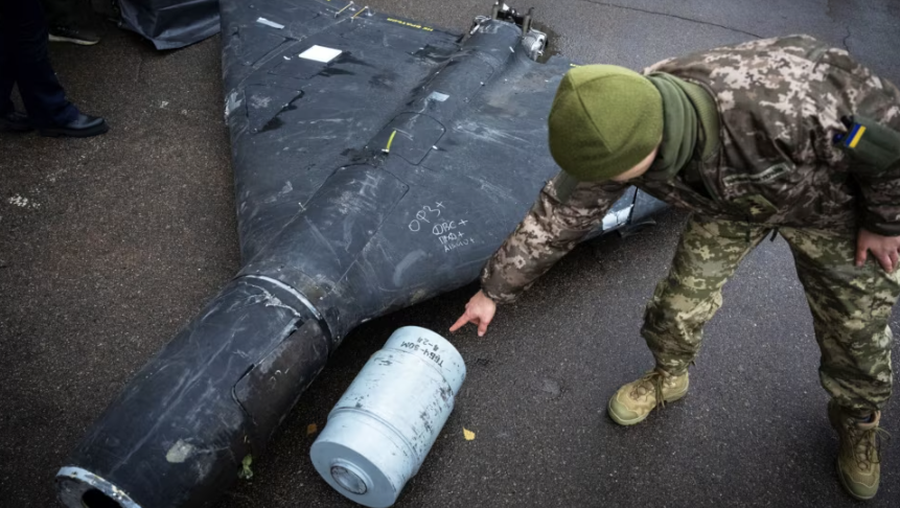
Samira was about to send her 16-year-old daughter from where they live in Chui, northern Kyrgyzstan, to study at a prestigious school in the Russian Republic of Tatarstan.
What he didn't know was that the school, Alabuga Polytechnic, a technical institution located in the Alabuga free economic zone, was producing combat drones used in Russian air strikes against Ukraine.
"I thought it was a regular vocational training program," Samira - who asked that her name be changed - told Radio Free Europe. "But when I learned about the school's ties to the military and drone production, I was shocked."
"Russia needs you"
Russian authorities are distributing promotional and recruitment materials for the Alabuga Polytechnic Institute to schools in Kyrgyzstan. One brochure urges students to “join … the best.” A photo of young men in military uniform promises to “train [the students] to become the best drone assembly specialists for the needs of the Russian army.” The brochure’s front page features a drone, along with the pro-Russian military symbols “Z” and “V.”
Months ago, according to media reports, brochures from the Alabuga Polytechnic were also distributed to schools in neighboring Kazakhstan.
It wasn't just the brochures. This spring, recruiters from the Alabuga Polytechnic visited schools in northern Kyrgyzstan. Students as young as 14 are being invited to apply, something that has raised concerns among parents. The recruitment includes both sexes, along with promises of a high-tech education, career development opportunities, and monthly salaries or scholarships ranging from 30,000 rubles ($382) to 70,000 rubles, are serving to attract young people.
The Alabuga special economic zone also appears to have recruited students through an online game called Business Cats, where players innovate and trade virtual cats, simulating entrepreneurship and developing business skills.
According to authorities in Alabuga, the game was “a program for financial and entrepreneurial skills for students and the game is accessible not only in Russia but also in other former Soviet republics.” Local teachers in Kyrgyzstan reportedly promoted the game via WhatsApp.
Military links confirmed
On April 2, 2024, a Ukrainian drone attack on the Alabuga free economic zone injured seven people, including minors. Other attacks were carried out later that year, on April 23 and June 15, with the last attack killing two people and wounding 13 others. Ukrainian military officials later confirmed that the attacks had targeted drone facilities, which were used to attack Ukrainian infrastructure. Officials described Alabuga as a “legitimate military target.”
Russia has also acknowledged that drones are being manufactured in Alabuga. In July, the Russian Defense Ministry’s Zvezda television channel confirmed that Shahed-136 drones, designed in Iran and branded domestically as Geran, are being mass-produced in the Alabuga special economic zone. The program showcased the scale of the assembly operations, which involve college students.
According to Zvezda, Timur Shagivaleyev, director of the Alabuga special economic zone, said that a factory is producing “thousands” of drones with the help of students from the Alabuga Polytechnic. Footage showed young workers, many of whom appeared to be teenagers, operating machinery and assembling parts. “Hundreds of machines, thousands of workers, and everywhere you look – young people,” the program’s host said. “Boys and girls work here and study at the same time.”
Children traveling alone
Parents like Samira were alarmed when they were told that their children would be traveling by plane alone to Russia, unaccompanied by an adult or state representative.
"That's when I started to worry," Samira said. "They were asking for my daughter's travel documents, her ID, and they even offered to buy her a plane ticket."
One of the recruiters, she said, was constantly messaging her on Telegram. “They kept calling. When I stopped answering, they called me again and again,” Samira said.
Myrza Karimov, an education expert in Kyrgyzstan, has spoken publicly about the situation. “If our Ministry of Education has made an agreement, then someone from the Ministry should accompany the group and hand them over to the other side,” Karimov said. “Because the children are under 18, it is not right to send them and assume that they will be received on the other side. Even when underage students participate in various international sports events, they are always accompanied by a state representative.”
Some Kyrgyz parents have already sent their children to Alabuga. Kazybek, a resident of Chui - who asked not to be named - told Radio Free Europe that his son traveled to Alabuga on July 15, adding that the school covered the flight costs.
For most families, school teachers were the main source of information about the Alabuga Polytechnic.
A parent from Tokmok, whose daughter passed the recruitment tests and will travel to Alabuga, said: "We trusted the teachers. They told us their children were going there."
It's the questionable recruitment process that worries education expert Karimov.
"If children are truly being recruited based on a memorandum signed by our Ministry of Education, then this should be made public," he added./REL




Lini një Përgjigje