


 Shkruar nga James Warren Davis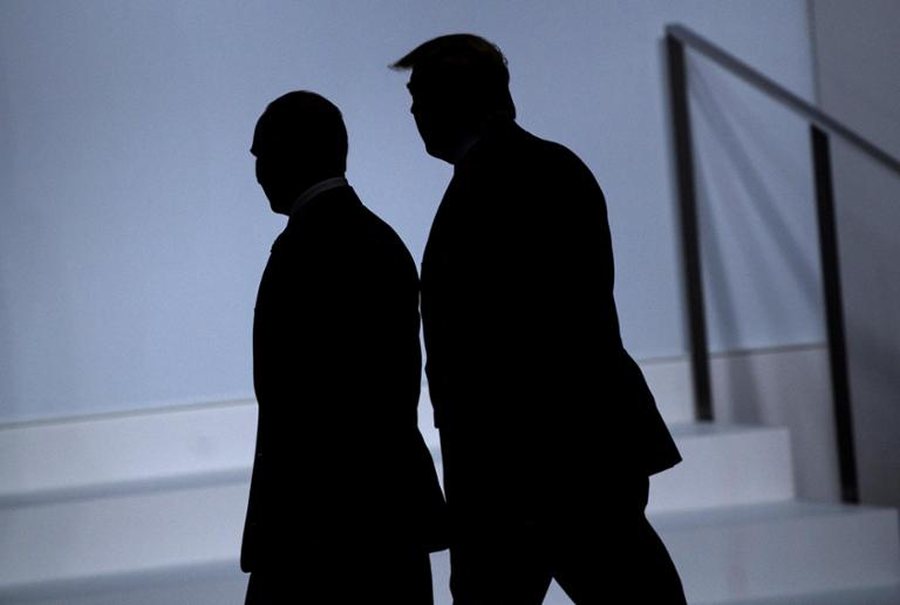
A look back at history shows that summits must be well prepared. However, in the case of the Alaskan meeting between Trump and Putin, there is a risk of complete failure.
Hardly anyone can analyze the US, its politics, and Donald Trump better than him: American political scientist James W. Davis. He is a renowned expert on US politics and international relations and has taught in German-speaking countries for decades.
He writes regularly for IPPEN.MEDIA about the situation in the US and Donald Trump's second term in office. This time, he is discussing the planned meeting between Trump and Vladimir Putin in Alaska ...
In October 1986, Ronald Reagan traveled to Reykjavik, Iceland, to meet with Mikhail Gorbachev, the new reformist leader of the Soviet Union. At the time, I was the youngest member of the editorial board of Foreign Affairs, the flagship journal of the Council on Foreign Relations in New York.
Our editor-in-chief was William Hyland, who had a distinguished career at the highest levels of American foreign policy. In the 1970s, he served as an advisor to Henry Kissinger in the White House under President Richard Nixon before Nixon appointed him Director of National Intelligence in the State Department. After Nixon’s resignation, Hyland returned to the White House, this time as Deputy National Security Advisor under President Gerald Ford. In all three roles, he played a central role in U.S.-Soviet relations and was instrumental in planning and implementing summit meetings between Presidents Nixon and Ford and early Soviet leader Leonid Brezhnev.
Trump-Putin meeting as a "diplomatic trap"
In Washington, Hyland was considered something of an oracle for US-USSR summits, a reputation he had already earned as a young CIA analyst. In 1960, he correctly predicted that Nikita Khrushchev would find a way to avoid a planned meeting with President Dwight Eisenhower in Paris—which proved true when Khrushchev used the shooting down of an American U-2 spy plane as a pretext to cancel the talks. Since then, Hyland has been adamantly opposed to direct summits between US and Soviet heads of state unless they were carefully prepared, carefully planned, and served merely as a formal confirmation of agreements previously negotiated by experienced diplomats.
In our editorial meetings in October of that year, Hyland expressed extreme skepticism that anything positive could come of the Reagan-Gorbachev meeting. He feared that Reagan might be blinded by Gorbachev’s charisma and agree to a deal that would harm the interests of the United States and its European allies. Hyland may have been correct in his assessment of Gorbachev’s intentions, but he underestimated Reagan’s resolve. The talks ultimately failed because Reagan refused to abandon the American missile defense program.
I recall these conversations as I think about this week’s summit between Donald Trump and Vladimir Putin in Alaska. Even if it weren’t for a former KGB officer with a keen talent for manipulation and a president so susceptible to flattery, this meeting bears all the hallmarks of the diplomatic trap that Hyland has always warned against.
"The risk of misunderstanding is extremely high"
The meeting was announced less than two weeks ago; there is no agreement even on who proposed it. Serious substantive preparations at the expert level have been practically non-existent. Without a well-thought-out agenda and prior agreement on key points, the risk of misunderstandings, or worse, improvisation, is extremely high. This, in turn, increases the risk of public failure. And the greater this risk becomes, the greater the pressure to avoid it at all costs, especially if one of the parties involved is desperate to demonstrate a symbolic “success.”
Who is more likely to give in to this pressure? On the one hand, a harsh autocrat willing to accept massive sanctions to pursue his goals. Largely isolated, he achieves a symbolic victory simply by meeting with the US president on American soil.
Opposing him will be a man who fired the head of the U.S. Census Bureau because he didn't like the unemployment figures that resulted from his trade policy and who is practically obsessed with winning the Nobel Peace Prize.
I'm afraid this peak is not another Reykjavik. It's more like a game of roulette, with cards stacked and rules invented along the way. /Adapted from Pamphlet/





Lini një Përgjigje