


 Shkruar nga The Guardian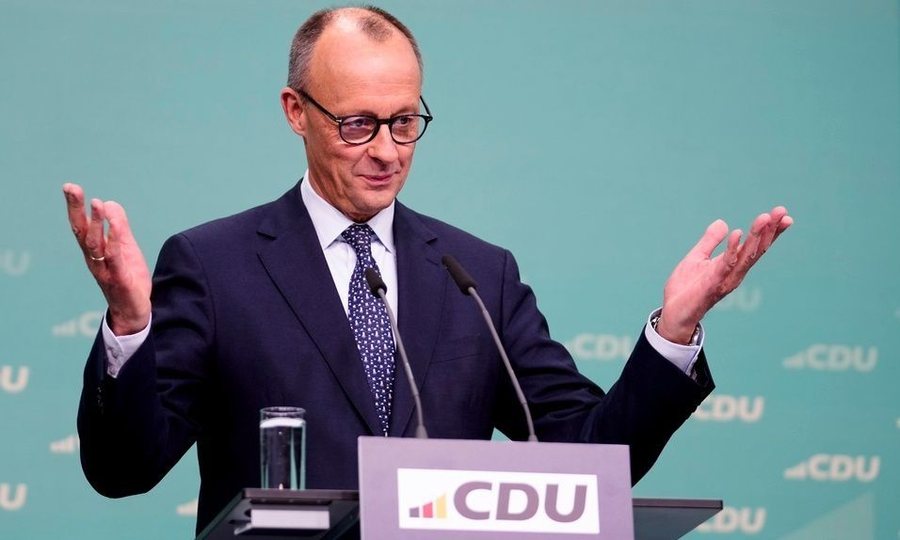
For Ukraine, in desperate need of strong support from a united Europe, Merz's unwavering support also offers reason for hope.
Friedrich Merz, leader of the center-right Christian Democratic Union (CDU), has a reputation for being outspoken. On Sunday evening, as it became clear that the CDU had won the snap election triggered by the outgoing Social Democratic Chancellor, Olaf Scholz, he did not disappoint. “For me,” Merz said in a post-election televised debate, “the absolute priority will be to strengthen Europe as quickly as possible, so that, step by step, we can truly achieve independence from the US.”
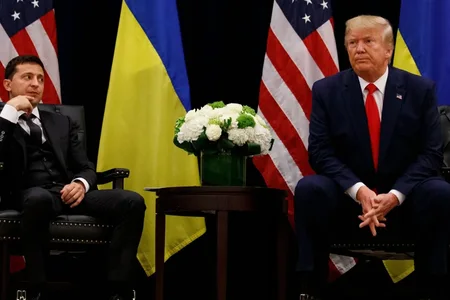
As recently as two weeks ago, such a statement from an elected German chancellor would have been inconceivable. But these are new and extraordinary times. A staunch transatlanticist, Merz has previously downplayed the dangers to Western unity posed by Donald Trump. But the US president’s crude electioneering on behalf of the far-right Alternative for Germany (AfD), and his sidelining of Europe and Kiev from negotiations over Ukraine’s future, have forced a U-turn.
For the European Union, as it seeks to strengthen its strategic autonomy in a new and challenging era, this is good news. For Ukraine, in desperate need of strong support from a united Europe, Merz’s unwavering support also offers reason for hope. New leadership from the EU’s most powerful member state will be crucial in a significantly more threatening global context.
Domestically, the reasons for optimism are thinner on the ground. As Merz acknowledged on Monday, the weekend poll revealed a dangerously polarized country — one in which the center is historically weak while the far right continues to grow, especially in the east. With a very high turnout, the AfD doubled its vote to 21%. The combined result of the CDU and its Bavarian sister party, the Christian Social Union (CSU), was 29% — the second lowest since 1949. The Social Democratic Party (SPD) suffered its worst post-war result, falling to third place with 16%.
Merz has pledged to maintain the firewall by excluding the far right from power, and the composition of the new Bundestag points to a two-party coalition with the SPD. This could lead to a welcome softening of the CDU’s efforts to defeat the AfD’s stance on immigration policy. Rather than prolonging the failed attempt to push the far right out, it would be in Germany’s interest for Merz to move in the other direction on the economy.
The CDU leader built his reputation in the 1990s as a free-marketeer of small states in the mold of Ronald Reagan. As chancellor, however, he will inherit a moribund economy in dire need of major government investment, at a time when pressure to increase defense spending is also acute. The business model that depended on cheap Russian energy and Chinese demand for exports has collapsed. Fixing it could require pushing for constitutional reform to allow the state to borrow and spend more — seen as anathema to many in Merz’s party.
One in five German voters on Sunday voted for a party that supports the forced repatriation of migrants and has been accompanied by neo-Nazi whistling. Horrifyingly, the AfD gained significant support among young people and non-graduates. Beyond the firewall, AfD leader Alice Weidel could be positioned as the leader of a Trumpian government in waiting. The next administration must try to restore faith in Germany’s post-war tradition of consensus-building and moderation. The goals could hardly be higher. / Adapted from “Pamphlet” by “The Guardian”


Lini një Përgjigje