


 Shkruar nga Steve Rosenberg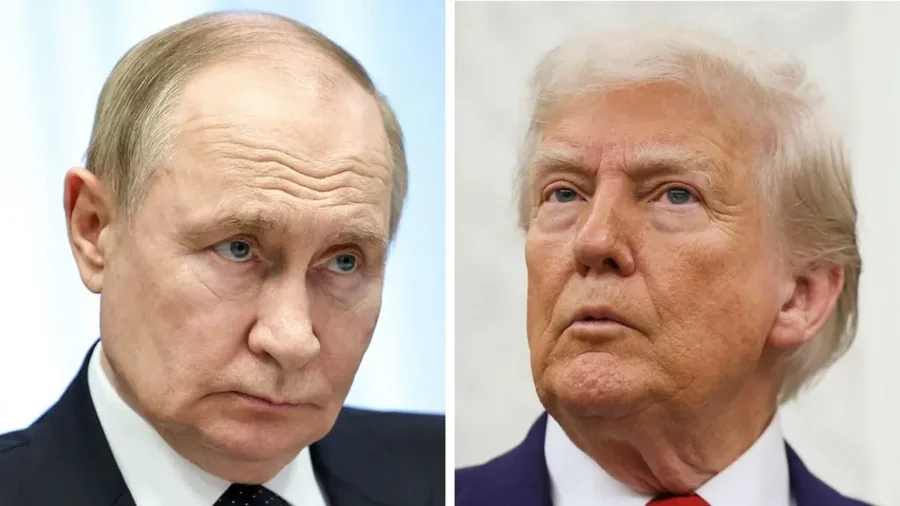
A week ago I had the distinct feeling that it was like "Groundhog Day", or as the Russians call it, "Dyen Surka".
Amid US threats to pressure Moscow by promising Ukraine Tomahawk missiles, Vladimir Putin and President Donald Trump held a phone call. The result: a US-Russia summit in Budapest was announced.
Last August, amid threats of additional US sanctions on Russia, Putin met with Trump's special envoy, Steve Witkoff. The result: a US-Russia summit in Alaska was announced.
But it seems that "Groundhog Day" is over.
The meeting in Alaska took place with minimal preparation and few results.
Meanwhile, the Budapest summit has been canceled. It barely had time to be announced. Now President Trump has canceled it.
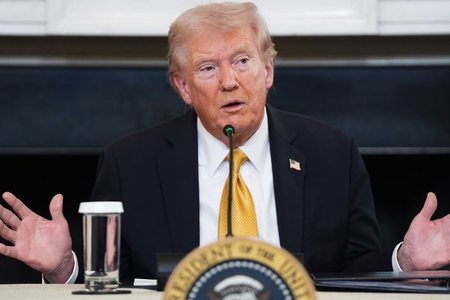
"I didn't feel like we were going to get where we needed to get," the US president told reporters.
And that's not all.
Previously, Trump had not used threats to put more pressure on Russia, preferring the "cake" to the "stick" in relations with the Kremlin.
Currently, he has taken the cake off the stage – he has imposed sanctions on two major Russian oil companies, Rosneft and Lukoil.
This is unlikely to force Putin to make a U-turn on the war, but it is a sign of Trump's frustration with the Kremlin's unwillingness to compromise or make concessions to end the fighting in Ukraine.
Russian reaction
President Putin called the new US sanctions package "an unfriendly act" and "an attempt to put pressure on Russia."
"No country and no self-respecting people puts anything under pressure," he said.
Former President Dmitry Medvedev was less diplomatic: “The US is our enemy, and their talkative ‘peacemaker’ has fully entered the path of war with Russia,” he wrote on social media. “The decisions that have been taken are an act of war against Russia.”
The tabloid newspaper Moskovsky Komsomolets described the situation with less drama but just as negatively, criticizing the “capriciousness and instability of our main negotiating partner.”
What has changed?
Unlike the first time, when Trump rushed to the first summit, this time he showed more caution.
He asked Secretary of State Marco Rubio to prepare the ground for the summit, through a meeting with Russian Foreign Minister Sergei Lavrov, to ensure there was a reason to travel to Budapest.
But it quickly became clear that there was none, and that a new summit would not bring any progress.
Russia is strongly opposed to Trump's idea of "freezing" the front lines in Ukraine.
The Kremlin is determined to take control of at least the entire eastern Donbas region, much of which has already been occupied. But President Volodymyr Zelensky refuses to hand over to Russia the areas that Ukraine still controls.
Russian benefits and objectives
Moscow would have liked a second summit with the US.
The first, in Alaska, was a diplomatic and political victory for the Kremlin: the red-carpet reception for Putin in Anchorage symbolized Russia's return to the international stage and the West's failure to isolate it.
Russian state media have been relishing the idea of a meeting in Europe with Trump, but without the European Union present. Russian commentators described the potential summit in Budapest as “a slap in the face to Brussels.” However, few believed that the meeting would produce the results Moscow wanted.
Some Russian newspapers have even called for the army to continue the war: "There is no reason for Moscow to accept a ceasefire," Moskovsky Komsomolets declared yesterday.
This does not mean that the Kremlin does not want peace, it does want it, but only on its own terms, unacceptable to both Kiev and Washington.
Russia's "conditions"
These conditions are not just about territory: Moscow wants to address the “root causes” of the war, a phrase it uses to include stopping NATO’s eastward expansion. It is also widely believed that Russia still aims to bring Ukraine back under its influence.
What is expected from Trump?
Is Donald Trump ready to increase pressure on Russia? Maybe so. But it's just as likely that we'll wake up one morning and find ourselves back on Groundhog Day.
“In the tug-of-war between Trump and Putin, Russia is leading again,” Moskovsky Komsomolets wrote after the Budapest summit announcement, continuing, “In the weeks leading up to the meeting, Trump will pull in the opposite direction from European phone calls and visits. Then Putin will pull him back to our side.”
*By Steve Rosenberg, BBC Russia Editor



Udheheqesit totalitare si Putini, nuk marrin vesh me diplomaci, ata duan me cdo kusht te fitojne, prandaj ndaj tyre duhet perdorur vetem kerbaci.