


 Shkruar nga Davide Malacaria
Instead of the peace he promised, Trump is moving towards escalating the two most dangerous conflicts on the planet...
The belt is tightening around Donald Trump, who appears to be moving into “neocon mode.” This shift is clearly evident in his new stances on two war fronts historically dominated by the neoconservative establishment: Russia and the Middle East. Trump, once criticized for his rapprochement with Putin and his distancing himself from military interventions, is now seen as aligned against Russia and leaning toward Netanyahu’s line on the Gaza conflict.
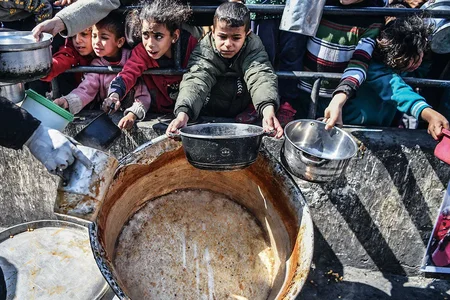
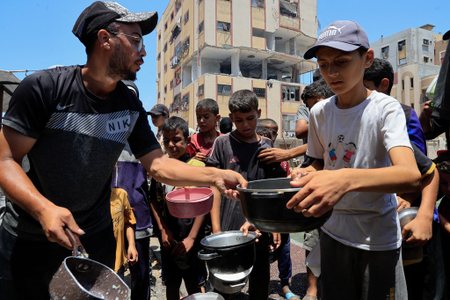
This is not a complete capitulation. Trump has expressed regret for the famine in Gaza and a desire for a ceasefire, statements that contradict the Israeli plan to occupy Gaza and annex the West Bank. But, nevertheless, his room for action has narrowed considerably. The time when Trump could openly challenge the architects of the wars seems to be over – at least for now.
The Epstein Files and Pressure on Trump
A key element in this pressure is the Epstein case. During a visit to Scotland, where he met with European Commission President Ursula von der Leyen, Trump said that “if there was anything against me in those files, the Democrats would have used it a long time ago.” But his insistence on the possibility of manipulation shows that there is a real fear, perhaps of something small, but sufficient to be used against him by circles specializing in information warfare.
Another sign of Trump’s “turn” is his public praise of Mark Levin, a leading figure in the neocon camp in the media, and his reposting of his statements on the investigation into the “Russiagate” dossier, which Trump claims was rigged under Obama. This is ironic, considering that many of his current supporters were the architects of his first political coup.
From Gaza to Ukraine: aligning with the neoconservative line
In Gaza, Trump is now seen as aligned with Israeli operations, with the most he can do to suggest any tactical change to avoid damaging his own image. In Ukraine, his rhetoric against Russia has significantly intensified, materializing with a new ultimatum to Putin for a ceasefire agreement within just a few days, as opposed to the 50-day deadline he had previously given.
This is coupled with a new economic and military agreement with the EU, which forces Europe to buy American gas at higher prices and invest billions in American weapons, most likely to be sent to Ukraine. In practice, Trump's calls for more European defense spending have become a formal obligation.
A mandate that seems to have ended prematurely
Just seven months into his term, many analysts already see the end of the independent Trump and the beginning of Trump 2.0, a president aligned with the same interests he once opposed. There may be attempts by him to free himself from this pressure in the future, but for now the reality is clear.
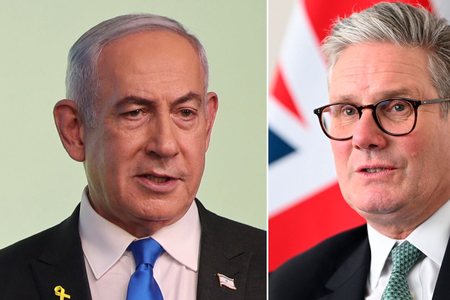
Symbolically, Putin also seems to have understood the change, as in recent days he has directly contacted Benjamin Netanyahu, the man who is today seen as one of the most powerful actors in global politics, confirming the shift in balance and Trump's own loss of maneuvering space. /Adapted from "Pamphlet" by "Inside Over"



Lini një Përgjigje