


 Shkruar nga Pamfleti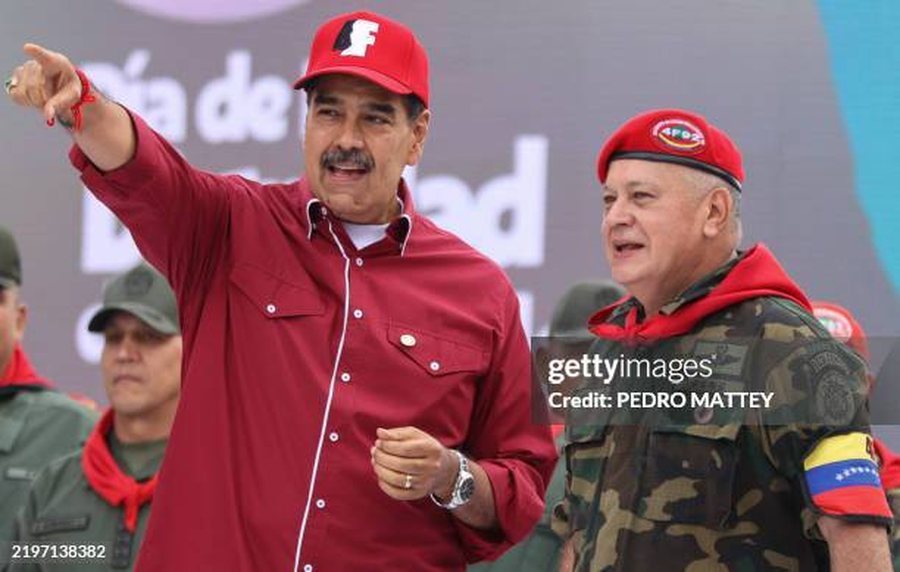
From sanctioned to collaborator, how Cabello became the key to stability for the US in Venezuela
According to an exclusive report by Reuters , senior Trump administration officials had maintained regular contact with Venezuelan Interior Minister Diosdado Cabello long before and after the US intervention that led to the overthrow and arrest of Nicolás Maduro on January 3.
Sources within the US administration confirmed that communication with Cabello continued even after Maduro's departure, in an effort to ensure that security structures were not used against the opposition or to destabilize the transition of power.
Cabello, a former soldier and key figure in the Chavista regime, has been accused by the US for years of international drug trafficking, in the same file as Maduro, but he was not included in the January arrests, a detail that now appears to have been no coincidence.
U.S. officials have warned Cabello not to use the military, intelligence services, or paramilitary groups in the service of destabilization. In fact, Venezuela's security system, including intelligence, police, and armed forces, has remained largely functional and under control since Maduro's departure.
A double game: enemies in public, partners behind the scenes?
Despite being on the US sanctions list, Cabello has been seen as a key factor in preserving the post-Maduro order. According to sources, he maintained communication with Washington both directly and through intermediaries.
It is not clear whether the discussions included plans for a long-term political agreement or his own role in the country's future. So far, Cabello has publicly expressed support for Delsy Rodríguez, who has taken over as interim head of government and has been touted by Trump as a figure of stability in this transitional phase.
However, the relationship between Cabello and Rodríguez is anything but close. Both have been part of the power elite, but are not close political allies. US officials have privately acknowledged that Cabello's history as an architect of repression, and his influence in the secret services, could become an unexpected threat to the planned transition.
Why does the US "trust" an old enemy?
Cabello has been considered for years the most powerful man in Venezuela after Chávez and Maduro, a strongman with direct control over the security apparatus and paramilitary groups that have suppressed the opposition. He is also one of the most hated men in the Venezuelan opposition.
In this context, the fact that Washington has negotiated with him – even for short-term stability – shows that political reality has dominated public statements.
At the moment, there is no official comment from the White House or the interim government of Venezuela. But the fact that Cabello was not affected by the arrests, and that his influence in the security structures remains unchanged, suggests that he is part of the American equation to guarantee "controlled stability." /Pamphlet


Lini një Përgjigje