


 Shkruar nga Pamfleti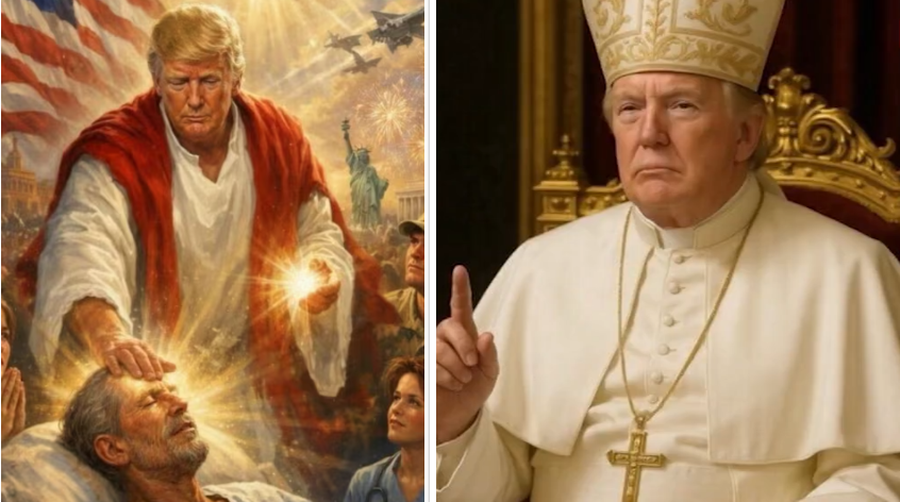
Manipulated images are not just humor, they are being used as a tool of influence in digital political communication.
Before Trump appeared as Jesus, he appeared as the Pope. There were also versions where he was Rocky, or part of the movie “Apocalypse Now,” smelling victory.
In another image, he appeared with a sword like Darth Vader's, trying to influence opponents on May 4. To mock the "No Kings" protests, he posed as a fighter pilot with the call "King Trump", dropping bombs with debris on the protesters below.
If this sounds like a joke or irony, you may not be getting the full message. Trump may have realized he crossed a line with the now-deleted post in which he posed as Jesus. Still, mobilizing his supporters seems to be an important part of the White House's communications strategy, at a time when people get their information mostly from social media and remain in closed information environments.
He is also depicted as one of the Founding Fathers of the US, signing what appears to be the Constitution or Declaration of Independence, although the AI-generated image is poor, as he uses a quill pen rather than his usual Sharpie pen.
In another video, he appears as a hockey player, dominating the Canadian defense, appearing on the networks at a time when the US Olympic gold medal was being discussed.
“Memes are essentially visual forms of communication and allow people to insert ideas into cultural discourse without expressing them directly,” said technology journalist Taylor Lorenz, author of the book “Extremely Online: The Untold Story of Fame, Influence, and Power on the Internet.”
Rather than fully retracting the deleted post, which was considered blasphemous by some Christians, Trump later reposted an image of himself next to Jesus, acknowledging and simultaneously expanding the narrative.
International actors also reacted to these memes. The Iranian embassy in Tajikistan released a video of Jesus descending to punish Trump, who was portrayed as Jesus, a reaction that takes irony to another level.
According to Kaylyn Jackson Schiff, co-director of the GRAIL lab at Purdue University, all of these images are forms of “deepfake.” While the term is usually associated with deceptive content, it also includes images that are clearly fake. Researchers call them “synthetic content.”
July 4th, 1776 and November 5th, 2024. The two most important dates in American history! pic.twitter.com/8anqoTYLUi
— Nick Adams (@NickAdamsinUSA) July 3, 2025
GRAIL classifies these into several categories:
“Darkfakes” janë imazhe realiste që synojnë të mashtrojnë dhe të dëmtojnë kundërshtarët politikë.
“Glowfakes” janë imazhe pozitive që e paraqesin një person më mirë se realiteti.
“Foefakes” janë qartësisht të rreme dhe përdoren për të tallur kundërshtarët.
“Fanfakes” e vendosin një figurë në piedestal, duke rritur entuziazmin e mbështetësve.
Në rastin e Trump, shumë nga këto imazhe e paraqesin atë si një figurë heroike ose pothuajse hyjnore, duke rritur mbështetjen brenda bazës së tij.
View this post on Instagram
Nuk është gjithmonë e qartë nëse këto përmbajtje krijohen nga vetë Shtëpia e Bardhë. Një version i imazhit ku Trump paraqitet si Jezusi u shpërnda që në shkurt nga Nick Adams, një influencues i djathtë që mban një post zyrtar në Departamentin e Shtetit.
Adams ka publikuar edhe imazhe të tjera, si një ku Trump duket sikur lutet në Zyrën Ovale me figurat e Martin Luther King Jr. dhe Abraham Lincoln pas tij.
Marrëdhënia e Trump me mbështetësit e tij konsiderohet e veçantë në politikën amerikane. Ndryshe nga politikanë të tjerë që qëndrojnë larg memeve, ai i përforcon dhe i shpërndan ato.
Sipas Jackson Schiff, mbështetësit e shohin atë njëkohësisht si njeri të zakonshëm dhe si figurë të lartësuar.
Taylor Lorenz argumenton se edhe pse këto imazhe mund të duken të parëndësishme, ato kanë ndikim të grumbulluar. “Jo çdo billboard të bën të blesh diçka, por ato ndikojnë në mënyrën se si mendon dhe percepton,” tha ajo.
Analisti Aidan Walker e krahason ndikimin e Trump me atë të krijuesit të YouTube, MrBeast, duke theksuar se ai është figura dominante në ekosistemin e ndikimit politik online.
Sipas tij, nuk ka një figurë ekuivalente në kampin demokrat, çka mund të shpjegojë mungesën e një lideri unifikues.
Megjithatë, edhe demokratët po përpiqen të përdorin forma të ngjashme komunikimi. Guvernatori i Kalifornisë, Gavin Newsom, ka publikuar imazhe satirike të Trump, përfshirë një ku ai paraqitet si Marie Antoinette.
Elementi i talljes lidhet me politikën moderne, shpesh përçarëse, por njëkohësisht krijon një kontrast me seriozitetin që kërkon qeverisja.
Në disa raste, këto përmbajtje janë bërë vetë lajmi. Kjo ndodhi me imazhin e Trump si Jezus, i cili u publikua në një moment tensioni me papën.
TRUMP “MARIE ANTOINETTE” SAYS, “NO HEALTH CARE FOR YOU PEASANTS, BUT A BALLROOM FOR THE QUEEN!” pic.twitter.com/u8o6dSsIhW
— Governor Newsom Press Office (@GovPressOffice) October 1, 2025
Një situatë e ngjashme ndodhi kur Trump shpërndau një video që përfshinte pretendime të pabazuara për mashtrim zgjedhor dhe përfundonte me imazhe raciste të Barack dhe Michelle Obama.
Si kjo video, ashtu edhe imazhi “hyjnor” i krijuar me AI, janë ndër rastet e rralla kur postimet janë fshirë nga Trump ose nga Shtëpia e Bardhë.
However, the account that created the racist video continues to promote it, and is the same one that made the video where Trump appears as a pilot attacking protesters, a content considered in poor taste, but which did not cause the same reaction as the religious image. /Adapted from CNN /


Lini një Përgjigje