


 Shkruar nga Pamfleti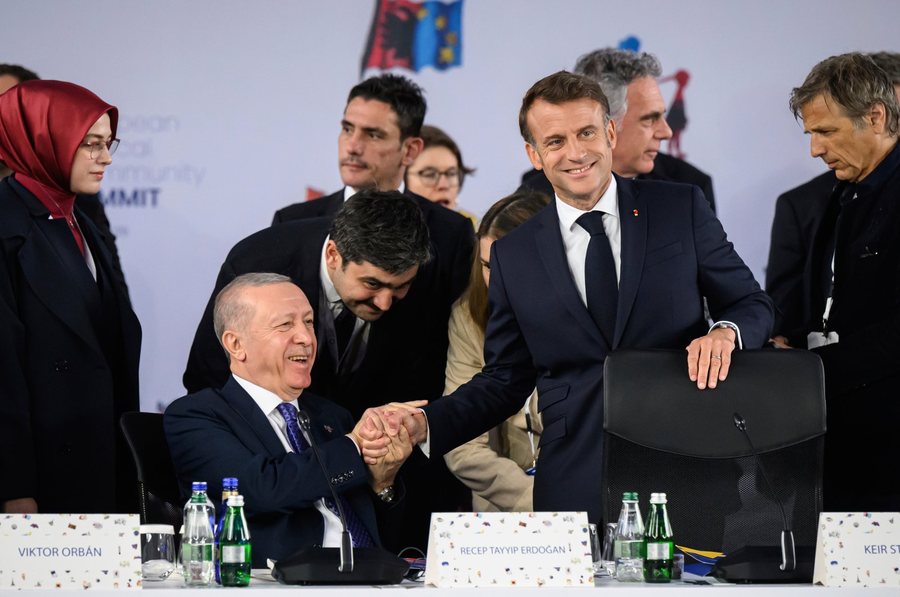
Turkey's bid for EU membership has been "uncertain" since setbacks under former French President Nicolas Sarkozy and former German Chancellor Angela Merkel, exacerbated by the country's domestic political developments. However, the war in Ukraine has prompted a reassessment and "new realism" in European capitals...
Turkey is emerging as an important partner as Europe faces the twin challenges of declining US commitment to NATO and continued fear of Russia, a leading analyst says.
Timothy Ash, a senior emerging markets strategist and senior Turkey analyst, believes that Ankara is in a unique position to help fill the strategic and industrial gaps that the European defense plan now faces.
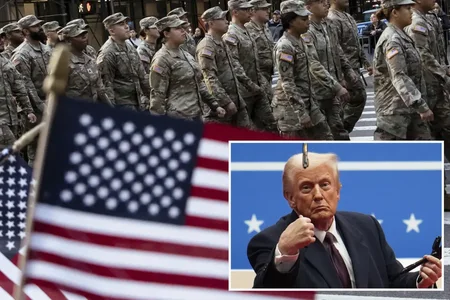
In an interview with Anadolu Agency (AA), Ash highlighted fundamental changes in Europe's security architecture, driven in part by US President Donald Trump's leadership style and declining American military support, on which European NATO allies have long relied.
"American security support for Europe and NATO is rapidly evaporating," he said, adding that this comes at a time when Europe is facing significant vulnerabilities due to lagging defense spending and military-industrial production, along with the threat from Russia.
Ash stressed that although Europe possesses advanced military technologies, its defense production capacity is not well equipped to scale up production in response to rapidly growing threats.
"This is the moment when Turkey, with its powerful military and booming defense industry, can fill the gap," he said, emphasizing that Turkey's ability to increase production could help Europe address immediate supply gaps in defense production.
"Turkey boasts the largest army in Europe, outside of Ukraine and Russia, with nearly 400,000 troops and a rapidly growing military-industrial complex. Turkey could help France, the United Kingdom and other countries maintain a credible peacekeeping force in Ukraine by contributing tens of thousands of ground troops," he noted.
Ankara, he continued, also has "the potential to partner with European countries in technological exchanges, combining Europe's scientific expertise with its own manufacturing capacity."
He cited the recent collaboration between Turkish drone manufacturer Baykar and Italian defense contractor Leonardo as a promising sign of growing defense partnerships. More such partnerships are likely to follow, driven by mutual interests in combating regional threats and diversifying supply chains, he added.
Turkey's importance extends beyond the battlefield, with Ash underlining the country's value to Europe in terms of both economic integration and energy diversification. With its vast manufacturing base already integrated within European supply chains, particularly in the automotive sector, Turkey can help the continent meet challenges such as rising Chinese imports of electric vehicles, he said.
He explained that reorganizing Turkey's manufacturing base towards the military-industrial complex could ease short-term economic pressures while simultaneously meeting Europe's defense needs.
"Kill two birds with one stone," said Ash.
Regarding energy, he underlined that Turkey's geographical location makes it an important energy transit hub, offering alternative supply routes from Central Asia, the South Caucasus and the Middle East that could help Europe diversify from its over-dependence on Russian gas.
"This fits in with Europe's accelerated energy transition and push for renewables," the analyst said. While the potential for strategic cooperation is significant, Ash acknowledged political obstacles in Turkey's relations with the EU.
He stressed that Turkey's bid for EU membership has been "uncertain" since setbacks under former French President Nicolas Sarkozy and former German Chancellor Angela Merkel, exacerbated by the country's domestic political developments. However, Ash believes that the war in Ukraine has sparked a reappraisal and "new realism" in European capitals, making national security now the continent's top priority. "Europe must wake up to the reality that it is not able to maintain its own defense," Ash said, stressing the need for compromises such as updating the EU-Turkey Customs Union to facilitate deeper cooperation.
Ash also highlighted the importance of Turkey's strategic positioning in global geopolitics, including its relatively favorable relationship with the Trump administration. He noted that President Recep Tayyip Erdogan's personal rapport with Trump has shielded Turkey from some of the harshest trade measures imposed on other countries and led to progress on issues such as F-16 upgrades and a possible return to the F-35 program.
"Turkey's role in Syria, Iran and the Eastern Mediterranean further underscores its importance as a major regional player," he added.
Ash also pointed to strong ties with the United Kingdom as evidence of Turkey's growing importance, saying that bilateral relations are at their strongest in 25 years, driven by mutual respect and defense cooperation.
“The UK, along with Spain and Italy, is keen to push ahead with deals like the Eurofighter sale, despite German reservations,” he said. Looking ahead, Ash suggested that Turkish defence firms could benefit from the EU’s plan to invest 500 billion euros (over $560 billion) in defence by buying or partnering with European companies, enabling Ankara to participate in key NATO procurement programmes.
"The natural partner for Turkey is Europe," Ash concluded, emphasizing their deep economic ties and shared interests in addressing new regional and global challenges. / Adapted Pamphlet from Daily Sabah/


Lini një Përgjigje