


 Shkruar nga Pamfleti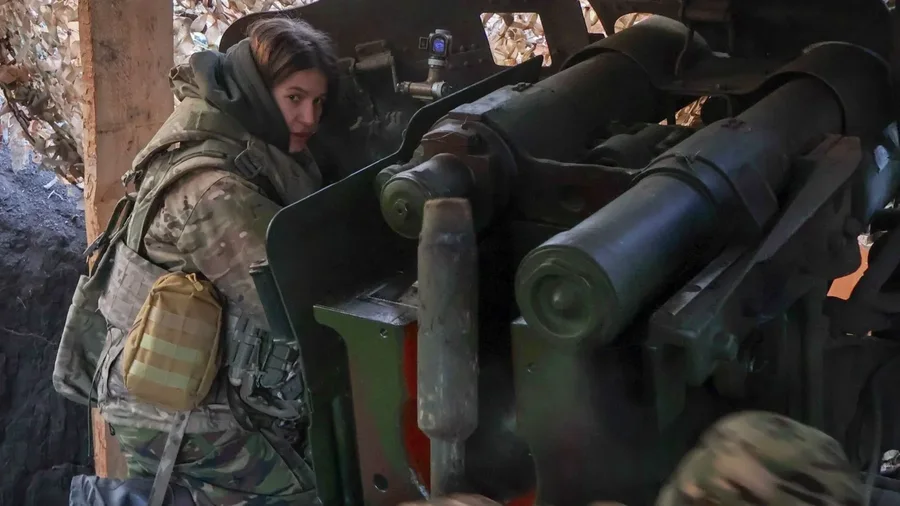
The global arms trade remains stable, but the list of buyers has changed dramatically, according to the latest report by the Swedish institute SIPRI.
The central sentence of the current report from the renowned Stockholm International Peace Research Institute – SIPRI for short – may be surprising at first glance: global arms exports are stagnant and have hardly changed compared to the period 2010-2019. But when looking at individual countries, the dramatic geopolitical changes currently troubling the world become apparent.
Ukraine is now, in the period 2020-2024, the largest buyer of heavy weapons in the world. Compared to 2015-2019, this country, attacked by Russia in 2022, increased its imports almost a hundredfold – a fact that is frightening in itself. Almost nine percent of total global arms exports ended up in Ukraine.
Russian aggression and fear of America
At the same time, arms imports to other European countries increased by 155 percent. This is also a direct consequence of the Russian aggression that began in February 2022. In addition, according to Swedish researchers, the reason for this increase is uncertainty about the development of American foreign policy. Mathew George, one of the authors of the new SIPRI report, says: “The new arms transfer figures reflect a strengthening of armaments in European countries in response to the new threat from Russia. On the other hand, some of the world's largest arms importers, such as Saudi Arabia, China and India, have seen a sharper decline in imports, despite the increased perception of threat also in their regions.”
The US – by far the largest supporter of Ukraine
According to the same report, 35 countries participated in arms shipments to Ukraine during the period under review. Between 2020 and 2024, Ukraine received 8.8 percent of total world exports. The US provided 45 percent of all shipments, Germany 12 percent, and Poland 11 percent. These reports clearly show what changes could occur if the US, under the new President Donald Trump, were to completely withdraw from military support for Ukraine.
Among the world's ten largest arms importers in the period 2020-2024, Ukraine was the only European country, although other European countries also significantly increased their arms orders and deliveries.
SIPRI: US to continue supplying Europe
Pieter Wezeman, a researcher at the Stockholm Institute, says: “As Russia became increasingly aggressive and transatlantic relations were already under pressure during Donald Trump’s first presidential term, European NATO countries began to reduce their dependence on imports and strengthen their military industries. Trump took office again in January this year, and after an unprecedented row with Ukrainian President Volodymyr Zelensky, he has cut off military aid to Ukraine. Support remains uncertain, but it is expected that the US will continue to supply Europe.
US remains top exporter, Russia falls in ranking
The US remains the world's largest arms exporter: 43 percent of the total global arms trade comes from the United States, which supplied 107 countries between 2020 and 2024. Mathew George says: “The US is in a unique position when it comes to arms exports – their share is more than four times that of the second largest exporter, France.”
On the other hand, Russia reduced its arms exports by 63 percent between 2015 and 2024. In the period 2021 and 2022 its total exports were the lowest in the last two decades. This is not surprising, because it was clear that it was already preparing for war, so Russia preferred to strengthen its own military capabilities more than to sell weapons to others.
SIPRI scientist Pieter Wezeman says: “The war against Ukraine further accelerated the decline in Russian arms exports as more weapons were now needed on the battlefield. In addition, sanctions have made it difficult for Russia to produce and sell weapons.” When Russia exported weapons, the main buyers were China and India.
Gulf States and Asia
Four of the top ten arms importers between 2020 and 2024 were Gulf countries: Qatar, Saudi Arabia, Egypt and Kuwait. Four others come from Asia and Oceania: India, Pakistan, Japan and Australia. Siemon Wezeman is surprised that more attention is not being paid to this: “While arms shipments to Europe and the Middle East attract the most media attention, Asia and Oceania remain the regions with the largest arms imports in the world.”
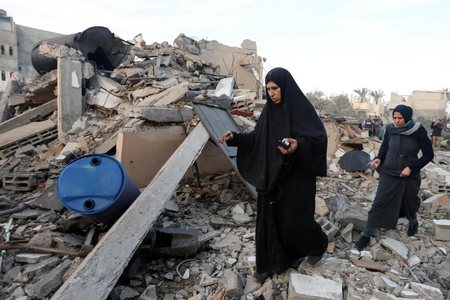
Despite the war in the Gaza Strip, which began in October 2023, arms imports to Israel between 2015 and 2024 remained almost unchanged. According to the SIPRI report, for its military operations since the beginning of the conflict, Israel has mainly used weapons that were mainly supplied to it by the US.
Volume and structure of sales
Conclusion: the global arms trade is stagnating in overall volume, but the structure among arms recipients is changing drastically. While changes are happening rapidly: Germany plans to invest astronomical amounts in the Bundeswehr and further support for Ukraine in the coming years. Experts estimate that this will be around 400 billion euros.
Such programs mainly increase the profits of global arms manufacturers. SIPRI found in December 2024 that the revenues of the world's 100 largest arms producers increased by 4.2 percent in 2023, reaching about $632 billion./ DW





Lini një Përgjigje