


 Shkruar nga Pamfleti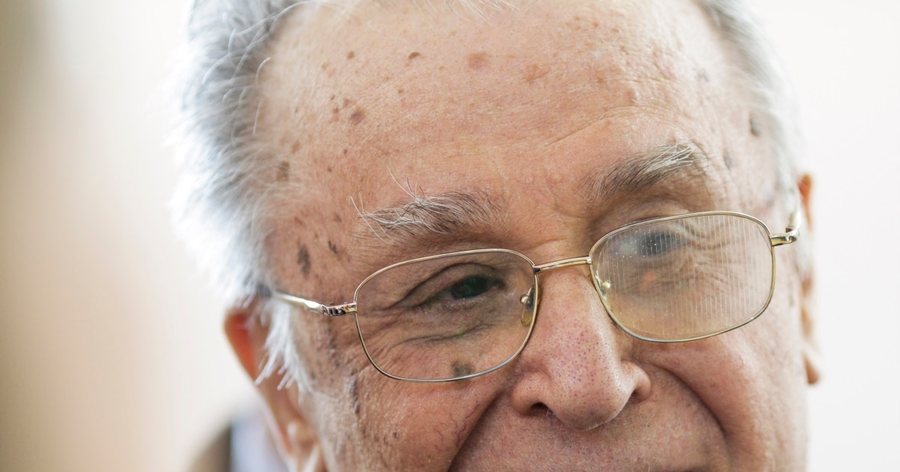
Former Romanian President Ion Iliescu, one of the most influential but also controversial figures of Romania's post-communist period, died in Bucharest on August 5, at the age of 95.
The former president had been hospitalized since June 9, and doctors had diagnosed him with lung cancer.
In an official statement, the Government announced with "deep regret" Iliescu's death and expressed condolences to his family and friends.
Beloved by some and rejected by others, Iliescu was one of the most controversial politicians in the democratic period that followed the overthrow of the long-time dictator, Nicolae Ceaușescu, in December 1989.
Iliescu had been a government minister before being sidelined by Ceaușescu in the early 1970s. In December 1989, he emerged as an opponent of Ceaușescu's regime and emerged as the leader of the National Salvation Front, a group that took control of the country after Ceaușescu and his wife were overthrown and executed.
In May 1990, he became the first freely elected president of Romania, serving until 1996.
His term, however, was marred by the bloody transfer of power, in which 862 people were killed, and by his decision to mobilize striking miners to violently suppress anti-government protests in June 1990, which was seen by many as an attempt to stay in power.
In 2018, he was charged with crimes against humanity for his role in those violent events. The case was postponed several times, but in 2023, the Court of Appeals ruled that the trial should continue.
In his second term, from 2000 to 2004, Iliescu played a significant role in advancing Romania's membership in the European Union. During his presidency, Romania also signed the NATO accession treaty in 2004, and the country joined the military alliance shortly before he left office.
In announcing Iliescu's death, the government said details of the former president's state funeral would be made public in the coming days. August 7 has been declared a national day of mourning in Romania./ REL




Lini një Përgjigje