


 Shkruar nga Pamfleti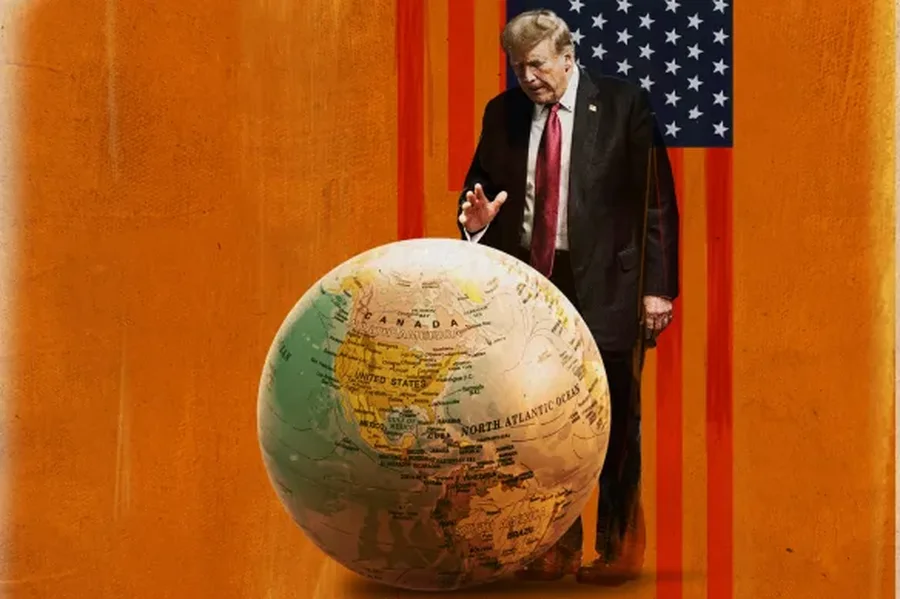
The US's Western allies appear to be prepared for the return of Donald Trump, still hoping for the best but largely unprepared for what could turn out to be a worse, chaotic and disorienting future.
The build-up to his inauguration has sent a flurry of signals, as Trump announced tariff increases against Canada, China and Mexico, vowed to buy (and if not) occupy Greenland and the Panama Canal, and used his power to pressure Benjamin Netanyahu to accept a ceasefire in Gaza that the Israeli prime minister had resisted since May.
At the same time, his pick for Secretary of State, Marco Rubio, testified for 4 and a half hours before the Senate Foreign Relations Committee that in terms of breadth of knowledge and views, he resembled less Steve Bannon and more James Baker.
If Rubio and the State Department are to have an impact on foreign policy, the question in Europe is whether Trump will depend more on his chief of staff, Sue Wiles, and his national security adviser, Mike Waltz.
Finding signals amidst all this noise, distinguishing between threats that predict action versus the chaos of bargaining, and finding justification for the administration's decisions, is keeping bewildered foreign diplomats in Washington up at night.
Trump has become more outspoken about his unpredictability as his “modus operandi.” He told the Wall Street Journal that he was pleased that Chinese President Xi Jinping “respects me because he knows I’m crazy.”
Unfortunately, the fear of the madman fades unless he does something truly crazy every now and then. For this reason, many expect Trump to soon start trying to upset opponents and prove that his “America First” approach is serious.
On his first day, he can't hope to end the Ukraine war in 24 hours, begin mass deportations, or impose 25% tariffs on the entire world, but he is expected to reveal which foreign countries are his targets, starting with Canada, China, and Mexico.
Canadian diplomats were surprised to find themselves on the front lines alongside China. They spent much of last week in Washington trying to whisper in the ears of Republican senators.
Despite its internal divisions, Canada claims it has three levels of retaliation against $150 billion in U.S. imports if Trump launches his trade war.
Mexican President Claudia Sheinbaum, who met with Latin American foreign ministers on Friday to devise a joint strategy against Trump, insists the country has its own plans if mass deportations from the U.S. begin.
China has been waging its retaliation for a year and is looking for allies.
But in Europe, where popular hostility to Trump is greater than anywhere else, the foreboding is strong. German Economy Minister Robert Habeck predicts grimly that US tariffs against the EU will harm German industry. Even Friedrich Merz, widely tipped to be Germany’s next chancellor, argues that EU unity is a prerequisite for seizing the opportunities for a successful relationship.
In general, European diplomats insist they are not grasping at straws when they say the Trump administration’s policies may be more nuanced than its rhetoric. In 2016, Trump threatened 30% tariffs on Mexico, but ultimately agreed to renegotiate the North American Free Trade Agreement. The EU finally avoided tariffs on cars by agreeing in 2018 to buy more American liquefied natural gas and soybeans. Similar deals are being worked out this time around.
The transcript of Rubio's Senate confirmation hearing suggests the US is not ready to burn bridges. His testimony repeatedly referred to America's global role and the importance of cultivating alliances, even acknowledging a preference for working with Mexico to combat drug cartels.
On Ukraine, he said the administration's official position was that "the war had to end" and that required territorial concessions from both sides. But before a ceasefire could begin, Ukraine needed to be in a strong negotiating position, Rubio said, adding that what Vladimir Putin had done by invading Ukraine was "unacceptable."
"Putin's goal now is to have maximum power so that he can essentially impose neutrality on Ukraine, get stronger and come back and do it again in 4 or 5 years. And that's not an outcome that I think any of us would accept."
Asked whether Ukraine should offer military neutrality, he refused to accept it, saying: "Even if the conflict were to end, Ukraine must have the ability to defend itself."
A British official commented: "This does not sound like a neutral Ukraine left without security guarantees."
On NATO, Rubio said he stood by the 2023 act that bars the US president from withdrawing from NATO without Senate approval. In general, his demand that Europe contribute more to its defense is a perfectly familiar refrain of every American politician over the past two decades.
Only once did he hint at a larger reframing of security when he asked: “Should the role of the United States and NATO in the 21st century be primarily one of defense or as a deterrent to aggression, with countries in the region taking on more of that responsibility by contributing more?”
Rubio, known as a China hawk, insisted he did not believe Beijing wanted military conflict, saying: “The Chinese have basically come to the conclusion that America is some kind of tired, declining great power. That they are on a path over the next 20 or 30 years to naturally replace us, no matter what happens. And I think their preference is to not have any trade and/or armed conflict for the time being, because I think they could interrupt what they believe is a natural progression.”
On seeking alliances against China in the Indo-Pacific, he said: “It would be a mistake to go in with a Cold War mentality of asking countries to choose sides.” He framed the conflict with China in terms of making the American economy and that of its allies less dependent on China.
He did not advocate a simple withdrawal from the Middle East, refusing to abandon the Syrian Kurds to the Turks, a position that would be welcome in Europe.
Rubio said the Trump administration would be the most pro-Israeli in history, but opposed Israel's return to control of Gaza: "The real question for the Palestinians is who is going to govern in Gaza in the short term and who is going to govern ultimately? Will it be the Palestinian Authority or some other entity? Because there has to be someone."
But do Rubio's views matter?
Former Australian Prime Minister Malcolm Turnbull warns that in the new American administration there will be only one decision-maker: Donald Trump.
Turnbull advises that as executive orders emerge from the White House next week, many of them hostile to America’s allies, the first test will be confronting the bullying. Then he must convince himself that there is common ground, because there is only one question, commercial and political, that Trump ever asks: “What’s in it for me?” / The Guardian


Lini një Përgjigje