


 Shkruar nga Pamfleti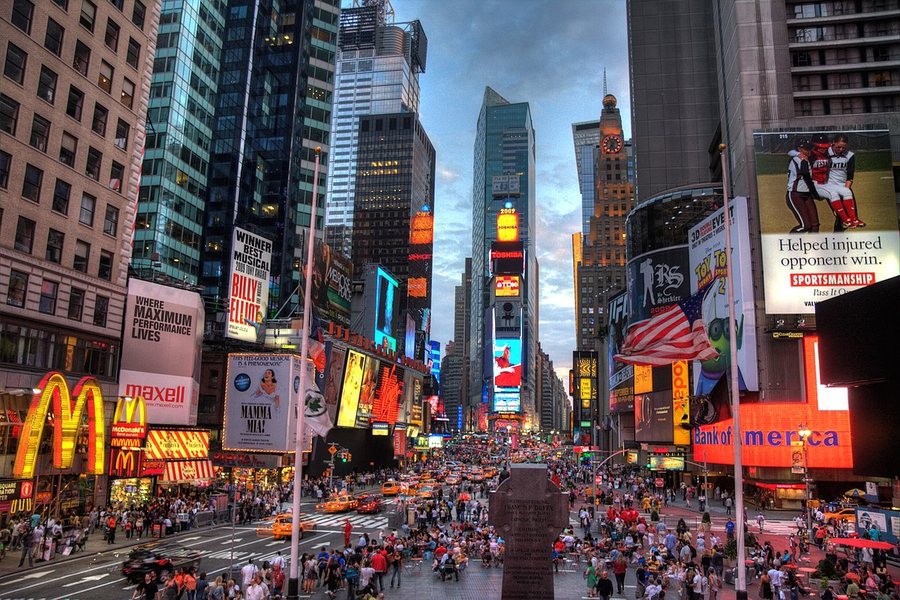
The New York Police Department has 18 ways to control and wiretap citizens. And it's doing it massively without any authorization from the courts and without limits.
In the first reports that began circulating about security footage of Tyler Robinson, the suspect, who has not yet pleaded guilty, in the murder of Charlie Kirk, some sources claimed that he was limping intentionally, in order not to be recognized by software that identifies people by the way they walk.
The truth is that each of us has a unique way of walking, as Nanni Moretti said, “each way of walking is a different conception of the world.” However, it is much more likely that Robinson had a gun hidden in his pants, which hindered his movements. However, the idea that someone can be identified solely by the way they walk is disturbing.
But even more disturbing is what is actually happening to the citizens of New York. They are physically monitored by thousands of security cameras and drones, and also monitored on social media. The police have data on almost everyone: where they go, who they hang out with, and why.
These developments are covered in detail in a New York Times article, which shows that digital surveillance, although a well-known privacy problem, has now reached a level that few fully understand.
According to the newspaper, the New York police have spent over $4 billion collecting data on citizens without any court order or legal authorization. Journalist Elizabeth Daniel Vasquez writes: If you drive, police algorithms can accurately predict what time you will get home next Wednesday and what route you will take to get there. The city's computers are constantly and passively processing this data, in case a real-life version of the film Minority Report is needed later.
What makes this surveillance even more disturbing is that it is targeted. If you are a teenager living in the slums of Brooklyn, you are likely to end up on a criminal gang database with a list of 13,000 names, 99% of whom are African-American. And once you are there, you are already part of a nightmare.
If you post on social media, you may be contacted by unknown "friends" who will ask you strange questions, in fact, they are undercover agents. As a suspicious person, you will often be stopped and may be taken to the police station for questioning. In those cases, your cell phone will be confiscated only in 2024, this happened over 24 thousand times. Through your phone, they will certainly find other compromising data. They may also take a DNA sample. Once you are targeted as suspicious, everyone will avoid you: other children will not talk to you, parents will isolate you. As Vasquez writes: Paranoia is spreading like a contagious disease.
The case of Henry Jelani is significant. He was arrested in New York for a double murder, simply because the description of the perpetrator was: African-American and tall. Moreover, he had given several Facebook likes to a local group that the authorities considered a gangster. After 19 months in prison and 9 months in solitary confinement, Jelani was released and the charges were dismissed. But everything remains in his file.
Another case is that of Leqaa Kordia, a Palestinian woman living in New Jersey. Last year, she participated in a protest in front of Columbia University. She was arrested and immediately released, as she had not broken the law. However, her file was handed over by the New York police to the federal immigration agency (ICE), which is now trying to deport her.
Even more shocking are the cases related to reproductive rights. If you are a woman from Utah, a state where abortion is illegal, and you decide to go to New York to terminate your pregnancy (where it is still legal), the authorities in your state can request and obtain records from the New York police to find out if you have been to a clinic and with whom. Your file will be enriched even further. If you were once an at-risk teenager, now you are a blackmailed adult. Anyone can access your information: that you were part of a gang, that you had an abortion, that you criticized the president on social media, or that you participated in protests.
It is said that more and more people now go to protests without their cell phones, for fear of being identified. But the sources of surveillance have now become endless. And the laws that should regulate this reality do not exist.
Under the Trump administration, this form of control has been reinforced. The Department of “Government Efficiency” this year called for the removal of barriers between different databases, with the aim of creating a unique file for every citizen. Meanwhile, the federal government has significantly expanded contracts with Palantir, the company founded by Peter Thiel, a figure some describe as obsessed with the “Antichrist” and who today represents a new, powerful form of the technological deep state./ Corriere della Sera







Lini një Përgjigje