


 Shkruar nga Pamfleti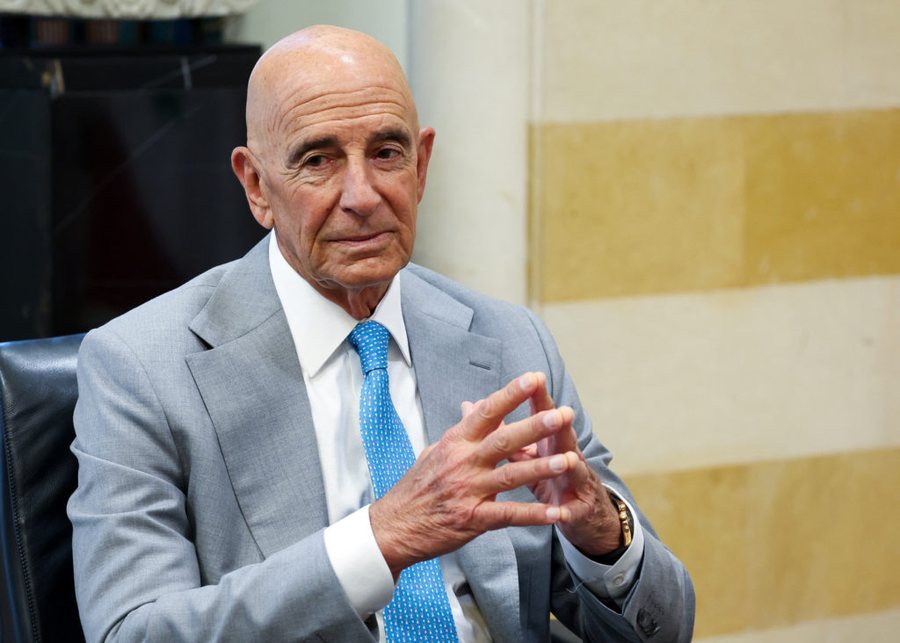
Tom Barrack Topples the Empire: Regime Changes Don't Work
If someone is looking for a “for dummies” version of the new National Security Strategy of the United States, they don’t need to read the long document in Washington. They just need to listen to the last words of Thomas “Tom” Barrack, the US ambassador to Turkey and Donald Trump’s special envoy for Syria, a powerful businessman, personal friend of Trump and financial savior of Jared Kushner, the president’s son-in-law.
Barrack is not just one of the millionaires who surround Trump. He is also an old “connoisseur” of the Arab world and the petro-monarchies of the Persian Gulf, where he has made billions through investments. But recently, he has decided to speak openly and without diplomacy: “ Regime changes have never worked. Since 1946, the US has intervened on 93 occasions to change governments, all of which have resulted in failure .”
Barrack's statement is not a slip of the tongue. It coincides precisely with the strategic reorientation that Washington is undertaking: the end of expensive and fruitless military adventures, and the beginning of a new era of economic and geopolitical "deals". The Americans are no longer willing to intervene like "cowboys" in every regional crisis. If they intervene, they do so to protect their interests, energy, technology and economic influence.
This also explains Donald Trump's "love" for peace treaties: the mediation between Azerbaijan and Armenia (with the US taking control of the strategic Zangezur corridor for 100 years), the peace initiative between India and Pakistan (with an interest in trade involving China), and the attempt to bring together the leaders of Congo and Rwanda at a table covered with... valuable minerals.
This new orientation divides the world into two parts: with the small ones, America speaks the language of business and the dollar. With the big ones, like Russia and China, in the language of high diplomacy and power negotiations. Europe? Not even mentioned. In Trump's eyes, it is bureaucratic, parasitic and weak. In this great game, Europe remains a spectator, neither loved nor respected.
Now that the US is effectively withdrawing, it is precisely those Europeans who once scoffed at warnings of an independent foreign policy and autonomous defense who are shouting the loudest. They are talking about “betrayal,” about “Western division,” but they forget that these are the same ones who supported the invasion of Iraq, who helped destroy Libya, who militarily controlled parts of Africa, and who remained silent (or collaborated) in the massacre of Palestinians.
When German Chancellor Friedrich Merz shamelessly says that “Israel is doing our dirty work for us,” we are not just facing American cynicism. We are facing a race in which Europe has also played its own dark role. /Adapted from “Inside Over”




Lini një Përgjigje