


 Shkruar nga Pamfleti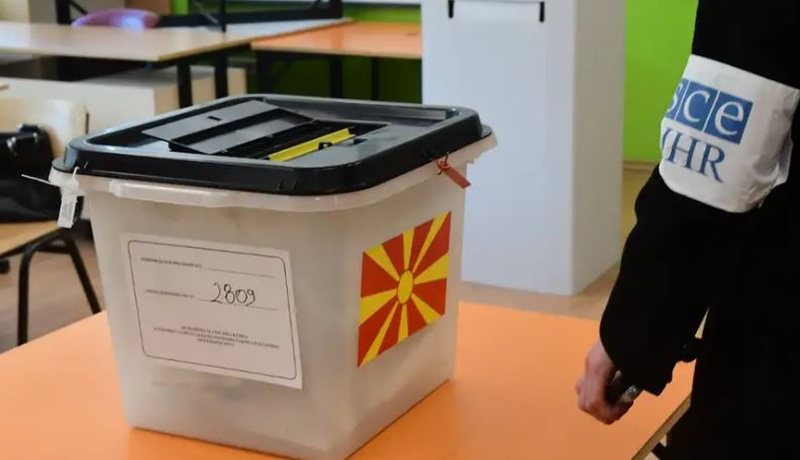
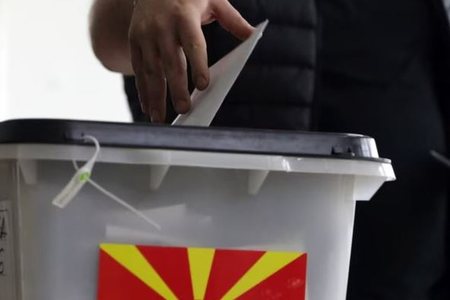
The presidential election in the first round on April 24 marked a clear victory for the national-conservatives, the opposition VMRO-DPMNE party in North Macedonia.
Opposition candidate Gordana Siljanovska-Davkova, a 70-year-old retired professor, secured twice as many votes as incumbent rival Stevo Pendarovski of the ruling Social Democratic Party (LSDM), who received less than 20 percent of the vote.
Disappointed with the country's slow EU accession process, weak economy and prevailing corruption, many voters supported the opposition candidate in the first round of the presidential election. Analysts consider this result as a litmus test not only for the second round of the presidential race, but also for the tendency of the electorate to vote in the parliamentary elections, which take place on the same day.
"I think there is a lot of possibility for the government to be changed by the voters," Daniel Braun, head of the Konrad Adenauer Foundation's representative office in Skopje, said to DLF (German National Radio), a foundation close to the German Christian Democratic Party. According to him, this tendency has to do "firstly, starting from the fact that the government's records are depressing in many areas. Corruption and state dysfunction are seen everywhere.”
Failure to fulfill promises and the controversial change of the country's name
The Social Democrats came to power in 2017, promising NATO membership, the launch of membership negotiations with the EU and the fight against corruption. Only one of these promises has been fulfilled: North Macedonia joined NATO in 2020 after reaching a compromise on the name of the country with the suffix "North" in the dispute with Greece.
This difficult compromise with its southern neighbor, which infuriated nationalists in North Macedonia and sparked mass protests, did little to open the door to the EU for this small Balkan country of 2 million people.
Bulgaria vetoed the EU membership negotiations
In November 2020, Bulgaria vetoed the opening of membership talks with the EU, demanding concessions related to many Macedonians' direct historical and cultural ties to their identity. This dispute was partially resolved after an agreement mediated by France, which led to Bulgaria's demands being included in the framework of negotiations between North Macedonia and the EU in June 2022. The new conditions for the opening of the negotiations were for North Macedonia to include the small Bulgarian minority of 3,000 members in the constitution as a national component.
But the necessary majority of votes for this constitutional amendment was not reached in the parliament. Talks with the EU have remained at a standstill. The nationalist opposition led by VMRO-DPMNE rejected the compromise, fueling a sense of insecurity among ethnic Macedonians and mobilizing them against the government.
Weak economy top concern for voters
Massive corruption and the government's inability to pull the country out of economic stagnation, high inflation caused by the COVID-19 pandemic, and Russia's war in Ukraine have given support to the opposition.
According to the World Bank, North Macedonia in 2024 will have the lowest economic growth for the second year in a row and the highest deficit compared to other Western Balkan countries. In 2023, North Macedonia was ranked two points higher on Transparency International's corruption index list, but it still continues to have "serious problems with corruption."
Tensions between the opposition and the Albanian parties
Despite disputes with neighboring countries, neither Greece nor Bulgaria was in focus in the opposition's electoral campaign. The head of VMRO-DPMN dominated the field in the confrontation with the largest Albanian party, which co-governs, DUI. He clearly stated that he will not accept co-governance with this party, which he considers corrupt. But co-governance with the Albanians, who make up the largest ethnic group in North Macedonia, is considered a factor of stability in the country.
Since the social democrats are in power and co-govern with the Albanian party DUI since 2017, Albanians have been elected to important leadership positions such as speaker of parliament, foreign minister and even a prime minister in the last three months of the governing mandate. These divisions of posts with important functions have encouraged Macedonian nationalists to complain about the "Albanianization of the state".
However, assessing the weight of the vote of the Albanian electorate and trying to calm the Albanian community, the head of VMRO-DPMNE has stated that the second largest alliance created by Albanian parties can be part of the next government.
The Social Democrats play with the EU card
Despite the deep defeat in the first round of the presidential race on April 24, the Social Democrats have stuck to their slogan "we do not retreat from the European future." However, polls show that this message does not appeal to voters, who are tired of compromises with neighbors and an uncertain future in the EU.
Aleksandar Krzhalovski, director of the "Macedonian Center for International Cooperation" told DW that "the government has pinned all its hopes on a single card" in the electoral campaign, and has "neglected other important issues such as the fight against organized crime and corruption, which citizens and international reporters consider to be the biggest problem."
Former Prime Minister and Chairman of the Social Democratic Party, Dimitar Kovacevski during the campaign apologized for the mistakes made in recent years, but addressed the voters with a strong warning: "These elections will be decisive for the future of North Macedonia: or we will move towards a progressive society, towards the EU, or we will go back to the time when we had isolation and ethnic conflicts", he said./DW


Lini një Përgjigje