


 Shkruar nga Pamfleti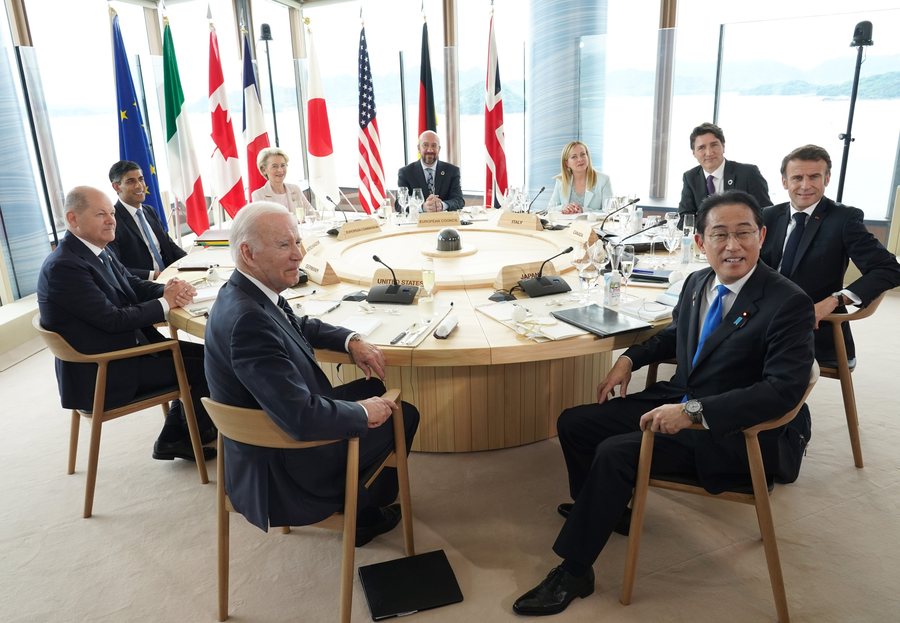
And regardless of which party citizens vote for in Europe, the policies remain intact, which is increasingly encouraging a shift towards more radical populist political groups.
Over the past decade it has become an inevitable cycle: every election that upsets the interests and expectations of EU technocrats is met with predictions of the bloc's inevitable disintegration.
Despite these predictions the shock victory of Geert Wilders' Party for Freedom (PVV) in the Dutch general election last month looks different. It seems to show the symptoms of a disease deeper than the normal economic shocks that have previously threatened the existence of the EU and, more specifically, of the European Monetary System.
The traditional source of instability within the eurozone has been economic, especially the austerity policies imposed by the European Commission in the so-called peripheral countries such as Italy, Greece and Spain. While these measures have usually contributed to a degree of political backlash (often accompanied by the threat of exit from the currency), the European Commission and key members of the bloc have generally devised technical solutions that solve the underlying problem.
Their aim is always to soften the stance towards the EU rather than to resolve the prevailing political anger. From time to time, the populist parties elected after this discontent even "embroider" from Brussels and become willing servants of neoliberal politics. Italy's new government, led by Giorgia Meloni, is a great example of this process.
But as the latest round of elections across Europe has illustrated, this disenchantment has now taken root in the heart of Europe, in countries such as the Netherlands, France and even Germany, long considered key eurozone countries.
In France last year, President Emmanuel Macron was re-elected again, but the election also marked the best result for Marine Le Pen's National Assembly Party, and Macron's party lost its majority in parliament. In Germany, Chancellor Olaf Scholz's Social Democrats are currently in third place in Germany behind the right-wing populist Alternative for Deutschland (AfD), which has increased its share of the national vote to 21% in recent polls.
Exacerbating Germany's political fragmentation is Sahra Wagenknecht, who previously served as a member of the German Bundestag for the left-wing Die Linke. She has since announced her departure from the party and officially formed a new left-wing populist party, Bündnis Sahra Wagenknecht. Early polls give the party an average support of 14% nationally, from the same group of voters currently drawn to the AfD.
Then there is last month's result in the Netherlands. PVV is led by 60-year-old Geert Wilders, a right-winger long known for his aggressive anti-Islam, anti-immigration and anti-EU rhetoric. After last month's election, Wilders now leads the largest political party in the Netherlands, winning 37 of the 150 seats in the Dutch lower house (and almost a quarter of the popular vote).
While some commentators have suggested that it will be difficult for Wilders to form a governing coalition, the leader of his centre-right rival, the People's Party for Freedom and Democracy, has already shown some willingness to "tolerate" in order to do not support PVV. In Sweden, whose main parties previously cooperated to expel extremists from government, it is now governed by a coalition that includes the far-right Sweden Democrats.
The difference between this populist revolt and those of the 2010s is that it is not a primary reaction to economic discontent; it is a symptom of a wider reshuffle in European conservatism.
Seen more as the Donald Trump effect in the Republican Party, these figures are moving to transform a conservatism defined by traditionalist instincts into an anti-establishment and, in many cases, deeply xenophobic and racist movement.
The perception that the continent is facilitating uncontrolled immigration is the main driver of this trend. In 2022, there were 1 million asylum applications in the EU, 52% more than in 2021 and the highest level since 2016.
Further contributing to this problem is the fallout from the Ukraine conflict, which Washington has apparently decided to leave Europe to fund, as well as the rebuilding of an increasingly dysfunctional nation from which millions have already emigrated. in other parts of Europe.
The arrival of large numbers of refugees and irregular migrants has put the EU's asylum system under great stress, particularly as member states have failed to agree on a balanced method of sharing responsibility for asylum seekers.
Furthermore, the uneven cost burden of climate mitigation policies has also played a major role in fueling discontent across the EU. This began with protests in France, and has recently emerged in the Netherlands, where the current government appeared to be attacking Dutch farmers for huge increases in nitrogen emissions, which in turn led the Rutte coalition to propose significant cuts in agricultural production to meet climate protection obligations. This showed resentment because government policies for decades had encouraged farmers to intensify production, despite the environmental costs.
After all, these are structural social problems and are not easily remedied through simple technical economic adjustments to the currency union, or softening of the rules of the Stability and Growth Pact. The issue is further complicated by the fact that the European parties of the Left have become the avatars of economic austerity and are increasingly seen as removed from the problems facing ordinary citizens.
European voters have been offered nothing but "no alternative" politics from both the mainstream left and right during the last few elections. And regardless of which party citizens vote for in Europe, the policies remain intact, which is increasingly encouraging a shift towards more radical populist political groups.
Like the election of Donald Trump in 2016 (and the growing possibility of his return to the White House in 2025), the political tremors experienced in Europe today have been building for decades and are a systematic failure of governments to address the growing anger of public about the nature of civil society across Europe.
The populist right has so far been the biggest beneficiary: its leaders have strategically positioned themselves as political outsiders and critics of the "ruling elite", enabling them to tap easily into the heart of popular anger that is directed at the EU and national governments are seen as its mediators.
Consequently, the material fact and the idea of Europe is falling apart and the EU is facing a situation not unlike that of post-communist Yugoslavia. In that case, once the organizing genius of Tito's government disappeared, the delicate ties between the country's states together frayed and eventually fell apart, often violently.
Similar kinds of fractures are now appearing across the European Union, even within the wealthiest countries, which have long felt that they are being unfairly burdened by so-called Mediterranean "immigrants".
The threat to the EU is very real and accompanied by the temptation that its leaders may have to push once more for "ever closer union", further alienating voters they have failed to interpret or understand. Apparently, predictions about the fall of the European Union do not seem to be excessive. /Adapted "Pamphlet" from "Unherd"





Lini një Përgjigje