


 Shkruar nga Pamfleti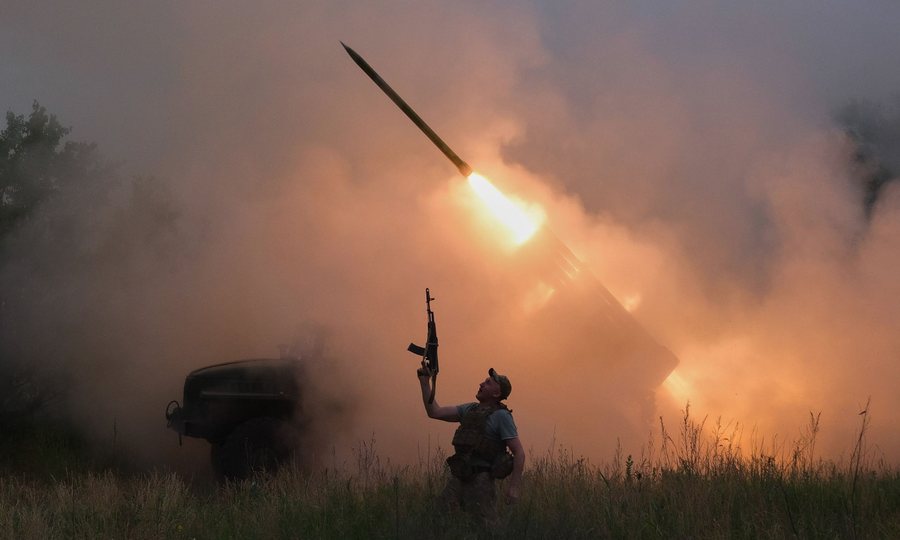
Drones monitor every movement near the front line, as Kiev warns that the danger zone is rapidly expanding...
Ukrainian soldiers now need several days to cross the so-called "death zone" to reach advanced positions on the front line, and this route is often considered the most dangerous part of their mission, a senior Ukrainian Defense Ministry official said.
The “death zone” is an area near the front line, filled with drones that can detect and strike any moving object, be it a soldier or a vehicle. Its width varies by sector, but it usually extends 10 to 20 kilometers from the front. Ukrainian officials warn that this zone is constantly expanding.
First Deputy Defense Minister Oleksii Viskub said the area could double this year. According to him, infantry units lose several days to reach their positions, moving under the constant surveillance and threat of Russian reconnaissance and attack drones.
Viskub emphasized that it is precisely the passage through this space, also known as the "dead zone", that poses the greatest risk to the lives of Ukrainian soldiers. He did not rule out the possibility that in the future access for human personnel to this area will become practically impossible.
For this reason, Ukrainian authorities are trying to replace soldiers with unmanned systems, mainly robotic ground vehicles, for supply and transport missions in high-risk areas.
The ever-expanding “kill zone” reflects the rapid growth of drone use in warfare. The conflict is increasingly turning into a showdown between automated systems, as Ukraine massively expands production of unmanned aerial and ground platforms.
Andrii Hrytseniuk, executive director of the Ukrainian state-backed innovation platform Brave1, stated that in 2022 artillery dominated the battlefield. Today, according to him, more than 80 percent of strikes are carried out by drones.
According to the data he presented, over 95 percent of these attacks are carried out by drones manufactured in Ukraine. The domestic defense industry has seen rapid growth since 2022, with the number of drone manufacturers increasing from around 10 to more than 500.
The Ukrainian arsenal of unmanned systems includes platforms for reconnaissance, attack, interception, maritime operations, ground missions, and long-range strikes.
Some drones use radio links, while others operate via fiber-optic cables to evade electronic jamming systems. Newer models, equipped with artificial intelligence, can continue searching for targets even after losing contact with the operator.
"The number of drones has increased dramatically," Viskub said, revealing that Ukraine is now delivering tens of thousands of interceptor drones every month for air defense. He clarified that these systems are not used against infantry or military equipment.
In parallel with interceptor drones, which have become a mainstay of Ukrainian air defense, Kiev is also prioritizing medium-range drones for attacks on Russian positions and supply lines up to 300 kilometers away.
Ukrainian officials and analysts estimate that this strike campaign has entered a successful new phase of the war, causing significant disruptions to Russian logistical networks, especially in southern Ukraine and around occupied Crimea.
Last month, the Minister of Digital Transformation and responsible for defense technology, Mykhailo Fedorov, stated that Ukraine had consciously invested in this direction and that the results are already visible.
"The data clearly shows that the more enemy forces are destroyed in operational depth, the fewer attacks are carried out on the front line," he said, calling the use of medium-range drones one of Ukraine's most important technological advantages.
According to Viskub, the real impact of technology on warfare and the way it is changing military operations is often underestimated. He added that many commanders may not have traditional military training, but possess advanced skills in using data and technology, driving innovation on the battlefield.
"Conventional warfare, with infantry, artillery and people directly facing each other, is unfortunately now a thing of the past," he said. / Pamphlet /






Lini një Përgjigje