


 Shkruar nga Nikica Korubin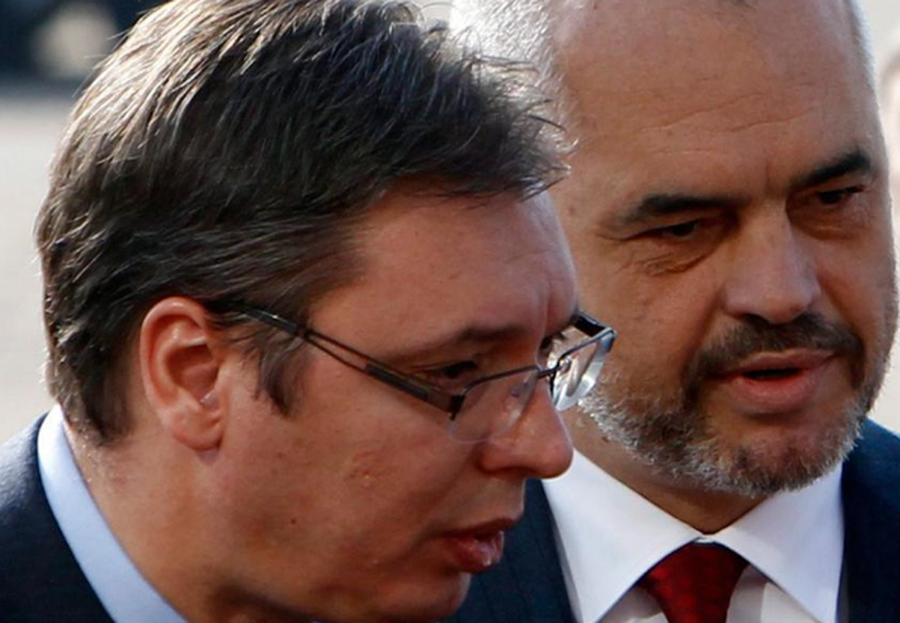
"Open Balkan" is the legalization of Serbian hegemony, which needs the anomaly: the "Serbization" of the Albanians, namely the "Serbization" of their political elites...
That in relations with Albanians, "Serbian tyranny" has dominated them, this is nothing new. But the biggest surprise happened when, with the "burden" of pro-Serb domination in all aspects of life, today North Macedonia is a member of NATO and a candidate country for the EU, which meanwhile with all its strength, namely, among others, with the same Serbophile forces, they are trying to block it, as far as they can reach.....
They are disguised with all kinds of makeup (media, academic, analyst, church, business, patriotic, non-governmental) but they wear only one mask with more difficulty: the European-Macedonian affiliation outside the Serbian world. There is no acting here, here they are sincerely and devotedly "Serbs greater than Serbs", this well-known syndrome of the expression of submissive loyalty...
North Macedonia, European and independent, is not the state they want... But if the Macedonians have shown themselves to be easy "prey" in this brutal propaganda-emotional game, then how is it possible that the Albanians were also "Serbized". Or, to put it more clearly, why their political establishment constantly shows loyalty to the "Serbian world".
Albania's closeness to Serbia in the "Open Balkans", namely to the "Serbian world" expresses the paradox of this loyalty... "Open Balkans" is the legalization of Serbian hegemony, which needs the anomaly: the "Serbization" of the Albanians, namely " serbization" of their political elites.
And, if in the case of Macedonia, the Albanians over the years were the main factor that the country was not completely "Serbized" as early as the 90s, and as a result became independent and rose on contemporary political foundations (Temporary Agreement for membership in UN, the Ohrid Agreement, the Prespa Agreement and the Agreement with Bulgaria), precisely the Albanians became "eyesores", i.e. the main obstacle to the inhibitors of the complete and irreversible stabilization of the state, through effective membership in the EU. Therefore, they must definitely be taken advantage of...
And this is precisely where the silence of "public opinion" for the "Open Balkans" project lies, namely the silence of all Macedonian parties (expected) and Albanian parties (unexpected)... Although "anti-Bulgarianism" came out of the public's knowledge and in a "blitzkrieg" operation, however, the main driving force in Macedonian society remains "anti-Albanianism", so much desired in a "pro-Serb" environment that they want to install in North Macedonia.
But who is the main problem in this problematic and paradoxical situation? Striving for full control. First the control over the citizens, then the control over the narrative, and finally the control over the ethnos. Although all the instruments are with them, the citizens are not the narrow circle of the political establishment, while the narrative is almost retrograde (maps, flags, myths)
But, the attempt to simplify ethnos seems more interesting, with a complete denial of the cultural and civilizational nuances and finesse of the Albanians, the word goes (Albanians in Kosovo and Albanians in the south and north of Albania, Albanians in North Macedonia) are not one "the same measure" which a "leader" will control, just as the "Serb hegemonic-chauvinistic world" is committed to the equalization of all Serbs wherever they are, so that someone can "bring" them into a single state ...
Therefore, over the years, Macedonians were "taught and trained" to always be "victims through concessions", being "taught" with anti-Albanianism and, as necessary, anti-Bulgarianism, with constant defeatism and a de facto blockade of society.
In fact, what do we have today that we should not have? We have our country and should we not have it? We have an incomplete historical right to the name Macedonia, and should we not have it? We have a civil state with clear ethnic elements, and should we not have it? Albanians are our main "defenders" from the real danger of Serbian hegemony, should we not have them?
Maybe, what should we have, so that the "elites" are satisfied, at the expense of the citizens?
Are the elites Macedonian? Do partners and allies know them, do they know the risk? What is the status of the Macedonian Orthodox Church at the moment and all the state wealth that has been made available to it over the years? Whose cultural heritage do they own?
Precisely for this reason, the "public" will more and more often and harshly "rent" us with the old topics, while the "big ideas" from the past seek their way to the citizens, over whom they lose control. Even the European leaders of the region (Albin Kurti) will be to blame for the control they do not have over Albanianism.
However, the Macedonian issue is not in the hands of the Macedonians. If it were, we would never be able to see the Albanians, our fellow citizens, our allies, with the same eyes in this hegemonic world.
Maybe, once we will be able to understand who our interest is? The interest of the citizens and the only state they have, North Macedonia? At least, most of us./ Pamphlet
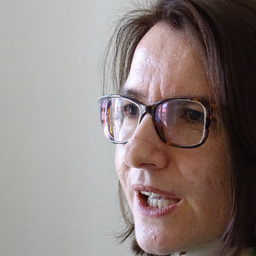
*The author is a Macedonian intellectual, university lecturer and former member of parliament


Lini një Përgjigje