


 Shkruar nga Pamfleti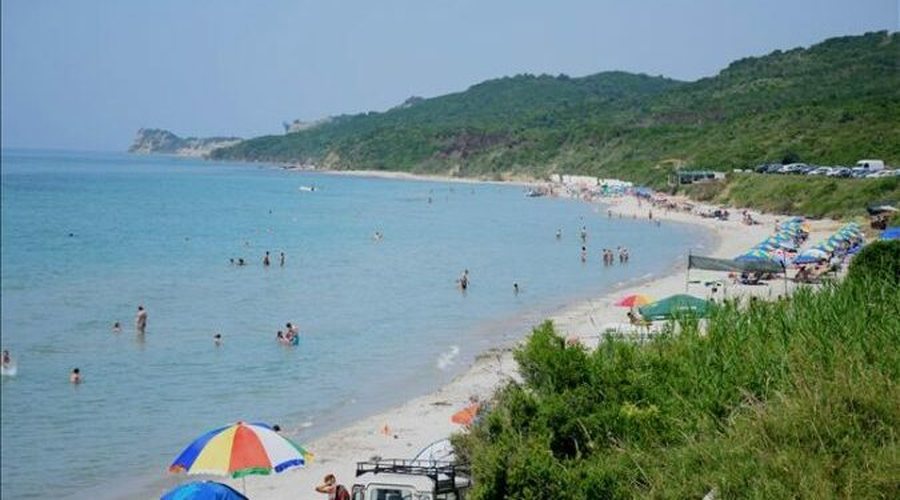
The complacency of a part that produced "prices more than salty", seriously risked turning the "boom" created after a good 2023 into a "pit for everyone".
Anisa Ceno, hotel manager in Vlora, tells A2: "In terms of prices, on average in the Vlora market we had a 15-20 percent. This is due to the devaluation of the euro. Consequently it affected the pockets of our European customers.”
Just as they were lured by the advertisement and posts of the country's beauty on social networks, along with the geographical position and cultural connections, just as quickly the Italians began to do the opposite this summer.
The bad weather for "price abuses" that had the south of the country as its epicenter, produced a chain reaction in almost the entire coastline of the country, leaving hundreds of hotel rooms and thousands of empty tents and deckchairs. This at least until mid-July.
As a result of the unjustified increase in prices, the best example of a model that develops badly, unlike a year ago when the capacities were almost exhausted, at the beginning of July on the platforms AirBNB and "Booking" you could easily find apartments with daily rent or a room in hotels in almost the entire south of the country.
Rrahman Kasa, head of the Albanian Tourist Union, declares: "The hotels themselves have confirmed to me that they had created WhatsApp groups where they recommended each other to raise the prices that this year there was a very high demand. Which turned out not to be true. They were sorry. They lowered the prices later, but the impact was there."
"It takes years to build something and only a second to destroy it." This statement retains its meaning even in the context of tourism.
After months of double-digit growth, tourism in July grew by only 2.7 percent, giving clear signs of slowing down and confirming the situation that tour operators and accommodation structures reported in the first part of this month. But the increase in prices is not the only reason for the "tourism obstacle course" this year.
According to tourist operators, their flow has decreased compared to previous years, while the visa waiver has pushed them to other destinations. And this tendency was normal and expected. Both Albanian citizens and those from Kosovo were the most regular visitors to the sunbeds, so there is no surprise that they are empty.
However, the second half of July overturned the created situation by returning tourism to the levels it left last year. Albania was visited by over 6.3 million foreigners until the end of July. Data from the Institute of Statistics show that compared to January-July of the previous year, the number of tourists increased by almost 1.2 million or 23.2 percent.
Data from INSTAT show that most of those who visited Albania until July, over 65 of the total, were from European countries. The rest result from the United States of America, East Asia, the Pacific and Africa.
With August behind us, which over the years has marked the end of mass summer tourism, operators' expectations are for an even better autumn than the one a year ago.
Meanwhile, the new problems of tourism in the country did not miss this year either the lack of labor force. Bars, restaurants or hotels in the country were and continue to be looking for waiters, bartenders, cooks, cleaners, as well as for drivers, guides, cicerones and managers.
And as the tourist season, at least the massive summer one, is coming to an end, there are many questions that are being raised and waiting for answers: Why were the sunbeds empty? Are there more or less foreign tourists? Has patriotic tourism come to an end? Was the price increase abusive and so on./ A2CNN




Lini një Përgjigje