


 Shkruar nga Andrea Muratore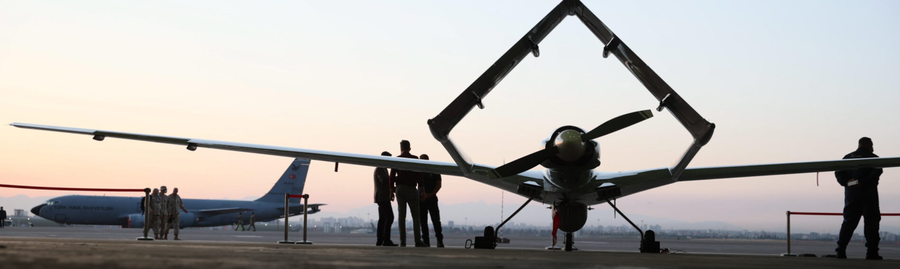
The rivalry between Ankara and Tel Aviv is drawing a new map of tensions that stretches from the Mediterranean to the Horn of Africa. This scenario pits two powerful armies against each other, shifting the conflict from tactical battles to a strategic clash. The possibility of a frontal war between them is now being analyzed as a real risk to the stability of global security...
Are Israel and Turkey destined for war? Will the Middle East in the coming years be the scene of a smaller-scale “Thucydides Trap” between Tel Aviv and Ankara, a concept often cited as the historical backdrop for the inevitable clash between China and the United States?
At the moment, the confrontation between them in the region is wide-ranging. In Syria, where Turkey has its own strategic interests and fears Israeli assertiveness in the south; in Cyprus, where Ankara controls the northern part through an internationally unrecognized state, while Nicosia sees Tel Aviv as a security provider; and in the Horn of Africa, where Israeli support for the secession of Somaliland clashes with Turkish support for Somalia.
Recep Tayyip Erdogan is forging stronger ties with Saudi Arabia and Pakistan, trying to prevent a clash between the United States and Iran, which would give Tel Aviv more influence.
On the other hand, the latter sees the United Arab Emirates and India as guarantors of its strategic alliances. The “chess pieces” are being positioned to create the ideal battlefield between the Turks and the Israelis.
It is a system of regional rivalries between powers with strategic projection, deeply conflicting interests, and strong, well-defined structures. However, there are restraining forces, such as the shared alliance with the United States and the mutual fear of international institutions.
But the reality is clear: the course of the conflict for the coming years seems set, and it remains up to the governments of Recep Tayyip Erdogan and Benjamin Netanyahu to divert it or not. In Israel, some expert groups have begun to question the possibility of a war with Turkey.
The scenario is critical. Ankara is unlike any of the adversaries Israel has faced in recent years. Hamas, Hezbollah, the Houthis, and even Iran itself, objectively have clear military gaps compared to Tel Aviv. Israel’s problem with these adversaries has not been achieving tactical results, but achieving strategic successes. In addition, in all of these conflicts since October 7, 2023, Israel has been guaranteed a large influx of American weapons. In a conflict with Turkey, this would not be certain.
First, because the Turkish armed forces are much more structured and accustomed to NATO standards. Second, because the battlefield would be multi-dimensional. Third, the considerable tactical parity (the use of F-16 aircraft by both sides) or potential parity (Ankara's intention for F-35 aircraft), would create a context where Israel would face the novelty of an adversary of equal size.
Some experts are already making calculations. Thus, the Israel Radar portal has published a detailed analysis of the development of a possible clash, hypothesizing a naval confrontation in the Eastern Mediterranean and a long-range conflict between the Turkish fleet and the Israeli air force.
This highlights two factors: on the one hand, Turkey's undoubted naval supremacy in terms of fleet; on the other, the awareness that the air advantage of the Israel Defense Forces (IDF) is the greatest means of deterrence that Israel can currently rely on.
But the question is: how long can this last? According to this portal, “Israel and its allies want to improve their operational readiness and send a strong message of deterrence.” Israel Radar also notes that Tel Aviv hopes to build a regional security belt.
Military analyst Ron Ben-Yishai points out that the Turkish Air Force is relatively weaker than the Israeli one, and the combination of the military power of Greece and Cyprus with the air power and intelligence capabilities of Israel could change the regional balance.
Israel is also carefully analyzing the presence of Turkish radars at Damascus airport. The HTRS-1000 systems could potentially be converted for dual use: for early warning of Israeli incursions or to identify targets deep behind enemy lines.
Meanwhile, Israel suffers from a lack of sufficient capabilities in the field of drones, where Turkey is recognized as a major power. In the event of an armed conflict, the dynamics on the ground would differ depending on whether the conflict involved proxy wars with external support or direct interventions, which would mainly involve Syria and the surrounding regions.
As political relations between the two countries deteriorate, this scenario is beginning to be analyzed as a potentially major challenge to global peace in the coming years. The main news is that Tel Aviv does not enjoy a clear tactical advantage.
This could significantly affect the regional security agenda and Israel's medium-term prospects. Turkey's determination to mediate from a position of strength in US-Iran relations, a scenario that Tel Aviv opposes in the long term, is a clear example of this challenge./ Prepared by: Pamphlet







Na mbytet me fjalen agjentë- ose shkruajeni ache de ose program