


 Shkruar nga Ben Andoni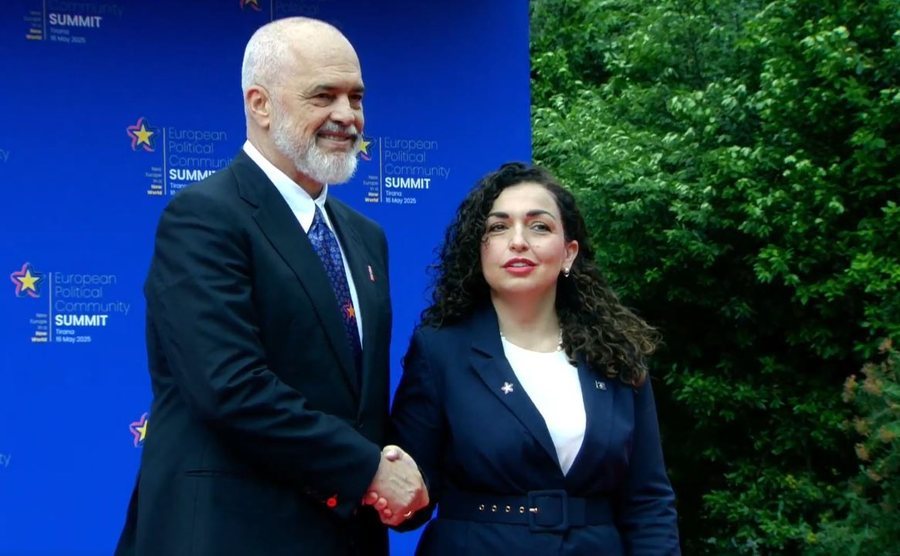
If Kosovo is to be recognized as an independent state, then the right to have their own state must be recognized for every minority in the world!
Kosovo, represented by President Vjosa Osmani, received the most direct messages for the continuation of the dialogue with Serbia at the Tirana Summit. At the same event, Serbia, with a different register for integration, openly challenged the EU and easily dribbled it right in Tirana. Ironically, Kosovo, with the cynical sovereignty of the acting Prime Minister, Albin Kurti, still has a full 150 million euros of EU funds on its back as austerity measures. To think that Serbia not only snubs it, but also challenges the EU, by not yet handing over the criminal Raidočić or the decision of President Vučić, who went to Moscow for the parade dedicated to the anniversary of the Victory over Fascism, then you understand that something is really wrong with the dialogue.
"First, we need to talk about lifting the measures by the EU, because this damages the credibility of the EU itself," Osmani appealed at the one-day summit of the European Political Community, where the concern was not about Kosovo at all.
What is left for Kosovo?! Nothing. Except patience and above all the possibility that the political class will constitute the parliament an hour earlier and have a much more pragmatic approach. The latter was understood by the PDK and LDK, who campaigned on the need to improve relations with Western partners and appealed to their anxiety about Kosovo's isolation at a dangerous geopolitical moment. What is hoped is that if Mr. Kurti manages to form a government, he should avoid nationalist pathos and really bring Brussels and Washington back to the interests of Kosovo, which now seems distant.
"The roadmap is very clear and we have spent a lot of time with the Kosovo-Serbia dialogue. The EU is legitimate in demanding that there be concrete advances on the political issue, on the municipal elections, on security issues. The demand is not a loss of credibility. We must get out of this confrontation that is blocking the situation. I hope that in the coming weeks we will resume the dialogue with Pristina and Belgrade," Macron said in Tirana, indirectly responding to the complaints of the Kosovo president, but also to what is known: A lot of time has been wasted.
But this cautious statement by the French president, although measured, shows that the interest in Kosovo is no longer what it was before and the time dedicated will not be the same. The challenge of Ukraine, the rise of nationalism, the divisions and new relations after the arrival of Mr. Trump are shifting the attention of Brussels, even though Kosovo is officially within the European agendas. The European Parliament recognizes Kosovo's path towards the EU as a potential candidate for membership and on the agenda for future enlargement. Moreover, the European Union actively supports Kosovo's European perspective and offers advice and support for its membership process, including the European Reform Agenda. Officially, the EU is also actively involved in facilitating the Belgrade-Pristina Dialogue, which is crucial for Kosovo's integration into the European Union. Moreover, if Kosovo is dedicated to Europe, even according to the Commission's own references, while Serbia openly challenges the EU and is opening chapter after chapter of its European projections, what kind of integration should be understood?! What is the meaning of democratic sense and integration standards when Kosovo shows with its journey and regular elections that in practice it is acting in accordance with this policy, while Serbia, with elections that were not welcomed by most EU countries and with unrest in the country, is far from it?!
The media passed it by coldly, but a few days ago and for the second year in a row, Kosovo failed to complete the procedural hurdles in order to secure the approval of the Committee of Ministers of the Council of Europe for membership in the organization. And, even more bitterly, Kosovo's request was not even on the agenda of the ministerial meeting. A fact that for official Belgrade, is considered appropriate (!) because only states can be members of the Council of Europe and Kosovo does not have such a status in the United Nations. Let's not forget that Serbia has a commitment that should not hinder Kosovo in its international integration!
What Serbia defends even after the verdict of Kosovo's non-independence by the Hague Court of Justice has an argument that is apparently clear: If Kosovo is to be recognized as an independent state, then the right to have their own state must be recognized for every minority in the world! This was the reason that the Kosovo authorities made a smart move when they turned to the International Court of Justice, which represents the highest court of the United Nations. It published its response on the afternoon of July 22, 2010 as an advisory opinion regarding the legality of Kosovo's declaration of independence in 2008. The words of the President of the International Court of Justice, Mr. Hisashi Owada, among other things, were: "The Declaration of Independence of Kosovo on February 17, 2008 did not violate international law."
Kosovo declared its independence in 2008 without violating international law, in the same way that every country that has declared its independence has followed, as an expression of the will of its citizens. The collateral of this decision was the terrifying number of 10,000 civilians killed, 800,000 forcibly displaced in 1999 alone, and the reaction of international forces was not without resistance.
Paradoxically, we are in 2025 and Kosovo is carrying austerity measures on its shoulders, Serbia's belief that Kosovo will never be a state, and a dialogue that no longer has a safe path in front of it. The EU's promise of membership is no longer a rip-off, as several member states do not recognize Kosovo's independence. Meanwhile, the EU's "status-neutral" approach to Kosovo is openly hindering its prospects and is peacefully enabling Serbia to maintain the status quo. There are times when Kosovo still appears within the map of the Republic of Serbia. In the coming days, the new foreign affairs chief, former Estonian Prime Minister Kaja Kallas, will be in Pristina, while the new special envoy for the normalization of Kosovo and Serbia, Danish diplomat Peter Sørensen, a regional specialist, will begin the Belgrade-Pristina walk. The first problem is that the way it is developing, the Kosovo-Serbia dialogue cannot be restarted. What's up your sleeve?! We have something for the parties, Kallas claims, but so far they are simply adding to the agony of waiting in Pristina and postponing the dialogue on the calendar in Belgrade. Which means that the policy of the whip can now be continued, but for this we need a united and not so divided Europe. So Asi, it seems more like a prestidigitator's trick than a pragmatic reality for the status quo that Serbia firmly maintains with Pristina... even with the help of the ambiguous Brussels. (Homo Albanicus)


Lini një Përgjigje