


 Shkruar nga Goffredo Buccini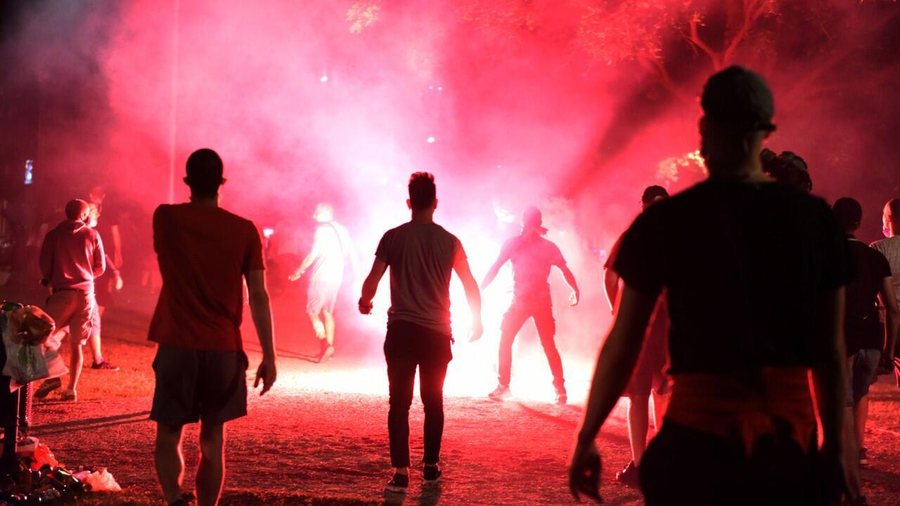
So, in the end, we return to the immovable engine of twenty-first century politics: fear...
Fear erodes democracies. And it can be fueled by demographics, if it is seen as a threat to civil coexistence: projecting a dystopian future in which we no longer know who we are or what we believe. It is happening in Israel, with the bitter experience in Gaza and the ongoing brutality in the West Bank. It is happening in America, with a climate of hatred reminiscent of last year’s tragically successful film, Civil War. But it is happening here, in Europe too, with the rise of intolerance and violent public discourse, in an absurd turn of adversarial extremism.
Months before Charlie Kirk’s assassination, political scientist Robert Pape published a series of polls in the journal Foreign Affairs that, reread today, read like a grim prophecy. In January 2024, 15% of Americans thought violence was acceptable to persuade lawmakers and government officials to “do the right thing.” And in June 2024, 10% of respondents believed that the use of force was appropriate to prevent Trump from regaining the presidency, while 7% supported the violent option of returning him to the White House.
But the structural migrations of our era and the inadequate or exploitative political response have fostered an air of existential crossroads that is certainly not limited to the United States.
In America, the rise in attacks on Republican and Democratic politicians since 2017 appears to have been fueled by panic about the ongoing shift in identity. In 1990, 76% of Americans identified as white. The percentage fell to 58% in 2023 and will fall below 50% by 2045.
It has been said that Latinos and people of color are now voting for Trump against their illegal immigrant “brothers.” But that doesn’t change the fact that the prospect of a nation that is no longer white and Christian has been seen as a ferocious threat to their way of life by conservatives, fueled by Trump’s narrative since 2015, the year the mogul entered politics. Trump’s illiberal policies, conversely, have provoked an equal and opposite wave among Democrats, who are not hostile to immigration or in any case concerned about the fate of American freedoms. Of course, America has always been violent. But even without agreeing with the absurd equation of those who would attribute moral responsibility for Kirk’s death to Trump, it is hard to deny that today’s violent populism is also the poisoned fruit of a political investment that Trump himself has persistently cultivated. With his rhetoric against women, gays, the disabled, immigrants, and progressives. With his glorification of the Capitol Hill rioters, whom he called "heroes."
The demographic trap is, ultimately, what has also distorted Israeli democracy, incapable since 1967, after the Six-Day War occupations, of solving a fundamental conundrum: annexing the West Bank and Gaza, accepting the consequence that their inhabitants will be able to vote in Israeli elections, or liberating them, thus losing two areas that were then seen as an indispensable security instrument?
In doubt, the government decided not to decide, pushing forward an occupation regime that has produced hatred, injustice, and fundamental contradictions for the future of the state. And in these hours, it is placing the nation with the Star of David in a dimension of international isolation never experienced before.
And in demography, with its paranoid and racist variants such as the Great Replacement theory, a significant part of the fate of the European sovereigntist parties and their opposition to the progressives, who nevertheless still lack a clear recipe for addressing the problem, has been and is being played. Since the night of the rapes in Cologne on New Year's Eve 2016, the perception of migrants has changed among Germans who, a year earlier, had joined Angela Merkel's generous challenge to welcome refugees, shouting "Wir Schaffen Das" (We can do it!).
And the Alternative für Deutschland began its ascent, coming in second in the last legislative elections and remaining between first and second place in all polls, despite its DNA tainted by Nazi slogans and memories. "Remigration", including that of German citizens of Islamic origin, and therefore considered "unassimilable", was the slogan that brought Alice Weidel and her party electoral success, but also a very serious dossier from the Office for the Protection of the Constitution (the domestic secret service) that could even lead to the AfD being banned for incompatibility with the fundamental values of the Federal Republic.
So, in the end, we return to the immobile engine of twenty-first century politics: fear. It must be managed if we are to dismantle the demographic trap. By accepting an inevitably different society. But without suicidal surrender to Sharia law or cultural renunciation of our principles and freedoms. By living together within the rules. By assimilating and respecting. By enriching what we are thanks to newcomers and winning their constitutional loyalty. It seems like an abstract conversation until we think of Mechelen, the Belgian city that, during the years when jihadism was raging in Europe, managed to become a model of integration thanks to a liberal democrat mayor, Bart Somers, who knew how to combine solidarity and security. Of course, it was a microcosm. But the ingredients for transforming fear into hope, in the end, are always the same. / Adapted "Pamphlet" from "Corriere Della Sera"




Lini një Përgjigje