


 Shkruar nga Ylli Pata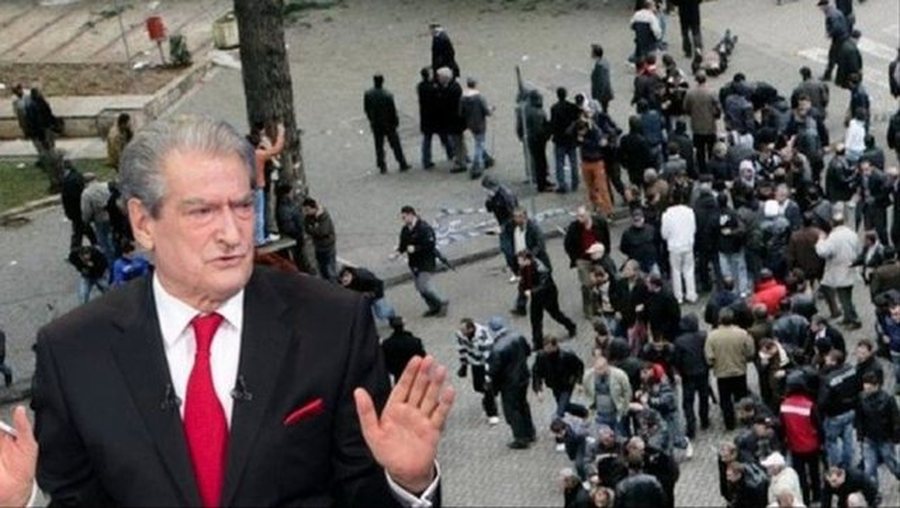
Sali Berisha's stance is clearly strained to play the "strongman" position to stop the opening of the file that would ultimately sink him...
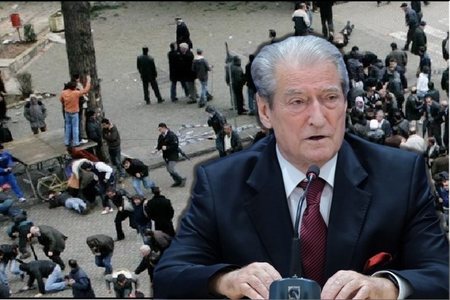
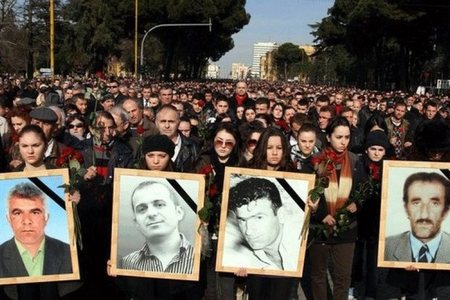
The tragedy of January 21 is a time mine not only as a matter of justice, that is, the investigation and punishment of the perpetrators of what the Strasbourg Court has called a “State Crime”. January 21, 2011 is a political event in the full sense of the word. A political event not only for what happened on the day of the tragedy and the other days that followed 15 years ago.
January 21 is an important indicator of political behavior during these years, up to today. It means that the way of political confrontation with this issue has been a test for Albanian politics. And first of all for the Democratic Party, which, at the time of the tragedy, was on the side of the authority that committed that state crime. In the Democratic Party, there is no unique position on the tragedy, even though Sali Berisha's entourage has tried to block a decentralized position as much as possible.
The President of the Republic at the time, Bamir Topi, elected by the DP when he was in its number 2 position, has expressed his entire version and position several times publicly, and above all in his book "Nocturne". Where he openly condemns crime as acceptable political behavior, always being open to justice.
Meanwhile, Lulzim Basha, the Minister of Interior at the time, and then the leader of the Democratic Party for several years, has openly expressed his support for justice being served for the event, by punishing those responsible for the state crime.
Meanwhile, other exponents, heavyweights of DP politics, have not defended Sali Berisha's version.
Who is the only one who is maintaining the same stance on the event; where he calls the murders simply a "law enforcement". To then continue with the accusations against Edi Rama and the SP as directly responsible for that tragedy.
Sali Berisha's stance is clearly strained to play the "strongman" position to stop the opening of the file that would ultimately sink him.
Even the case of the emergence of the so-called Irena Gjoka case, which is clearly an aid from the circles of the State Department in Athens, consists of blackmailing SPAK prosecutors or GJKKO judges if they open the "Pandora's Box" of January 21.
For this entire battle, Sali Berisha has spent millions of dollars on lobbying in the US and Europe to create a strong anti-Rama opinion. For this battle
A very expensive media entourage is being used to ignite and ignite the sparks of battles, whether political or in the attack on prosecutors and special judges. All this effort by Sali Bersha, even though he continues to obstruct justice for January 21, does not help him politically at all.
Even though SPAK may hurt the majority even more in investigations into corruption and abuses, the relativization that the opposition makes on the other hand by defending Sali Berisha does not harm this majority at all.
Which will never be able to gain political ground, maintaining this abrasive and angry stance towards the state crime of January 21st.
Which is really the red line that keeps the Democratic Party, and even the opposition, away from power. Which in many of its segments, tends to use Berisha's versions of the tragedy.
As Adriatik Lapaj said one night, when he jokingly threw the "not from the Garda" plum on television for the late Aleks Nika. A stance that had an immediate negative effect, even though Lapaj backed down, thanks also to a very mature and measured stance by Mark Nika, Aleks's uncle.
For this event, without a real catharsis, namely a clear separation from political or media protection, such as the piloted interviews of the former head of the Guard, etc., the public will not approach this opposition. And normally and logically there is no reason to approach. Once a politician justifies and defends the killing of innocent people by the security authorities, then people have the dialectical fear that this could happen again. Sali Berisha's amnesty by the electorate for 1997, when he was brought back to power in 2005, although it happened as it happened, is unlikely to be repeated.
January 21 is undoubtedly one of the main pillars of the isolation and punishment of Sali Berisha by the Western World, namely the US and EU with a dry seal, and the EU with a diplomatic stance.
Insisting on finding an alibi or relativizing it by comparing it to the political opponent regarding the corruption of officials, at least politically, has not held water.
This has been shown in every election, where the voter turnout is high and the specific power of the ruling party of the DP has almost disappeared. The opposition to reality is as fixed as the story of the bar mentioned by Yuri Kim, who was not in Albania in 2011, nor now. On the contrary, she is dealing with Venezuelan oil as the head of the American hydrocarbon giant...




Lini një Përgjigje