


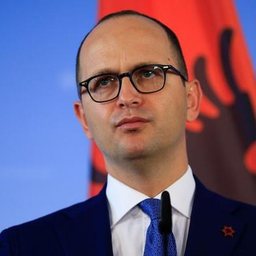
 Shkruar nga Ditmir Bushati
The fact that powerful G7 countries are taking this step for the first time signals a changing tide in the West.
Palestine will be the “elephant in the room” during the annual High-Level Meeting of the United Nations General Assembly starting this week. Several major Western countries such as the United Kingdom, France, Canada, Australia, New Zealand have announced their recognition. Portugal, Belgium, Luxembourg, Malta, San Marino and Andorra are also doing the same.
Palestinian statehood is still one of the most debated issues at the UN. Palestine enjoys international recognition from more than half of the UN's member states, which allows it to maintain diplomatic missions abroad and participate partially, as an observer state, in the UN. However, it lacks the borders sanctioned by the 1948 UN resolution, an army, a capital, and full sovereignty due to the ongoing conflict with Israel.
Why these recognitions now?
All of these countries have historically shown strong support for Israel. In fact, a decade ago, none of these states voted in favor of Palestine’s observer status at the UN. But scenes of starvation in Gaza and growing anger at the brutality of Israel’s disproportionate military campaign in response to Hamas’s October 7 terror attacks have changed public opinion in many of these countries.
Will these findings change the situation on the ground?
Difficult. However, the fact that the powerful G7 countries are taking this step for the first time signals a change of tide in the West, especially among some of Israel's staunchest supporters. It also gives Palestine the support of four of the five permanent members of the UN Security Council.
The recognition of Palestine by these states is argued to "reaffirm the right of the Palestinian people to self-determination" and as a contribution to a two-state solution. Meanwhile, Israel's supporters argue that a two-state solution cannot come as a reward to Hamas, and without its complete disappearance there can be neither a ceasefire nor dialogue leading to a lasting and final solution.
What about us?
Although it recognized the state of Palestine in 1988, when the UN General Assembly voted in 2012 to grant Palestine the status of non-member observer state, Albania abstained. In 2018, Albania voted in support of the resolution rejecting the decision to recognize Jerusalem as the capital of Israel. During the escalation of the war in Gaza, Albania's position became even more ambiguous, reflecting a lack of coherence in UN voting, and worse, a lack of sensitivity towards some of the principles that Albania has promoted due to the history of the Albanian people.
In May and September 2024, when the General Assembly adopted resolutions to admit Palestine as a full member, Albania again abstained. Albania did not support the New York Declaration that emerged from the proceedings of the High-Level Conference and abstained from the General Assembly resolution of 12 September 2025 supporting the two-state solution (Israel/Palestine). Albania even abstained from voting on the resolution of 19 September 2025, on the participation of Palestine in the proceedings of this year's UN General Assembly.
The abstention vote in the context of Albania recognizing Palestine, and having consistently stated that it supports a two-state solution, reinforces the perception of a chameleonic foreign policy, under the dictates of the domestic political exchange.
One of the challenges of foreign policy is coherence and consistency in relation to the principles we defend and the interests we have, while at the same time preserving alliances with strategic partners. This becomes a necessity, especially in an uncertain time when references are constantly changing. While our objectives and aspirations constitute the horizon of foreign policy, the principles and consistency of our orientations must be the limiting and defining lines of the horizon.
Let's be clear, Albania is a small country that does not have the power to resolve complex conflicts. But to act seriously and demonstrate strategic clarity is our obligation. Such issues require balancing the interests and principles that we have promoted over the years, since at stake is the maturity and continuity of the state, the ability to orientate properly in a constantly changing world.
Unequivocal condemnation of Hamas' terrorist actions, respect for innocent civilians, the principles and rules of international law ignored in the humanitarian catastrophe in Gaza, and a reaffirmation of a two-state solution for Israel/Palestine would be a just, moral stance, in accordance with international law. And at the same time, in respect of our history with the Jews sheltered in Albania during Nazism and the partnership forged over the years with the State of Israel.




Shume foshnjarak ky vleresim kur thuhet se uria beri qe Evropa te ndryshoje qendrim.Te mendosh se e kemi patur figure te larte shteterore eshte per te qeshur.
Esht turp i madh per Shqiperine qe ka ngel ne fore te nje KM qe fati i tij lidhet me oreksin ćifut.
Bushati e quan Ramen dhe politiken tone te jashtme “kemeleon” sipas shkrimit dhe Bushati nuk eshte as mish as peshk. Nuk eshte me Israelin po dhe nuk del kundra OKBse dhe shteteve ne europe se do te rikthehet ne politike.
1 votë është 1 votë në OKB. Abstenimi e vë Shqipërinë në vështirësi. Vendet po e shikojnë Shqipërinë dhe ndjekin "ngjyrën" e votës! Abstenimi sjell më shumë dëm sesa përfitime. Si udhëheqëse e gjeografisë së Shqipërisë, Shqipëria duhet të jetë në gjendje të thotë PO ose JO! NUK KA NEVOJË TË FSHEHESH PAS TË TJERËVE NË KLASË!