


 Shkruar nga Klodian Tomorri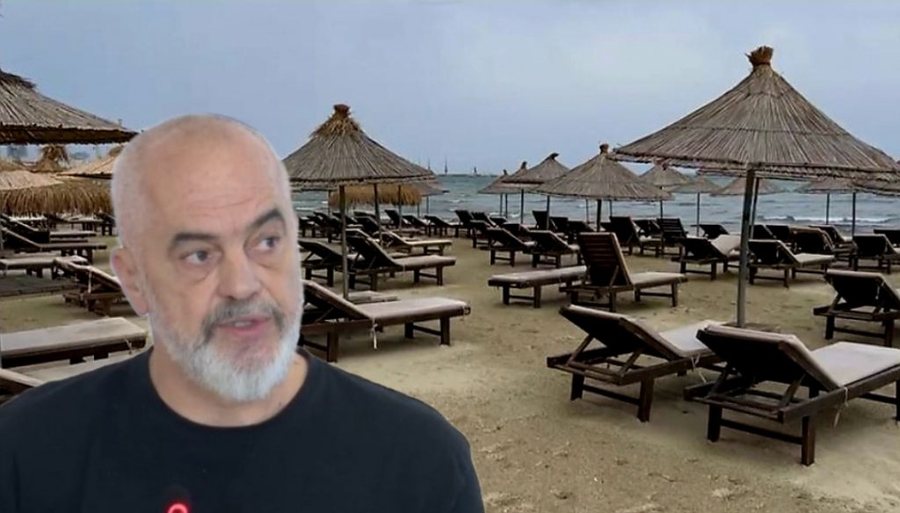
What would happen to Ksamil if prices did not rise? How would the selection be made as to who would have the right to rest in Ksamil and who would not? By lottery or by government decree?
The cost of the electronic certificate, which is used by businesses with obligation, is less than 500 ALL. But the government sells it for 4 thousand ALL per year, or 8 times more than the cost.
The cost of passports is less than 2 thousand ALL. But the government sells them to the citizens for 5 thousand ALL.
The cost of an ownership certificate is about 200 ALL. But the Cadastre sells it to citizens 10 times more expensive.
These comparisons can go on endlessly, since almost all public service fees that the state charges citizens and businesses are several times their real cost. This makes the government arguably the biggest bully in the market.
But speculators do not like competition. They want the extortion monopoly to be theirs alone. The concern of the prime minister that the people of Vlonia and Sarandio have lost their brains with the prices is simply the evidence.
However, there is no comparison here. The government uses the force of law to extort the market with its abusive prices. The services it sells to citizens at prices several times above cost are monopolies, or worse, monopolies that sell products or services that are mandated by law. While the market of tourist services operates under conditions of ideal competition.
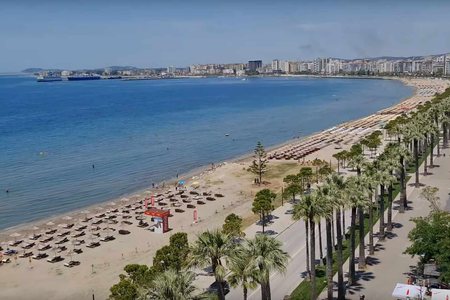
Theoretically, there is no force that can coordinate all the restaurants or hotels of Vlora and Saranda to harmonize the prices. There simply isn't one. The providers of these services compete with each other, but not only that. They also compete with other destinations. So the prices they set are the pure result of free market forces, the balance of demand and supply.
The concept of speculative prices in a market operating under conditions of perfect competition cannot exist. Because speculation and perfect competition are two incompatible notions.
Of course prices in competitive markets rise. But their growth is the mechanism that keeps the market in the optimal equilibrium, which maximizes the benefits for society. For two reasons. First, price increases prevent overexploitation of resources. On the one hand, the government says that tourism has increased by 80 percent. On the other hand, he worries about the increase in prices. Is there any greater folly than this?
What is the market that does not raise prices if demand increases by 80 percent? And what happens if prices don't go up? For example, what would happen to Ksamil if prices did not rise? How would the selection be made as to who would have the right to rest in Ksamil and who would not? By lottery or by government decree?
So the price increase in this case is mandatory. And even, sometimes insufficient to stop overexploitation of resources. Look at Croatia, Spain, Portugal.
Second, prices are the mechanism that carries signals for the efficient allocation of resources in the market. The more prices rise in the South, the more investment there will be. This is a win-win mechanism.
So the government should not worry. No one can take the pod of the biggest matrapaz on the market, no matter how much the brains of the Sarandiots are gone and the eyes of the Vlonjats are bursting. This is its exclusive monopoly.




Lini një Përgjigje