


 Shkruar nga Klodian Tomorri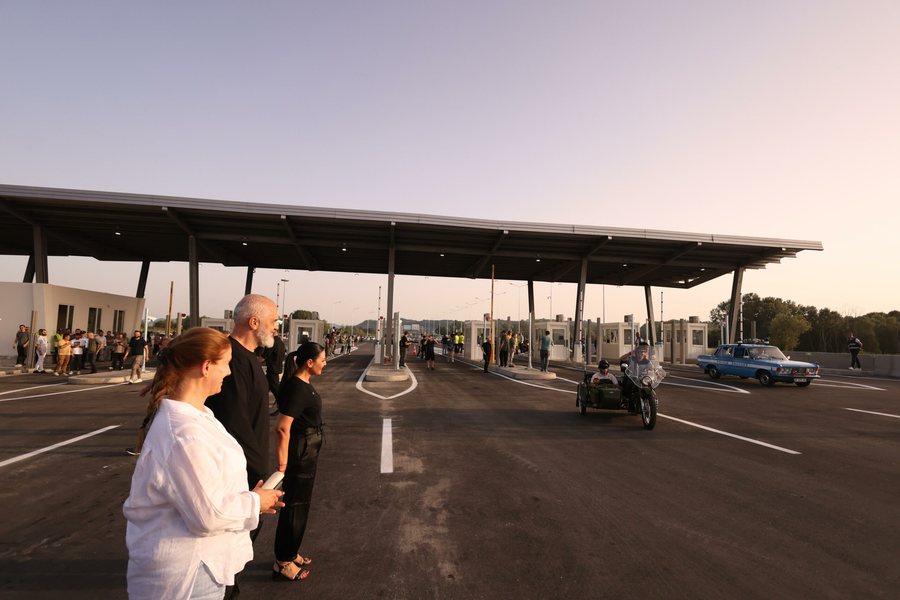
Can Albanians pay the tolls that are coming with the highway beams, beyond the taxes collected by the government?
The completion of the Thumanë-Kashar highway has opened the great public debate of the additional burden that will be thrown on the citizens for a service, which until today has been mostly free, that of traffic on the road. Can Albanians pay the tolls that are coming with the highway beams, beyond the taxes collected by the government?
This issue will become even more dominant in the following years, when the toll beams will be placed on almost all the main axes of the country, even those built with public money, from the Tirana-Durrës highway, to the Lekaj-Fier one, the road Elbasani and further to the tunnel of Llogara. In short, this is the beginning of a new era and Thumanë-Kashar is only the first or rather the second swallow, after the National Road. But with one essential difference.
Thumane-Kashar is the first real concession in the road infrastructure. Unlike the forms used until now through the classic tender or Public Private Partnership on the Arbri and Orikum-Dukat road, where the construction has always been financed by citizens' money, Thumane-Kashar is a highway for the construction of which the taxpayers did not pay nothing, except the expropriation costs, which are always the state's. This is no small change.
The concessionaire company built the road with its own capital and the loans it received from banks. In exchange, it will have the right to collect a payment of 2.1 euros for each vehicle in the next 35 years. And this formula raises the problem of affordability. Is the 2.1 euro fee, which together with VAT amounts to 2.5 euro, affordable for the standard of living of Albanians?
In the neighboring country of Italy, tolls on motorways vary according to areas and the difficulty of road construction. But their national average fluctuates around 7 euro cents per kilometer. Meanwhile, in Thumane-Kashar, the cost of crossing will be 10 cents per kilometer or 30 percent higher in absolute value and much more in relative value, if the welfare standard of the two countries is taken into account. This is a high fee.
However, something very important is worth noting here. Tolls on concession roads are not mandatory costs. Concessions always have the alternative. In the case of Thumanë-Kashar, citizens will always have the right to use the road as it is today, which remains free of charge. Strictly speaking, the issue of the fee in this case is more of a business decision, in the demand-supply balance game like any commodity in the market, with the essential condition that the existing road is preserved to the public in optimal parameters.
The private can keep a high rate and have less traffic on the road or set a low rate and have more vehicles. While citizens can choose to switch to the toll road if the costs they are cutting are higher than the toll or use the existing road if they think the toll is greater than the cost savings. In the business plan of the concession, the company claims that the savings offered by the highway compared to the existing road is 3 times higher than the established toll. So each of the parties chooses the point where it maximizes its interest.
However, Thumane-Kashar is not an evil, but a great public good, from which everyone benefits. For a reason. Those who cross the highway are willing to pay because they benefit from convenience, time and avoid traffic. Those who are not willing to pay, but use the existing road, benefit from traffic relief for the part that is moved to the highway. If even 10 percent of the flow uses the highway, this is no small relief for those who use the existing road.
Therefore, the tariff measure is not the most important point of the debate. In this matter the real debate is only one. Why should Albanians not have free highways? Why do the citizens of the North today and those of the South and Central Albania tomorrow have to pay money to cross the highways? Why should they not be built from the budget and be free, but should be concessioned for a fee. This is literally a political decision.
In the developed world today there are two models. The first is the German model, where highways are built with budget money and are all free of charge for citizens. While the second model is the Italian, French, etc., where the state builds only the basic infrastructure, while the highways are built by private individuals and are tolled. The Albanian government has chosen the second model, but not in an honest way. For two reasons.
First, there are key roads in the country, such as the National Road, which, although they have no alternative, have been tolled. Here the payment takes the form of binding cost. Therefore, in this case, the most suitable formula would be that of maintenance with a budget payment, not with a transit fee. Regardless of whether the maintenance service is concessioned or procured by classic tender.
Second, and more importantly, pay beams change the rules of the game. The government should as soon as possible remove the turnover tax, which is paid 35.4 lek for every liter of diesel that citizens buy in the market. This is double taxation and already with the placement of beams on the road, the turnover tax is clearly unconstitutional.
Today, all citizens of northern Albania are paying an unconstitutional tax. This is the stick of government, which hurts more than the beams of oligarchy. And truck and battalion accounts, which compare money spent today with money earned 35 years from now, without taking into account cost of capital, time value of money or operating expenses, are populism, nothing more than economic indictments. For example, with 1 million ALL 30 years ago, you could buy apartments and shops in the center of Tirana. And in the end, businesses have that purpose. To earn money.




Lini një Përgjigje