


 Shkruar nga Pamfleti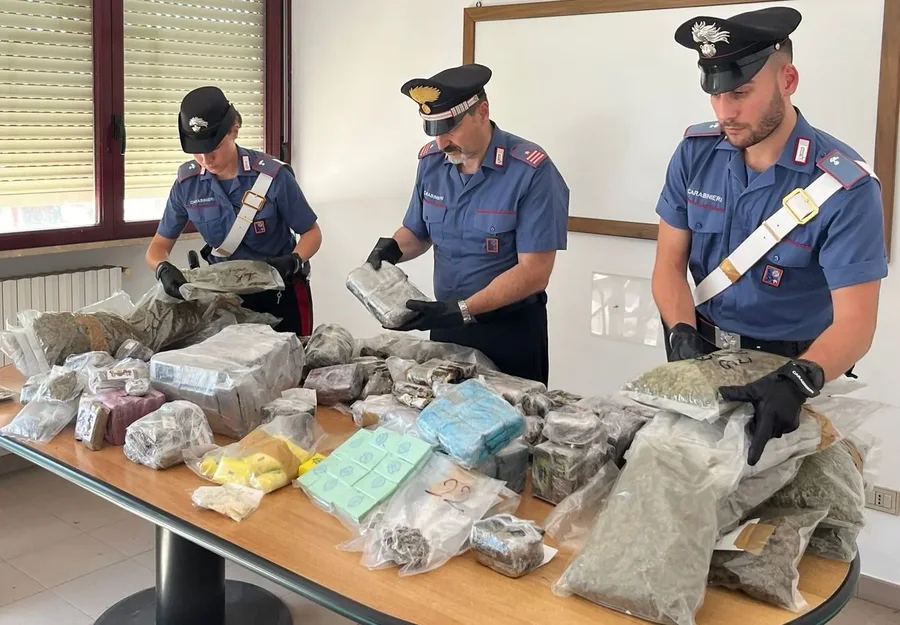
The report says that Albanian organizations have the ability to move large quantities of cocaine and heroin.
Albanian crime organizations continue to "make the law" in Italy, but even in Europe and Latin America. The alarm was given by the Italian Antidrug, which has published the work report for the past year.
According to her, Albanian drug traffickers are rapidly climbing the ranks of the most aggressive and powerful drug trafficking organizations in Italy.
According to the report, Albanian citizens are ranked in 2023 after Moroccans in Italian police reports to judicial bodies for drug crimes, with 1,604 cases, out of 1,574 that were reported in 2022.
The report says that Albanian organizations have the ability to move large quantities of cocaine and heroin.
" For cocaine, they take care of every stage of the supply and distribution chain: the purchase at the production sites, the collection of the narcotic in Dutch and Belgian ports, the transport to the destination with specially modified vehicles, until the subsequent stage of drug distribution in the Italian territory ", the report emphasizes.
Excerpts from the report
The investigative findings confirm the evolving role of Albanian organizations, present in a large part of the Italian territory and already among the most active and fully established foreign-based associations in the national and international drug trafficking scene, with a real sanctification within criminal network.
That Albanian drug traffickers are rapidly climbing the ranks of the most aggressive and powerful organizations dedicated to drug trafficking is also proven by the high number of members of this nationality reported to judicial bodies in Italy in 2023: 171 per associations targeting drug trafficking and 1,432 for the crime of drug trafficking, i.e. 16.44% of all reported foreigners (equal to 9,758 units).
The geographical compatibility between Italy and Albania has facilitated the development of direct channels between Apulian and Albanian criminal groups, especially in the supply, storage and trade of marijuana. Today, Albanian organizations operate on Italian territory in small, in some cases multi-ethnic groups, which mainly deal with drug distribution or, in other contexts, operate in ways that mirror those of mafia-type structures, using the force of intimidation of bonding and availability of large resources to be used in traffic.
These groups represent particularly reliable interlocutors for the criminal network revolving around the drug business, especially because of their ability to move large quantities of cocaine and heroin. For cocaine, they take care of every stage of the supply and distribution chain: the purchase of batches at the production sites, the collection of the narcotic in Dutch and Belgian ports, the transport to the destination in specially modified vehicles, and on and on. Developing direct relations for supplies in the production regions, they are increasingly in business, under the guise of trusted intermediaries, with the Calabrian, Campania and Sicilian mafia or other criminal groups.
For heroin, however, teams based in Albania continue to manage with absolute skill the final segment of the Balkan route, the one that transfers Afghan heroin from Turkey to national and European consumption areas.
For criminal organizations from around the world dedicated to drug trafficking, Colombia is a country of strategic importance. Currently, the Mexican "cartels", the Brazilian PCC and the Albanian mafia seem to be the main transporters of Colombian drugs. The Italian group historically most associated with this scenario is undoubtedly 'Ndrangheta . / Pamphlet








Lini një Përgjigje