


 Shkruar nga Julien Balboni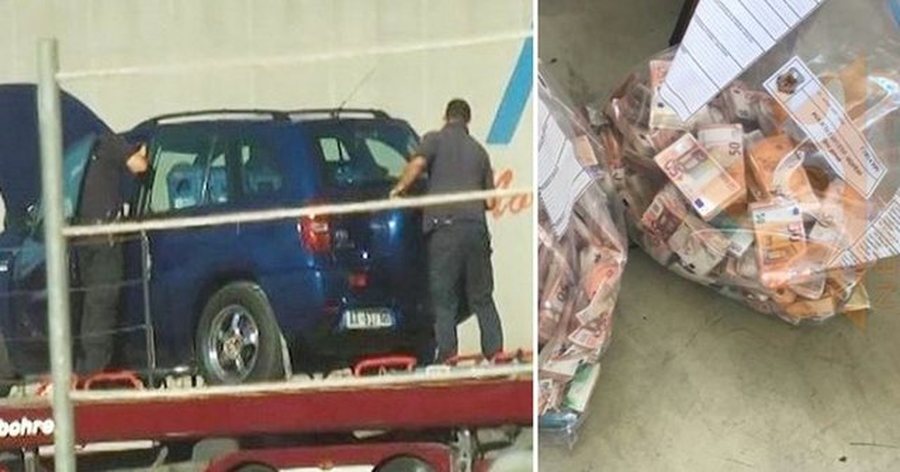
The "Toyota" trial, following the seizure in Albania of money from drug trafficking in Belgium, opens in Brussels.
The Albanian part of the investigation has led to convictions for corruption, as Albania hopes to join the EU soon.
The “Toyota” case began hearings this Monday before the Brussels Criminal Court. The case dates back to 2018, when almost 3.5 million euros in cash were discovered in two Toyota Auris cars that arrived from Belgium and were due to dock in the port of Durrës, Albania.
A classic case of money laundering and another example of the presence of the Albanian mafia on Belgian soil. But also further proof of Albania's desire to join the European Union, the feasibility of which is progressing, but is still hampered by the growth of corruption and the control of criminal organizations, a cancer whose metastases are found in all layers of society in this small Balkan state.
Money from drug trafficking in Belgium
Let's rewind the story. On June 13, 2018, two men set off in a heavy goods vehicle for Albania and arrived in Belgium three days later. On June 17, an Albanian citizen living in Belgium loaded several Toyota vehicles from a garage in Sint-Pieters-Leeuw and the truck crossed Europe again, passing through Germany, Austria and Italy, where it boarded a ferry at the port of Bari, bound for the small port of Durres, on the other side of the Adriatic Sea.
The Criminal Court sentenced Albanian lawyer Radovan Çela, who is being prosecuted in the Belgian case, to 4 years in prison for active corruption.
But Albanian secret services, which had confidential information, notified customs. During customs clearance, it discovered 3,366,700 euros and 80,000 Swiss francs in cash, packed in 106 packages hidden inside the doors of two Toyota Auris cars. It could be money from drug trafficking in Belgium.
Lawyer and prosecutor sentenced in Albania
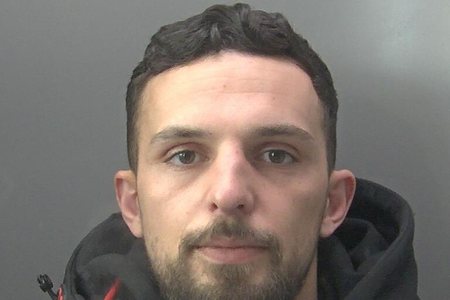
The Belgian case begins as its more massive Albanian component experienced a decisive episode last week. The Criminal Court sentenced Albanian lawyer Radovan Cela – who is being prosecuted in the Belgian case – to four years in prison for active corruption. In the same part of the case that concerns Albania, the former prosecutor of Vlora, Aurel Zarka, was also sentenced to four years in prison.
According to the Albanian press, it was the wiretapping of Radovan Çela's phone at Sky ECC, made available to Albanian authorities by Belgium, that allowed the discovery of the corruption attempt, after the lawyer had offered money to the prosecutor to obtain the lifting of the seizures.
Another obstacle to EU membership
These latest convictions pose additional challenges to Albania's efforts to join the European Union (EU). They date back a long time: the country submitted its application in 2009 and was offered candidate status in 2014.
"The most important reform in Albania over the last ten years has been the reform of the judicial system."
Roland Dodani, Professor of European Law at the University of Shkodra, said that negotiations were officially opened in July 2022, with an achievement expected in 2030. Meanwhile, Albania's efforts have been important, especially in restoring trust in judicial authorities.
"To meet EU requirements, Albania has undertaken very important reforms. In my opinion, the most important of the last ten years is the reform of the judicial system. It has been supported institutionally and economically by the EU and the United States, creating new institutions to guarantee the independence of the judicial system," summarizes Roland Dodani, professor of European law at the University of Shkodra.
The key was the creation of a new supreme court and a public prosecutor's office, SPAK (Special Structure against Corruption and Organized Crime), with considerable powers. This has notably allowed the indictments, and sometimes the investigation, of important political leaders (a former President of the Republic, a former Prime Minister) and judicial officials (prosecutors, police officers, etc.).
More than 50% of Albanian magistrates have been dismissed.
At the same time, all the assets, connections and qualifications of the country's magistrates were inspected by a so-called "vetting" commission. "This process has radically changed the Albanian judicial system," comments Roland Dodani. As a result, almost 300 of the 800 Albanian magistrates inspected so far have been dismissed. A real purge, painfully experienced in Albania.
"This important result has created several problems, especially due to the lack of magistrates in the courts and a significant slowdown in legal procedures," explains the Albanian researcher.
The fight against organized crime has reached an international level and can only be addressed at an international level.
The process of Albania's integration into Europe is still ongoing; last week the fifth accession conference took place. On May 15, in X, European Commission President Ursula von der Leyen even indicated that "Albania's place is in the EU". Meanwhile, Socialist Prime Minister Edi Rama is doing everything to enable his country's admission to the Union, trying in particular to strengthen his ties with the Italian Prime Minister, Giorgia Meloni, on migration issues.
"Albania must complete the reforms required by the EU as soon as possible, in order to become a member state as soon as possible," said Roland Dodani.
"I strongly believe that the EU should strive to add new members to its European family, as this will strengthen its position and further ensure stability in our region."
The fight against criminal organizations also remains.
"These are among the issues that Albania cannot address alone and will need the support of the EU and other European member states, including unfair competition and the fight against organized crime, which has reached an international level and can only be addressed at the international level," Dodani said.
This is why, in particular, Belgian magistrates from the federal prosecution service regularly visit Tirana with the aim of strengthening ties between the justice systems of the two countries. /Adapted from Pamphlet by L'Echo/


Lini një Përgjigje