


 Shkruar nga Pamfleti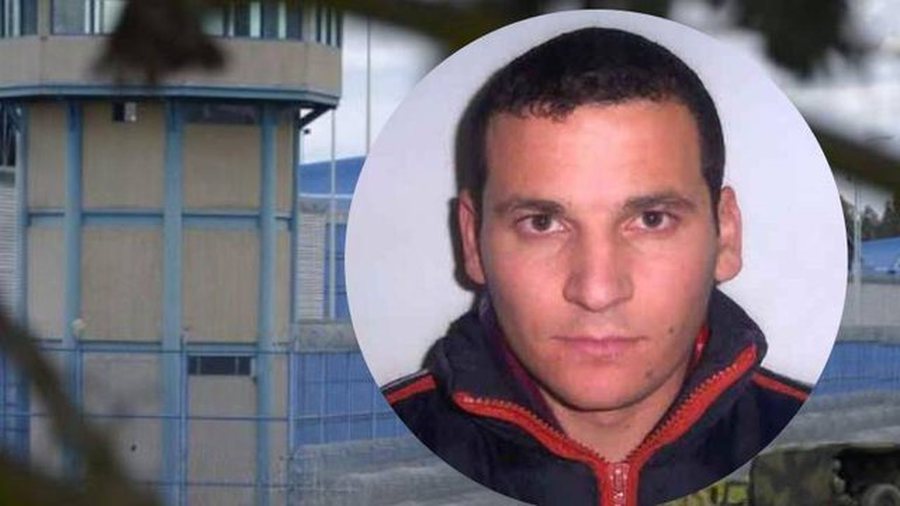
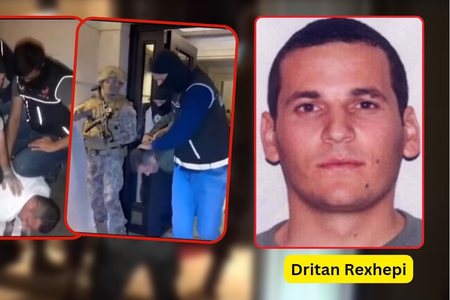
The ports of Rotterdam and Antwerp helped him to the status of "cocaine baron". Dritan Rexhepi, is a well-known character for justice, who was arrested in Istanbul, is registered in court files in at least ten countries for a series of very serious crimes (for life).
Dritan Rexhepi was once arrested in the Netherlands. He escaped, among other things, from a Belgian prison and, early in his career, combined a legal study with paid assassinations.
The criminal 'career' started in a period when Albania was in transition in the 1990s. Rexhepi was only a teenager when he was suspected of committing contract killings. There were at least two, maybe more. The Tirana court sentenced him in absentia in 2013 to 25 years in prison for two liquidations in 1998. His criminal name at that time was still "Gramoz", then Mutaraj, Lulëzim and Edmir Kraja were added.
In 2005, Rexhepi decided to study law. The plan to study law never materialized, Rexhepi said, because he was wrongly accused of murder. Therefore, his step into the drug trade would be forced. "I had two options, to surrender to an unjust and rotten system in Albania, which would lead to life imprisonment, or to look for a second chance to do something else with my life. That's why I got into the drug trade," declared Rexhepi for Balkan Insight. This media describes how, after his arrest in Durrës in 2006, Rexhepi was given the opportunity to leave the police cell for inexplicable circumstances. Someone had left his cell door open during a break in the interrogation. "They're done with me," he reportedly reported to a surprised officer in the hallway as he passed.
Rexhep often ended up in prison. He usually ran away, more often than Joaquin Guzmán "El Chapo".
After escaping to Durrës, Rexhepi was arrested in the Netherlands two years later and extradited to Italy. There he was convicted for cocaine trafficking. In 2011, he and two other inmates escaped from a prison south of Milan. In Voghera prison, Pavia province, Rexhepi and two others used a hacksaw to cut the bars of a window in a corridor... They reached the first floor with sheets. His Albanian companions had been convicted of serious violent crimes. In the afternoon shortly before the escape, the three were together with the other prisoners in the yard to get some air. They went outside for a few minutes. There they continued on foot. In a rural area, they stopped a car, pulled over the driver and disappeared without a trace.
Later in 2011, Rexhepi was arrested in Spain. He did not go to Italy to continue his sentence. Instead, the trip went to Belgium because he had been convicted there in 2009 by the Court of Appeal of a violent robbery. Although he was already on the Interpol fugitives list - because he was wanted in Albania for a double murder and in Italy for serving a sentence - Rexhepi ended up in Merksplas prison near Antwerp, in a moderately severe regime. The prison authorities were not informed about the caliber of the new Albanian prisoner.
In the fall of 2011, Rexhepi managed to leave Merksplas together with another prisoner. He went into hiding, but remained in the Benelux, and probably lived in Rotterdam, but possibly also in Spain. There his name appeared as a suspect for involvement in a series of bank robberies.
Bello Company
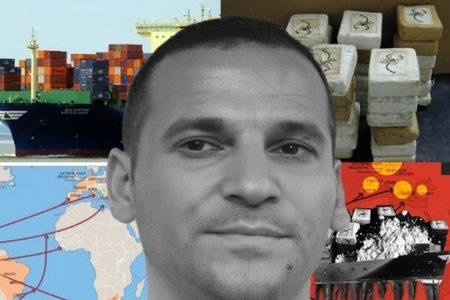
From that moment, Rexhepi and a number of compatriots began to build a network that received large quantities of cocaine in the ports of Rotterdam and Antwerp and distributed it throughout Europe, especially in Italy, Italian justice announced. Albanian and Italian prosecutors led the "Los Blancos" operation and slowly mapped out the network. The Florence prosecutor's office later named the network "Kompania Bello": a cartel of 14 Albanian criminal organizations that was active in Ecuador, the Netherlands, Belgium, Albania and Italy from at least 2014 (in 2020, the Los Blancos operation collapsed and dozens people were arrested).
Don Monti
In Ecuador, Rexhep's associates made an alliance with a man who had very good contacts with the cocaine producers in Ecuador at the time, Cesar Emilio Montenegro Castillo, also known as "Don Monti". He had ties to Colombian producers from the north of that country, a group formerly known as the Norte del Valle Cartel. Montenegro also had a connection to the Sinaloa cartel in Mexico, which also had good contacts with producers in Colombia.
In June 2014, Rexhepi was arrested in Quito, the capital of Ecuador, as part of a police drug operation that seized 278 kilograms of cocaine. For this he was sentenced to 13 years in prison. The Supreme Court in Ecuador decided that after serving the sentence he should be extradited to Albania for the double murder. This spring he cut off his ankle bracelet to hide. His sentence was almost served, but he is now a fugitive in Ecuador.
While other leaders of "Kompania Bello" are in prison in Italy, Rexhepi is now free and is seen as the undisputed leader of the Albanian cocaine mafia.
Italian prosecutors accuse Rexhepi of having ordered at least two murders while he was in prison, in Ecuador and Albania. And the Albanian authorities accuse Rexhepi of having ordered and directed - from his prison cell - the kidnapping and murder of Jan Prenga, whose body has not yet been found.
At the same time, police services are investigating, partly based on conversations made readable by Sky ECC, the cocaine trade that Rexhepi is said to have run from his cell in Ecuador. Italian justice assumes he is the man behind a series of large cocaine shipments from Ecuador.
50-50 offer
In addition, he would have received those quantities for "only" more than $4,000 per kilogram from his Latin American partners. Shipments to the Netherlands and Belgium would be made under a 50-50 arrangement, in which Rexhepi used the lines of his partners, who added another kilogram for every kilogram transported. Criminals from the Albanian communities in the Netherlands and Belgium provided safe harbor and in Rotterdam and Antwerp tons of cocaine were resold or redistributed for between 22,000 and 24,000 per kilogram.
According to Italian police files, the network used Chinese exchangers to launder drug profits paid in the Netherlands. The Italians say they made a turnover of 210 million euros from Rexhepi. Although the Dutch and Belgian police are investigating local Albanian networks, Italian justice assumes that the network of distributors in the Benelux and also the Rexhep network in South America is intact./ BW



Lini një Përgjigje