


 Shkruar nga Pamfleti
Ecuadorian media outlet Primicias has published an analysis on the role of Albanian criminal networks in global cocaine trafficking, emphasizing that they operate through intermediaries known as "fixers," who connect Latin American cartels with distribution networks in Europe and organize logistics, corruption, and drug transportation through the region's ports.
In the underground economy of global drug trafficking, actors other than big cartel bosses or leaders of armed gangs are gaining more and more influence. Power is often concentrated in less visible figures: the so-called "fixers", intermediaries who connect international criminal networks with local groups.
These intermediaries organize the logistics, finances, and corruption necessary to ensure that cocaine moves from production areas in Latin America to markets in Europe and the United States.
In countries like Ecuador, they ensure that cocaine shipments – guarded by local armed gangs – are able to evade controls and enter containers that are loaded onto merchant ships through seaports.
Ecuadorian researcher Renato Rivera, an expert in security and criminal economics at the Global Initiative against Organized Crime (GiTOC), has analyzed the role of these intermediaries in the global drug trafficking chain.
According to him, these operators take a significant share of the profits. “ Intermediaries can capture up to 30% of the profit in some cases ,” explains Rivera.
He emphasizes that their role also helps to understand the large difference in the price of cocaine on the global market.
In the Andean production areas, a kilogram of cocaine can cost around $1,500, while in Europe the price reaches up to $30,000. This difference is distributed among the logistical and financial actors of the criminal chain, with a large part of the profits ending up precisely with the intermediaries.
Rivera emphasizes that one of the biggest misconceptions is the idea that international cartels must necessarily have members in every country where they operate.
" The mistake is to think that when we talk about a cartel or a foreign criminal group, that means they necessarily have members based in Ecuador. They have business here and work with local networks, but through 'fixers', intermediaries who connect two criminal groups to move cocaine ," he explains.
The term "fixer" comes from English and is used to describe a person who organizes or solves problems for others, often in a dubious or illegal manner.
The phenomenon is linked to the transformation of drug trafficking since the end of the 20th century. After the breakup of the major cartels in the 1980s and 1990s, the network of drug production, transportation, and distribution became more decentralized. This created a system where each actor specializes in a part of the criminal chain.
"Fixers" also appeared in this structure, people who organize contacts, solve logistical problems, and connect various criminal actors.
Rivera says that in some cases even political figures can play this role.
" There are cases when politicians also serve as 'fixers' for criminal groups. For example, it could be a mayor who offers facilities, public contracts, land for drug storage or for landing small planes ," he explains.
In practice, middlemen can connect buyers from Mexico or Europe with cocaine suppliers in Colombia, contract local gangs for transportation to ports, and oversee drug shipments.
They also play a key role in institutional corruption, paying bribes to officials and police officers.
" The money for the bribe comes from the group that is requesting the service. That's why the costs at this stage are so high ," says Rivera.
In addition to transporting drugs, middlemen also help with money laundering, connecting criminal organizations with experts in tax evasion, company creation, or managing illicit capital.
In Ecuador, this mediation role has also been played by networks linked to the Balkan mafia, often identified as the Albanian mafia.
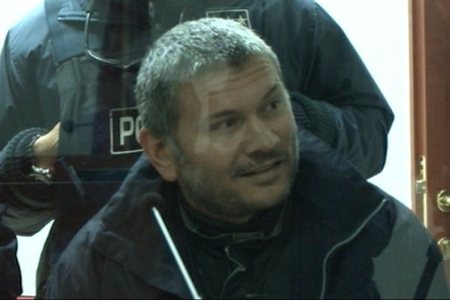
A recent case is the arrest of Ecuadorian Hernán Ruilova, known as "Chente", who according to the prosecution was a key intermediary between the Ecuadorian gang Los Lobos and Albanian criminal networks that sent cocaine to Europe hidden in banana shipments.
According to the investigation, he coordinated the receipt, storage, and packaging of the drugs, as well as acting as a liaison with foreign financiers of the operation.
Latin American security expert Tiziano Breda warns that competition to control these intermediary networks is constantly increasing.
"In the region, there is an increasingly violent competition between a growing number of criminal groups to gain access to this increasingly complex network of drug trafficking intermediaries," he points out.
According to analysts, these intermediaries – often invisible to the public – have become one of the most important links in the global cocaine trafficking. / Adapted from "Primicias"





Lini një Përgjigje