


 Shkruar nga Pamfleti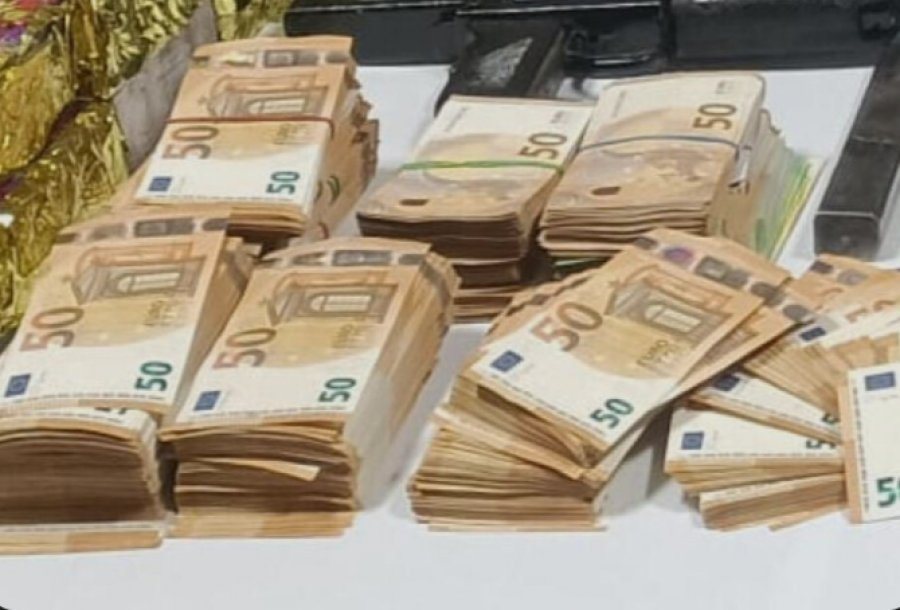
Investigations revealed that the organization used the informal financial transfer system “hawala”, also known in Chinese communities as “chop-shop”. This mechanism was used by Italian, Chinese and Albanian criminal groups.
Italian authorities have discovered a "ghost bank" in the city of Prato, which according to investigations had the capacity to circulate between 80 and 100 million euros per year through a sophisticated system of illegal payments linked to drug trafficking and informal international trade.
The operation, coordinated by the Florence Anti-Mafia Directorate and the Prato Prosecutor's Office, revealed the existence of a criminal organization with a high level of professionalism, which provided financial services to various criminal groups operating in Italy and other European countries.
According to authorities, at least three different criminal organizations benefited from this system: a group engaged in laundering proceeds from drug trafficking, another involved in international narcotics trafficking, and a network that dealt with the illegal immigration of Chinese citizens to Europe.
Investigations revealed that the organization used the informal financial transfer system “hawala,” also known in Chinese communities as “chop-shop.” This mechanism operates outside the traditional banking system and leaves no direct trail of transactions, making it difficult for authorities to trace the movement of money.
According to the investigative file, the system was used by Italian, Chinese and Albanian criminal groups to transfer large sums of money without going through official financial channels. For this reason, the court has ordered the seizure of around 60 million euros and imposed 41 security measures, including 17 prison sentences and 16 house arrest measures.
Italian authorities estimate that the criminal network had been operating for at least three years and relied on a system of couriers who transported dirty money between Italy, Spain, France and Portugal. Through this network, payments related to drug trafficking, but also to the undeclared trade of goods, were made.
A significant part of the scheme relied on undeclared financial flows from Chinese companies operating in the textile and fast fashion sectors. Investigators suspect that these flows were used to disguise and launder money from criminal activities.
The prosecution has also identified direct links between the organization's leaders and Albanian criminal groups involved in laundering proceeds from international drug trafficking. According to the investigation, the organization acted as a financial bridge between criminal networks and the informal economy.
The Italian court has also recognized the aggravation of mafia favoritism, as it is suspected that well-known Italian mafia organizations, including the Briganti clan of Sacra Corona Unita, the Fiare-Razionale-Gasparro group in Calabria, and the Aquino-Annunziata Camorra clan, have benefited from the services of this "ghost bank".
In parallel, the investigations also uncovered an organized network of illegal immigration from China. Chinese nationals first entered Serbia, which does not require an entry visa for Chinese citizens, and were then transported to Italy via Hungary and Slovenia. The main destinations were Prato, Turin and other areas with large Chinese communities.
According to authorities, the organizers earned around 9,500 euros for each trafficked migrant, turning the activity into a significant source of profit for the criminal network.
The operation is considered one of the most significant strikes in recent years against the illicit financial systems that support drug trafficking, money laundering and organized crime activities in Europe.








Lini një Përgjigje