


 Shkruar nga Kastriot Kotoni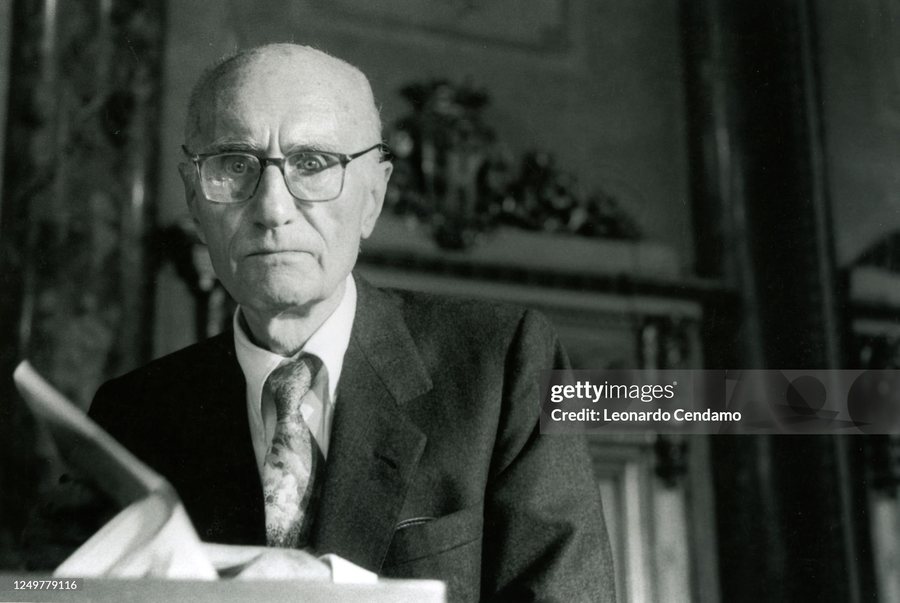
From the fronts of war to the ideals of free speech; the life, work and legacy of the journalist who bowed to no one...
Indro Montanelli was born on 22 April 1909 in Fučecchio, Tuscany, the only son of Sestilio Montanelli, a professor and later a high school principal, and Madalena Doddoli, from a wealthy merchant family. His rare name, Indro, given by his father, comes from Hindu mythology and was adapted to the masculine gender. He suffered from anxiety and depression from childhood. He never married and had no children, dedicating his life solely to work and journalism.
After graduating in Jurisprudence and Political Science from the University of Florence, he continued his journalism studies at the Sorbonne and the University of Grenoble in France. He worked first for the newspaper "Paris Soir" and then for the American agency "United Press".
In the early 1930s, Montanelli embraced anti-capitalist and anti-bourgeois ideas, collaborating with Berto Ricci and the newspaper “L'Universal”. During this period he met and considered Leo Longares, an important name in his professional formation, as a mentor. His first book “Farewell to the Time of Peace” was published in 1935.
He served as a war correspondent in Abyssinia, where he stayed for two years and was decorated for his service. From this experience was born the book “The 20th Eritrean Battalion”. He then went to the Spanish Civil War, where his critical reporting on the Italian intervention led to his expulsion from the Order of Journalists and the Fascist Party, a turn that separated him forever from Mussolini’s regime.
Montanelli covered important historical events in Poland, Estonia, Finland, and later in France, Greece, Hungary, Belgrade, Romania, Bulgaria, and Montenegro as a correspondent for the Corriere della Sera. He was arrested by the Nazis on February 5, 1944, and sentenced to be shot, but was saved thanks to the intervention of the Vatican and the efforts of his mother.
After the war, Montanelli became a powerful critic of any form of centralized power. In 1974 he founded the newspaper "Il Giornale", which he directed until 1994, to later found "La Voce". He never joined a political party, maintaining a rare intellectual independence. He also refused the appointment as a senator for life by President Cossiga, in 1991.
Montanelli was also a renowned historian. He published 71 works, including the history of Rome, Greece, Italy, the history of Garibaldi, and other essays. The monumental series “History of the Italians” consists of 22 volumes and remains an important reference of Italian historiography.
In his famous lecture at the University of Turin on May 12, 1997, he emphasized:
“Journalism doesn't make you rich. If you meet a rich journalist, don't trust him.”
“The public is our master. We must speak to them in their language, not that of the academies.”
“Scooping is the shortcut of fools. You may get there first, but in the worst way.”
“A journalist who uses his profession for other purposes deserves to be shot.”
He was critical of modern journalism, which he believed had lost its ethics due to the influence of television and the pursuit of the audience at all costs. He remained a figure swimming against the current until the end of his life, often threatened – he was even seriously injured by an assassination attempt by the Red Brigades, but never bowed down.
Indro Montanelli died on July 22, 2001, at the age of 92, and was buried in his hometown of Fučecchio, next to his mother's grave.
In the 1990s, he also published a book about Albania, "Albania One and a Thousand", where, among other things, he wrote:
"No one asked me for freedom. They asked for bread, land to plant, a house and cattle. While I was thinking of books by foreign journalists who saw Albania as a matter of democratic freedoms..."
Montanelli loved journalism as a mission and personal freedom, not as a path to power or wealth. He belongs to those figures who shaped the modern history of Italian and European journalism. His work, attitude and civic courage will always remain a guide for every honest journalist. / Pamphlet



Lini një Përgjigje