


 Shkruar nga Pamfleti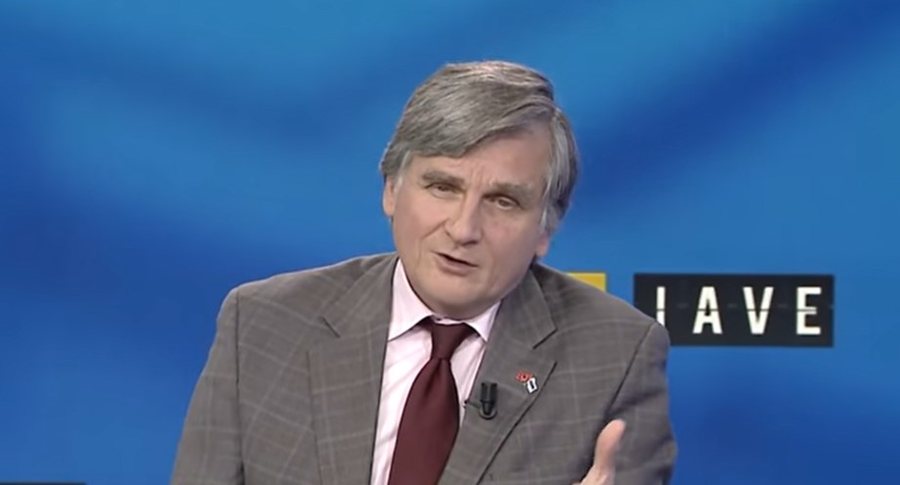
OSCE Ambassador Michel Tarran spoke on Friday evening about the OSCE/ODIHR report on the May 11 general elections.
On the show "This Week", Ambassador Tarran said that a problem with the elections remains the advantage of candidates for MPs who hold different positions.
"I want to tell you that this problem truly exists wherever a candidate is in office and has an advantage over other candidates who come forward."
I hope that with the ODIHR recommendations, some measures will be taken, for example legislation on how to limit the use of public administration by those candidates who are in different positions.
"There is work to be done, it seems to me that the first step has been taken, the creation of a bipartisan commission for electoral reform, and they have asked for our help, and of course we will also help with the legislation," said OSCE Ambassador Michel Tarran.
Regarding the opposition's claims about the May 11 elections, which it calls an electoral farce, the OSCE ambassador said that the fault for the OSCE/ODIHR recommendations not being implemented lies with the Albanian political spectrum.
"Let's not look back but look forward. Let's hope that this commission that has been created will function normally and we are here to help and show the example of another successful country."
All the problems you face here have existed and exist in other countries, but there are also solutions to these problems.
Excerpt from the interview
Is there a fatigue of Albanian institutions from the OSCE-ODIHR reports and recommendations, or is there still a terrain where your voice is heard? Elections continue to remain the "Achilles heel" of Albanian democracy. Why?
Tarran: The OSCE is a broad organization. The ODIHR has a mandate to observe elections, the OSCE does not.
We have a mandate to help Albanian institutions, to improve the electoral system, but we are not involved in the observation of elections. I think it is not the only problem in Albania. There is still a problem that Albania really needs to deal with, ODIHR and we as OSCE are here to help you.
The long-awaited report on the May 11 elections was read in different ways by political parties. For example, the leader of the Democratic Party, Sali Berisha, said that the election farce was proven, while Prime Minister Rama said the opposite. In your opinion, which one is closer to the truth?
Tarran: I think the answer to the question is in the report that has been made public and you can read it.
This report was not made to enter into the domestic political debate. How political actors use it here is the rule of the game, it is their problem.
We, as an organization, produce such a report to help, to show what problems we have identified, what options can be used to fix these problems. We work without entering into the internal political debate.
How clear is the election report so as not to be misinterpreted by Politika?
Tarrani: Please read it. The report begins by saying: The elections were organized in a very professional manner, respecting the plurality of the political scene, but there are still problems such as the advantage of those candidates who are already in different positions.
I want to tell you that this problem truly exists wherever a candidate is in office and has an advantage over other candidates who come forward.
I hope that with the ODIHR recommendations, some steps will be taken, for example legislation on how to limit the use of public administration by those candidates who are in dirty positions.
There is work to be done, it seems to me that the first step has been taken, the creation of a bipartisan commission for electoral reform, and they have asked for our help, and of course we will also help with the legislation.
Were the May 11 elections free and fair?
Tarran: Once again, I need you to repeat what is written in the report. It is not my job as the OSCE Chairman-in-Office to conduct an analysis or observation of the elections. That is the job of the ODIHR.
Whose responsibility is it, Mr. Ambassador, that the OSCE/ODIHR recommendations on Electoral Reform are not implemented or are partially implemented?
Tarran: I will answer in a general way that it is the fault of the Albanian political spectrum. Once again, without entering into the internal political debate. Now let's not look back, but look forward. Let's hope that this commission that has been created will function normally and we are here to help and show the example of another successful country. All the problems that you face here, have existed and exist in other countries as well, but there are also solutions to these problems.


Lini një Përgjigje