


 Shkruar nga Pamfleti
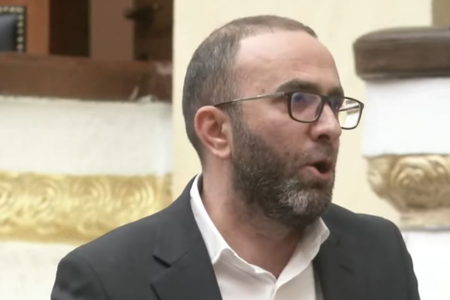
Socialist Party MP Erion Braçe has raised concerns in Parliament about the way in which analyses are conducted for the presence of aflatoxin in milk, questioning the role and reliability of private laboratories.
In an interpellation with the Minister of Agriculture, Andis Salla, Braçe emphasized that from December to the end of March, only 5 samples were taken, and that only three of the cases resulted in aflatoxin. He raised questions about unaccredited laboratories, adding that only results coming from laboratories of public institutions, such as the Food Safety and Veterinary Institute (ISUV), should be acceptable.
Braçe also raised concerns that this situation has been accompanied by economic consequences for farmers, such as non-collection of milk, dumping of the product in canals and price reductions by companies. He added that additional measures have also been put in place for the use of antifungals, increasing costs for livestock farmers.
"I accept that this verdict is given by accredited laboratories of public institutions, ISUV, but it is not okay for unaccredited laboratories of private companies that process milk to say that it has aflatoxin. The producer is that dairy farm over there, a manufacturer and a factory and there is no superiority over that small dairy farm. The dairy farm can accept the verdict of ISUV and that villager over there, but not of the company that has a laboratory that no one knows what standard it is, what analyses it performs and where it is accredited.
The campaign was accompanied by non-collection of the product. Massive dumping in the canals and the second with a price reduction by the companies that collected from the farmers. The third with additional measures for the farmers for antifungals and costs for them because, encouraged by the factories, they were forced to saturate the cows with antifungals. Why did the price decrease, did the offer on the market change? No, the amount of milk production did not increase, but was dumped into the canal. Companies have started to sell," said Braçe.
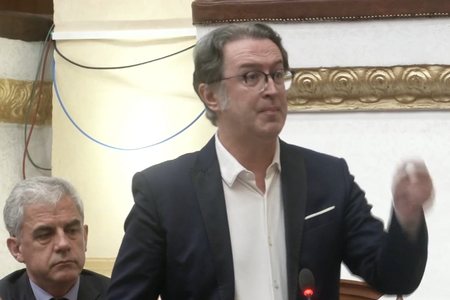
Meanwhile, the Minister of Agriculture, Adnis Salla, emphasized that the source of the problem could also be contaminated animal feed, mainly from aflatoxin B1 in corn or concentrates.
"It is important to understand the source of the problem and to emphasize that aflatoxin in milk is not created in the facility or dairy.
It comes mainly from contaminated animal feed, mainly from aflatoxin B1 in corn or concentrates.
"This is why we have not limited control to the final product, but have extended it to the entire chain, from imported animal feed to the border," the minister added.






Lini një Përgjigje