


 Shkruar nga Pamfleti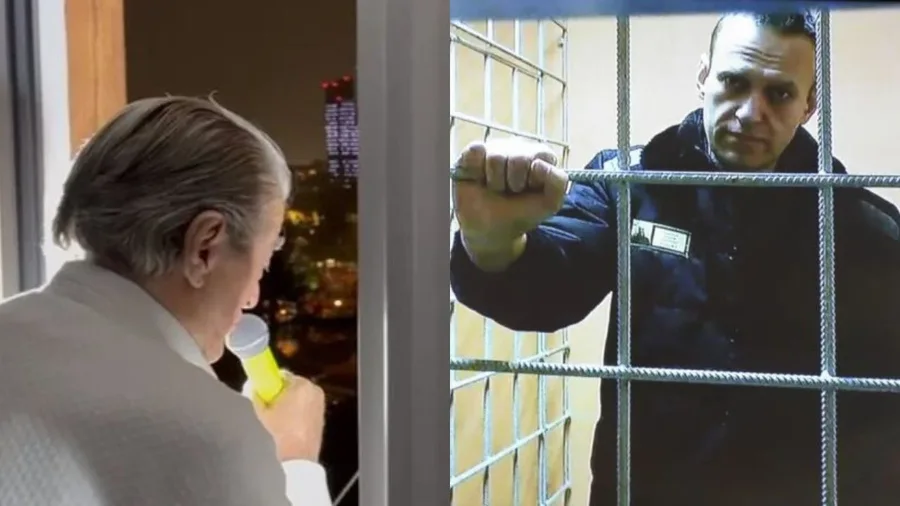
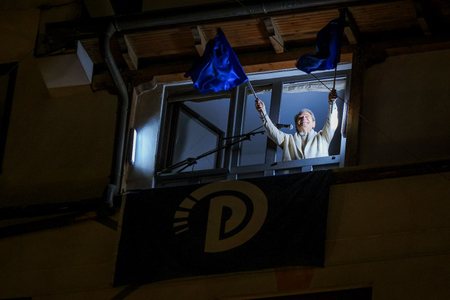
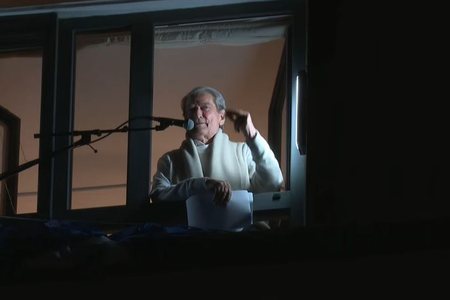
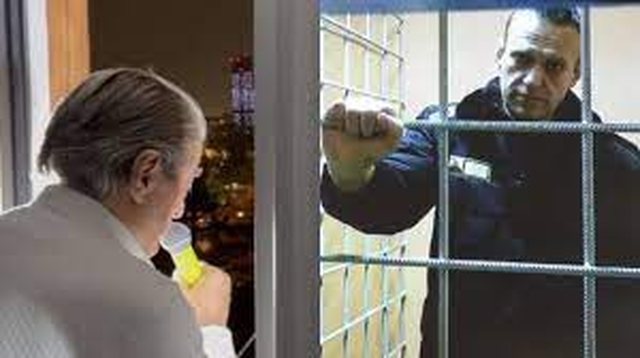
But since the defense of the former prime minister claims that Berisha is being denied freedom of expression, the court says the opposite, implying that he is communicating freely through social networks and from the balcony of his home. To illustrate that any limitation of freedom of expression means the anti-corruption court brings the example of Navalny, the political opponent of Putin, who won in Strasbourg, after the court gave him the right to violate the freedom of expression.
In the disclosed decision that Top Channel exclusively has, in which SPAK is given the right to not allow former prime minister Sali Berisha to participate in parliament on Thursdays, the court emphasizes that Sali Berisha's function as a deputy as a representative of chosen by the Albanians.
But, the court argues, it cannot be expected that this right will be exercised in the same and equal way as other fellow MPs, in the conditions when the applicant Sali Berisha has also received the status of an investigator in the said criminal proceedings, as suspected of committing the criminal offense "Passive corruption of high state officials or local elected officials", carried out in cooperation.
Moreover, according to the court, the criminal procedural law does not provide for the possibility of granting a permit of this type. The special court said 'no' to Sali Berisha to go to the parliament, but it has not closed the door completely. Bringing as examples the permission for former deputies Mark Frroku and Armando Prenga, the court remembers that they were allowed to go to the parliament but on special occasions, to vote on a law.
Judge Irena Gjoka says that Armando Prenga, who was under house arrest in 2016, received special leave on the day when the judicial reform was voted. While Mark Frrokut was under arrest, he gave you the same permission the day the Electoral Code was voted.
The anti-corruption court considers these two permits to be of special importance due to the voted laws and under these conditions, the anti-corruption judge Irena Gjoka continues, the request of deputy Sali Berisha cannot be equated with the above cases.
Berisha's request is considered of a different nature by SPAK and the court; while MP Berisha wants to participate in a regular and uninterrupted manner "in all parliamentary sessions, in the conditions he is in with the coercive personal security measure of "house arrest".
But since the defense of the former prime minister claims that Berisha is being denied freedom of expression, the court says the opposite, implying that he is communicating freely through social networks and from the balcony of his home. To illustrate that any limitation of freedom of expression means the anti-corruption court brings the example of Navalny, the political opponent of Putin, who won in Strasbourg, after the court gave him the right to violate the freedom of expression.
In Navalny v. Russia, among others, the European Court of Human Rights has argued that the ban on communication, internet use and making public statements about the criminal case undoubtedly limited his ability to give and receive information, constituted an interference with his freedom of expression, regardless of whether some other means of communication were still available to him. The Court concludes that the applicant's freedom of expression was subject to restrictions that were not in accordance with the law
The anti-corruption judge Gjoka further expresses Berisha's claims that the reasons for setting the coercive personal security measure are not legal but political insinuations to the detriment of the leader of the opposition in the country due to his political activity and the escalating political action of the opposition. The court regards them as subjective assessments and not based at all.
Citing Strasbourg cases on politics, the court brings up the case of the chairman of the Labor party in Lithuania Uspaskich, who won the elections while in prison, addressed to Strasbourg, which quotes from the anti-corruption court that "when the petitioner's political party nominated him as a candidate in parliamentary elections, the candidate must have been clearly aware that he was a suspect in a criminal investigation.
Therefore, he could not reasonably expect to participate in those elections without any restrictions, under equal conditions with any other candidate, who has not been the subject of criminal proceedings."/TCH




Lini një Përgjigje