


 Shkruar nga Pamfleti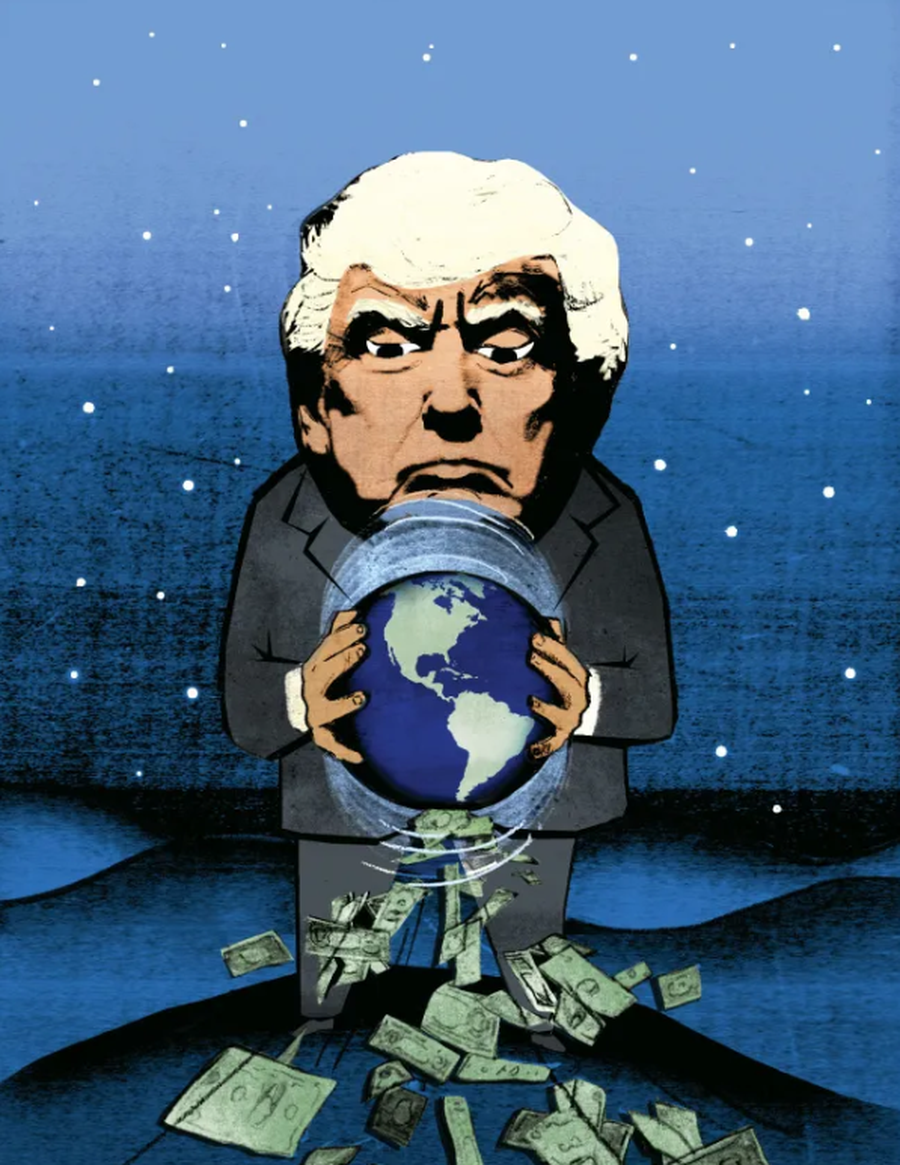
The transformation of American foreign policy into a tool for private gain and a threat to the global democratic order...
Analysts have had a hard time describing Donald Trump's foreign policy, often associating it with the terms "realism" or "transactional," or the "art of the deal" as the main strategy.
But these assessments are wrong. They assume that the administration’s goal is to advance U.S. “national interests.” In fact, Trump has destroyed that premise.
Especially in his second term, he has used foreign policy primarily to increase his wealth, strengthen his status, and for the personal benefits of a small circle of family and loyalists.
American foreign policy is now subordinated to the president’s private interests, blurring the distinction between public and personal interest. Under Trump, kleptocracy and ideology are inextricably intertwined. Political scientists argue that Trumpism is part of a global “heritage wave,” in which leaders transform bureaucratic states into extensions of their personal authority.
Yet Trump’s inclination is specific: it is kleptocratic. In a kleptocracy, corruption is the end in itself. Holding office serves to enrich the ruler. Regulation, law enforcement, and diplomacy become mere tools for extracting resources and diverting wealth to private allies.
To enable this model, the Trump administration has undertaken a systematic deinstitutionalization of the foreign policy apparatus. In 2025, over 1,350 career State Department employees were laid off in the name of combating bureaucratic “bloat.”
The National Security Council was reduced from 350 to fewer than 100 people, handing over direct control to Secretary of State Marco Rubio. This dismantling is not simply a fight against the “deep state,” but an effort to eliminate the technocratic independence that could hinder private deals. Without career officers and oversight, foreign policy remains in the hands of a handful.
friends. Instead of professional diplomats, Trump uses personal connections. Steve Witkoff, a real estate tycoon with no government experience, was sent to negotiate with Middle Eastern powers and Russia.
Jared Kushner and Massad Boulos (Tiffany Trump's father-in-law) play key roles in strategic deals that often remain opaque and without financial disclosure. These deals are "packaged transactions," combining state investments, arms sales, and private benefits into a single package, making them impossible to review legally.
For example, the deals with Qatar and Saudi Arabia involve staggering investment figures, but alongside them appear benefits such as a luxury Boeing jet for Trump or plans for "Trump Tower" in Dubai.
This approach has undermined Washington's decades-long efforts to combat global corruption. In February 2025, the administration suspended the Foreign Corrupt Practices Act, giving American companies a green light to take bribes abroad.
At the same time, the Corporate Transparency Act was weakened and oversight of cryptocurrencies, an industry that facilitates money laundering, was removed. Trump has also used the power of pardon to dismantle the regulations.
Operators of dark web drug markets and foreign leaders convicted of drug trafficking were pardoned, sending the message that the rules no longer apply to the president's friends.
Hasty and unsupervised agreements tend to fail geopolitically. The ceasefire in Congo or the joint declarations in Southeast Asia did not bring peace, but merely business opportunities.
This model makes the US similar to China in the way it negotiates, combining government investment with side deals for elites. However, unlike China, which invests in technocratic governance and education, the Trump administration is sabotaging key American advantages: its network of alliances and its image of good governance.
Even after his departure in 2029, the damage to institutions will take at least a decade to repair. The combination of kleptocracy and right-wing extremism makes corruption more sustainable.
Figures like JDVance and Stephen Miller have an ethno-nationalist vision that seeks the destruction of liberal institutions. In this symbiosis, ideologues serve as political shields for kleptocrats in exchange for power to implement their reactionary agendas.
This creates a vicious cycle where corruption abroad feeds corruption at home, making democratic institutions increasingly fragile. European Union countries and other allies should treat this regime as an immediate threat.
They must close the loopholes that allow kleptocrats to launder money and not back down under threats of retaliation. Given that Congress is unlikely to intervene, the damage will continue to accelerate.
But analysts can do one thing: stop calling this policy “realism” or “competition between powers.” Trump’s foreign policy is not a state strategy.
It is an existential threat to the American constitutional republic and the survival of democracies around the world. Any attempt to normalize this reality only exacerbates the danger. / Prepared by Pamphlet from “Foreign Affairs”
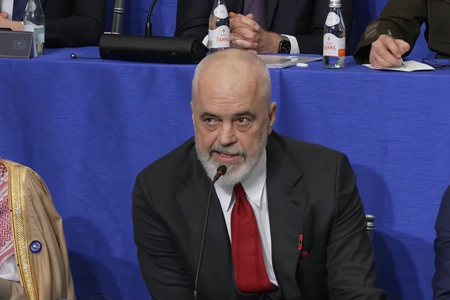
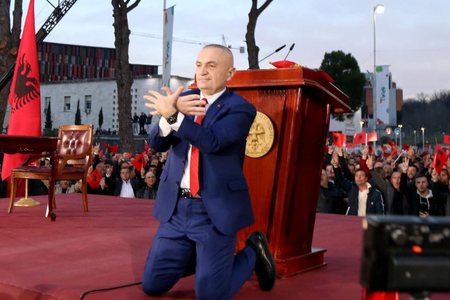
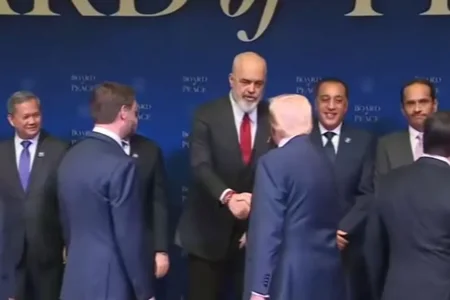



prandaj tek BORDI I PAQES shkuan ca njerez gjoja lider periferike, problematike, te korruptuar si lideri yne, qe kane shkaterruar vendin e tyre negociatore medioker te korruptuar, te etur per para e pushtet shkoi netanjahu qe shkaterroi Gazen TURP nuk ishte ftuar Palestina