


 Shkruar nga Anselmo Del Duka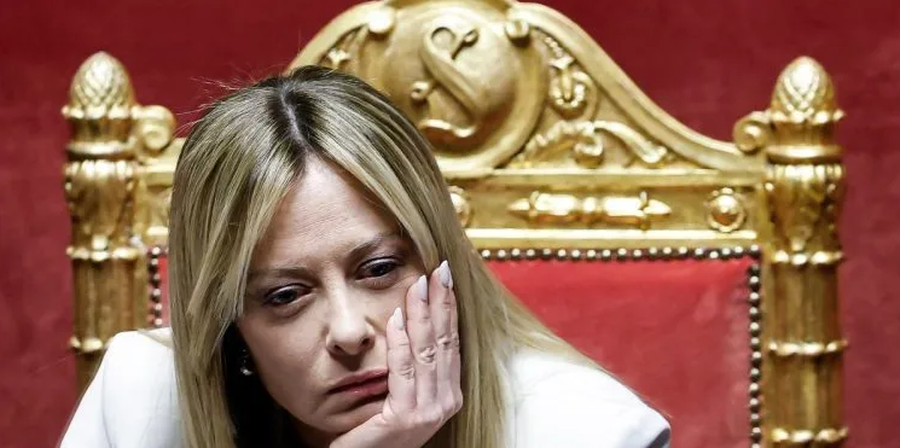
In Meloni's house, between dinners with allies and fears of a technical government, Italy's fate is being shaped. Will the "surgical reorganisation" be enough to avoid early elections?
Make a sudden move or allow the gradual consumption of power? Attempt a strong restart of the government and hold out for another year, or head towards early parliamentary elections?
This is the almost Shakespearean dilemma facing Italian Prime Minister Giorgia Meloni, hit hard by the referendum defeat. In terms of popular support, she has enjoyed an unusual “honeymoon” in republican history, lasting 3 and a half years.
But this cycle ended with the victory of the "No" vote in the referendum, a result that the prime minister denied until the last moment and when she admitted it, it was already too late. Now the danger lies in hasty reaction, especially in the face of negative polls.
After several moves to ease the pressure (such as the dismissal of figures such as Santanchè, Delmastro and Bartolozzi), Meloni has chosen not to go public, but to reflect. On Friday evening, she hosted deputy prime ministers Tajani and Salvini at her home for dinner to discuss the next steps, while also listening to the dissatisfaction of allies about the dominance of the Fratelli D'italia (Italian Brothers).
She and the entire coalition face a choice: a capillary reorganization of the government or new parliamentary elections. An agreement for the end of the current legislature could go through a "surgical reorganization."
This may include limited interventions, with some changes and new faces,
but without opening a formal government crisis. Several ministerial and undersecretary positions are at stake, but also possible more important moves, as well as the entry of new influential figures.
Meanwhile, the alternative is to quickly move to new elections, perhaps as early as the second half of June, to catch the left-wing opposition, which is still trying to finally unite in a common front and resolve the leadership issue, unprepared.
However, this path faces three main obstacles. The first is the difficult international context, with ongoing wars and an increasingly severe economic crisis.
The second is the lack of a new electoral reform, which could lead to a result without a clear winner.
And the third is the role of the Presidency of the Republic, namely Sergio Mattarella's reaction in the event of Meloni's resignation to pave the way for elections. Many analysts believe that in such a scenario the president would not immediately dissolve parliament, but would initiate consultations to verify the possibility of an alternative majority.
Even in Meloni's absence, the possibility of a "neutral" or "technical" government, as seen previously in Italy, cannot be ruled out. Such a scenario would avoid immediate elections and manage a transitional phase.
Is it worth it for Meloni to risk losing Palazzo Chigi to go to the polls? In principle, no. Power is better administered by the government than by the opposition. However, it must be borne in mind that the coming months may impose difficult and unpopular economic decisions.
The end of the National Recovery and Resilience Plan (NRRP) is approaching, and this while it has so far been one of the main factors that has helped avoid recession.
Added to this are the consequences of ongoing conflicts and temporary measures, which seem to
that they never manage to be completely sufficient. The intervention on excise duties faded within a very short time, while the recently presented fiscal decree was rejected without hesitation by Confindustria, amid numerous criticisms from other actors as well.
From this point on, even though we enter a terrain that touches the limits of political speculation, it is not difficult to predict that harsh and unpopular measures would have a direct negative impact on public consensus.
From this perspective, sharing responsibility for these decisions with the opposition and under the umbrella of a neutral government would undoubtedly constitute a political relief. The Democratic Party could hardly avoid involvement, as has happened in the past with the Monti and Draghi governments, especially in the face of expected pressure from the Quirinale (presidency).
At this point, decision-making belongs to the right-wing camp, but in particular to Meloni herself, more than to Salvini or Tajani, given that her leadership remains undisputed and the allies are not showing signs of being willing to break the pact that holds the center-right together.
Therefore, the decisive factor remains time. The Prime Minister must decide quickly which path she will follow. Stagnation, or a kind of stalemate in the country, would constitute the most unfavorable possible scenario for the center-right./ Pamphlet from “Linkiesta”





Lini një Përgjigje