


 Shkruar nga Pamfleti
The Mandates and Immunity Council is expected to meet on Friday, December 19, to review the Special Prosecution's request regarding Deputy Prime Minister Belinda Balluku.
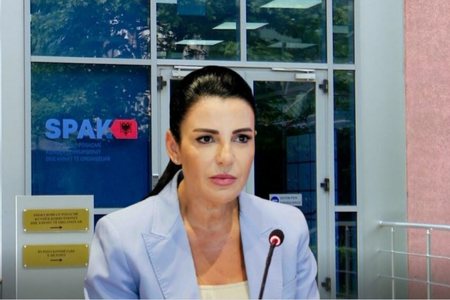
SPAK has requested the lifting of the MP's immunity, paving the way for the imposition of security measures against her. According to SPAK, Balluku is accused of "Violation of equality of participants in tenders or public auctions", committed in collaboration, as provided for by articles 258/2 and 25 of the Criminal Code, in relation to the procurement procedure with the object of "Construction of the Llogara tunnel".
He has also been placed under investigation for suspicion of committing the same criminal offense for seven other procurement procedures in Tirana's Grand Ring Road. Prime Minister Rama himself, in his reaction, gave signals that the SP may reject this request.

In a statement published on social media, Rama describes this action as a continuation of the "fashion of arrests without trial" and directly targets SPAK.
" That arrests without trial, sometimes at home and sometimes in prison, have become a rude fashion in Albania, this is a bitter truth ," Rama writes, referring to practices that, according to him, have also concerned the Council of Europe.
procedures
But what are the procedures followed when SPAK requests the lifting of a deputy's immunity? According to Article 118 of the Rules of Procedure, the Speaker of the Assembly immediately sends the request and accompanying documents to the Council for Rules of Procedure, Immunity and Mandates for review and notifies the deputy.
" The MP for whom authorization is requested is notified of the request made and the documents accompanying it, and is informed of the time at which the Council for the Rules of Procedure, Mandates and Immunity will begin examining the request. The MP has the right to present to the Council, in writing or orally, his explanations and observations on the matter, to be represented by legal counsel, to ask questions and seek clarifications regarding the request, in order to exercise the right of defense ," it is emphasized in point 2.
At the end of the review, the Council shall, within 2 weeks, draft a report for the plenary session, in which it shall recommend the rejection or approval of the granting of authorization for the imposition of the security measure of arrest in prison or at home, or deprivation of liberty in any form, or personal or residential search. The Council's report shall be distributed to the deputies.
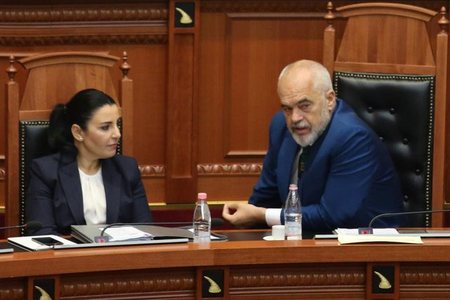
" The consideration of the request for the imposition of a security measure of arrest in prison or at home, deprivation of liberty in any form, or search of the person or residence of a deputy shall be placed as the first item on the agenda of the following session, after the presentation of the report of the Council on Rules of Procedure, Mandates and Immunity. In the plenary session, the floor shall be given first to the deputy against whom the request was submitted, to provide explanations or to answer questions from deputies. The report of the Council shall not be subject to discussion. The Assembly shall decide by open vote on the granting or refusal of authorization for the imposition of a security measure of arrest in prison or at home, or deprivation of liberty in any form, or search of the person or residence of the deputy ," it further states.
In the event that the Assembly does not make a decision on granting or refusing authorization to impose the security measure of arrest in prison or at home, or deprivation of liberty in any form, or personal or residential search of a deputy within 3 months from the date of submission of the relevant request, then the request is considered rejected by the Assembly.






Lini një Përgjigje