


 Shkruar nga Pamfleti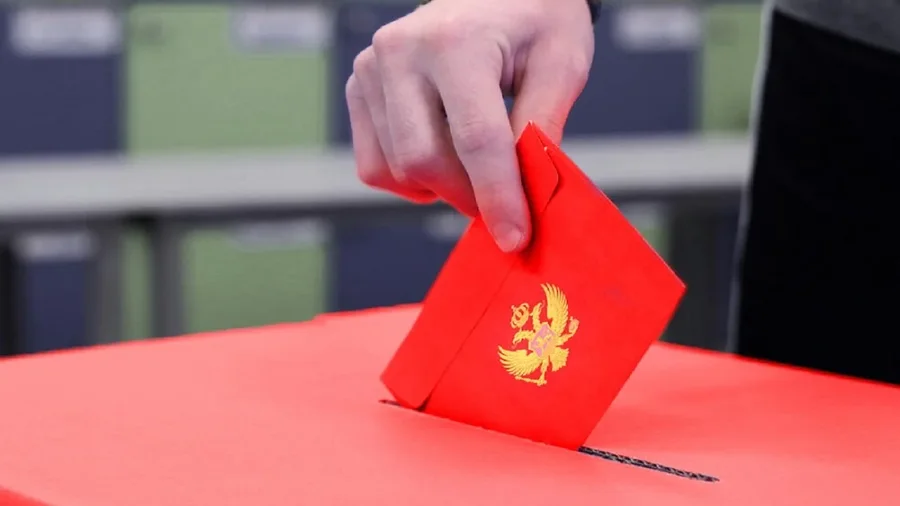
Early parliamentary elections are held on Sunday in Montenegro, which have aroused tremendous interest in the public opinion, as the solution to the political crisis that has reigned on the Montenegrin scene since the August 2020 elections depends on their outcome. Analysts appreciate the fact that the campaign took place calmly and without political friction, which, according to them, signals that such an atmosphere will also be carried over to the post-election coalitions, having a positive effect on solving the political crisis in the country.
According to Montenegrin analysts and various polls, the "Europe Now" movement, which was formed in the middle of last year and to which the newly elected president of Montenegro, Jakov Milatovic, belongs, is expected to lead.
Meanwhile, the Democratic Party of Socialists, of ex-president Milo Djukanovic, is expected to emerge as the second force in these elections, which for the first time goes to the elections with a new leader and in a coalition with several small parties.
A major change occurred in the coalition of the pro-Serbian and pro-Russian Democratic Front, which formed the current parliamentary majority in the last elections. This political coalition has already split into three independent parties and according to all polls, there will be a significant decline.
After the 2020 elections, the two parties together with the Democratic Front constituted the majority at the state level. The URA Civic Movement of interim prime minister Dritan Abazovic and the Democrats are running together in Sunday's elections.
Two coalitions of Albanian parties also participate in these elections: the Albanian Forum with the mayor of the Municipality of Tuzi, Nik Gjeloshaj and the Coalition of the Albanian Alliance with the experienced MP Genci Nimanbegu.
These elections have aroused an extraordinary interest in the public opinion, since the solution to the political crisis that prevails on the Montenegrin scene since the August 2020 elections depends on their outcome.
Well-known analyst Goran Popovic told the Voice of America that the election campaign was calm, and according to him, this gives hope for free elections that will undoubtedly affect the prolonged political crisis in Montenegro.
Mr. Popovic said that in recent times the electoral campaigns have changed, taking place very calmly and without political friction, which shows that such an atmosphere will also be carried over to the post-election coalitions. Such an approach without strain and tension can significantly affect the political crisis in Montenegro, Mr. Popovic said.
Meanwhile, analyst Bekim Çobaj believes that the winners of these elections will accelerate Montenegro's journey towards European integration.
"It is rightly expected that after the June 11 elections, the pro-European political parties will form the majority and those parties that are not pro-European and that have shown that they are not ready to do what they have declared and go in that direction will remain in the opposition ", said Mr. Çobaj.
81 deputies emerge from these elections and the new parliamentary majority will choose the new prime minister and government of Montenegro.
Over the past few years, the unstable parliamentary majority replaced two governments, which plunged Montenegro into an institutional crisis and further deepened divisions on the political scene.
For this reason, the international factor has continuously expressed concern about the prolonged political crisis in the country, the blocking of institutions, the increasing polarization of society and the inability of the authorities to find a way out of the crisis.
Montenegro joined NATO in 2017 after a failed coup attempt a year earlier, which Podgorica blamed on Russian agents and Serbian ultranationalists.
Following the launch of Russian aggression in Ukraine last year, Montenegro has joined EU sanctions against Russia. The Kremlin, in return, placed Montenegro on the list of unfriendly states./VOA


Lini një Përgjigje