


 Shkruar nga Pamfleti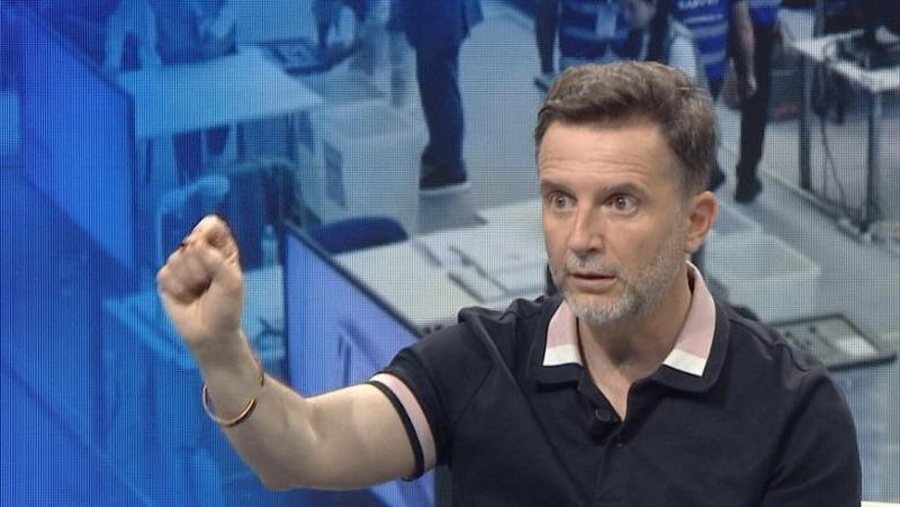
Hybrid warfare is a term that has found widespread and growing popularity over the last decade, as many Western states have found themselves the target of foreign interference and disinformation campaigns.
A country with limited technological infrastructure and fragile institutions, Albania decided to confront this phenomenon only last year.
On April 11, 2024, the Albanian Parliament approved with only 73 votes from the socialists the establishment of a Special Parliamentary Commission "To combat disinformation and other forms of foreign interference in the country's democratic processes", or as it is now widely known, the Disinformation Commission.
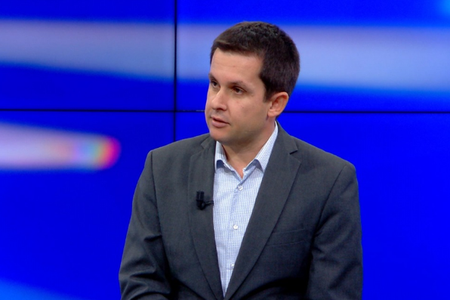
"The need was quite evident. We were under attack, under attack. An attack that continues consistently. The same actors continue to undertake attacks of a disinformation and cyber nature. And from here arose the need to raise this matter. In the background were the positions of our strategic partners the EU and the US to respond to these interventions," says the chairman of this commission, Erjon Braçe.
The work of 1 year, which consisted of calling 14 institutions, such as the Ministry of Interior, Defense, SHISH, AKEP, ANA, AMA or CEC, to hearings, ended with the approval of a "National Strategy Against Foreign Intervention and Disinformation" on July 3, again only with the votes of the socialists.
"Especially after the Russian attacks on Ukraine, it was necessary to establish a system that does not exist to this day, to draft a strategy that will coordinate all the actions of state actors to combat malicious foreign interference and disinformation within the territory to create divisions in society, social divisions, and to destabilize democracy and the economy."
Brace says that interference in democracy and electoral processes is the main concern. Elections in particular, according to him, are the weakest link.
"Democracy is their main focus. The whole essence of malicious foreign interference is the delegitimization of democracy within a society. The key element of democracy that is being used everywhere is elections. We are at risk when it comes to electoral processes as long as we have had cases of interference through direct funding or funding of dubious or unidentified origin that are under investigation and that have had a focus on influencing the electoral outcome. Elections are the key element of a malicious foreign interference with a clear focus on favoring political forces through funding. We have been exposed in this regard."
The proposals are concrete and will be put on the electoral reform table.
"The moment we sit down for a complete electoral reform, let's discuss two elements that are also a strategy proposal, electronic voting throughout the country and the protection of every electronic system that will be involved in the elections, starting from the origin of the product, is it in China? In Russia? Obliging third parties to declare the origin of the money with which they finance parties. Money originating from abroad? Or within the country? Today, someone can be a donor to a political party, to a candidate. We do not force donors to show the origin of the funding. We force the party to show the donor, but not the donor to show the origin of the money."
But in which sectors is our country most at risk?
Journalist Raziela Myslimaj: The strategy touches on another very important issue, which is the monitoring of foreign investments in critical sectors of the country that could affect national security. Do we have investments of dubious origin?
Erjon Braçe: Yes! In the communications sector that internet companies have and that was referred to us by the Central Bank but also by the DPT, that has owners who come from countries of this origin, and that of course with the owners come capital flows. A special focus should be here, in energy, in renewable energy, oil, gas… all together. There should be scrutiny of the capitals that enter these sectors. Also telephony, telecommunications. The banking system, the microcredit system, or non-bank institutions. This sector that is not regulated by law should even be under investigation. There are a series of critical sectors that are described in the strategy and that should be under attention for control. There are shareholders who come from countries of this origin, or from surrounding countries, such as Russia, Iran or other countries that do not have peaceful intentions towards us. Their activities should be under attention.
Here too, the measures proposed in the strategy are concrete.
"These are critical sectors where we have recommended two fundamental measures. A law that should unite the law on foreign investments and the law on strategic investments and that carries within it the creation of a control and transparency mechanism for capital flows entering these sectors."
Hacking of government systems and data for Albania continues to be a worrying phenomenon.
"We have requested very clearly: A list of countries from which Albania can import technology. One chip is enough to have access to the entire country, to all the country's data in real time. This list should be compiled as soon as possible in cooperation with partners, especially with regard to critical infrastructure."
The Disinformation Commission was established amidst major doubts and questions from experts and the opposition, that its product would be a tool of control and censorship for the media and freedom of expression.
"Everyone thought that the eye would be closed, the tooth would be removed, the tongue would be cut out...none of this happened. It was said that Erjon Braçe was put in charge to close these. On the contrary, the strategy treats disinformation in terms of freedom of expression. If there is a real threat to freedom of expression, it is disinformation. Today, audiovisual media operate on the basis of a law and there are special instruments that the media must submit to. Meanwhile, online, you have almost audiovisual media that produce video, as well as audio and text. These are out of control."
Braçe emphasizes that the concern about the commission's work was not at all the editorial line of these media outlets.
"I am not at all concerned about what is written in them, but when the national security or national and international interests of Albania as a member of NATO and very soon as a member of the EU are violated, we must stop to create an environment where freedom is greater than disinformation."
Journalist Raziela Myslimaj: Is there deliberate disinformation in the media? That they become a party to certain interests?
Erjon Braçe: What I have seen in those classified documents for 50 years, these two aspects. Falling prey to disinformation and spreading it massively due to the lack of financial, human, professional resources… and the second is self-sacrifice. They have volunteered to do this. The documents make this clear.
Journalist Raziela Myslimaj: Are there doubts about media financing?
Erjon Braçe: This is how far we went. We did not have the tag of an investigative commission. Then there is another phenomenon, which is the phenomenon of foreign media that addresses itself in the Albanian language. For the Pravda media system in the Albanian language, which addresses Russian politics here. The commission has requested their closure, just as it has noticed that the institutions were doing "after".
The commission entrusted to Erjon Braçe began and completed its work only with socialist members, as this initiative not only did not receive the support of the opposition, but was also boycotted by it by not attending any of the meetings, with the argument that the commission would violate media freedom.
Despite the claims, the strategy already approved by the parliament does not contain measures that violate media freedom, but rather interventions that increase transparency and verification of published information. The plan of measures includes media education in pre-university and university school curricula, as well as the establishment of a communication network with media operators to verify the veracity of information. /Report TV/


Lini një Përgjigje