


 Shkruar nga Pamfleti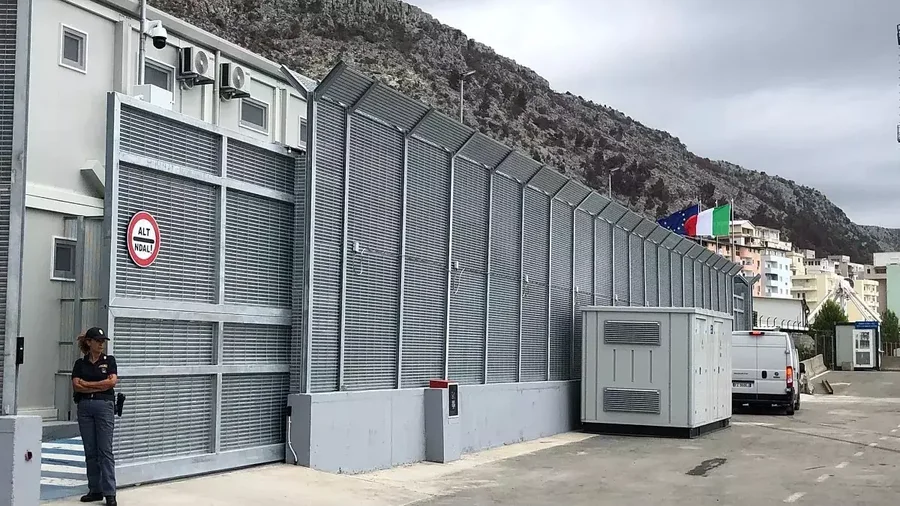
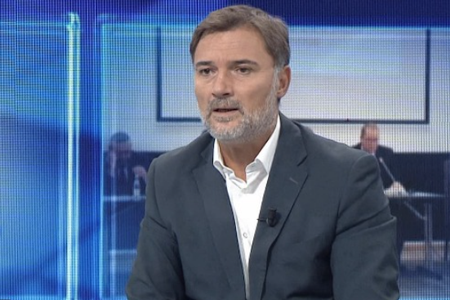
The General Secretary of the Union of Prison Police Employees in Italy, Gennaro De Fazio, spoke about the camp in Gjadër of Lezha. He said that even though they have worked for months to receive the immigrants, this camp lacks infrastructure. Fazio adds that it is also understaffed.
As he expresses his reservations about the migrant camp, he lists a series of problems that have been encountered in this camp, from the non-respect of working conditions to the lack of water and electricity, the telephone line or even the treatment of employees who, according to him, are sleeping in the container.
Interview:
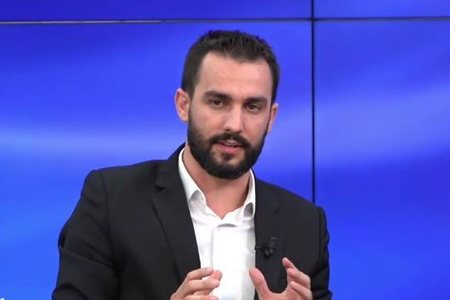
Alba Kepi: Secretary, a few hours after the news that the camps in Albania are ready, you as a representative of the employees of the Italian Penitentiary Police expressed strong criticism, what is it about?
Gennaro De Fazio: Thank you for the invitation. From the news that comes to us, we have references about the prison that was built there and that will have to wait for the immigrants, but that it lacks the necessary infrastructure and, on the other hand, it doesn't even have the right personnel. Out of 45 prison employees engaged to work in Albania, only 15 of them have arrived to date. And these are currently working in the supervision and security of the structures of immigrants as well as in their service. Our employees in Gjadër refer us that the construction sites are still open, problems with water supply, telephone and internet lines. Our colleagues are in a rather chaotic living situation, living in containers near the prison structure. I think that if the very employees who have to guarantee order and security in the immigrant camps in Albania have these problems, then I don't even want to imagine in what conditions asylum seekers can live in them or asylum seekers in prison. So, according to us, a situation far from what can be called ready to function and receive immigrants, which a democratic country like Italy should guarantee, but also Albania itself.
Alba Kepi: So in your opinion, the regulations provided for in this agreement and for the accommodation of security officers in luxury hotels near the port of Shengjin have not been respected?
Gennaro De Fazio: The other forces of the Police and the Italian Army are accommodated in hotels, while our employees in prefabricated containers inside the camps. Only the first days when they arrived they stayed in the hotel, but if they stayed there they would pay from their own pockets and then they were told that they would be reimbursed, but they also paid for the expenses they incurred from their own pockets.
Alba Kepi: As a trade unionist, you have expressed the concern of these employees in the relevant ministry of justice.
Gennaro De Fazio: We have expressed this concern that they have encountered, but we would also like cooperation with the police since often they are forced to say that everything is fine even when it is not.
Alba Kepi: You said a little while ago that there are only 15 penitentiary police officers in Shengjin, Albania, but when will the others leave?
Gennaro De Fazio: Currently there are 15 employees, it is planned that another 30 employees of the Penitentiary Police will go to Albania and we do not know when they will go, because the penitentiary administration does not give us accurate information and even the selection in these structures leaves much to be desired, as there is a lack of transparency. As we still do not know how they were selected to be in Albania. We even expressed in a meeting that this procedure is a procedure that is worthy of those countries where immigrants come from and this is another paradox.
Alba Kepi: Regarding the internal structure, what is your opinion, given that you are the General Secretary of the Union of Prison Police Employees?
Gennaro De Fazio: Here we enter the realm of personal opinions. And I want to stop a little here because seeing the problems that the prison police have in Italy, we believe, but apart from having our doubts about the way these immigrants will be treated in the camps in Albania, we think that for their realization there is a misuse of public funds that could be much better invested to increase the personnel of the police forces and to improve the situation in prisons in Italy where an overcrowding of 15 thousand people beyond the capacity and a shortage of personnel of 18 thousand employees, as well as 75 suicides are recorded of prisoners and 7 prison police suicides.
Alba Kepi: Are there structures in Italy as they were created in Albania?
Gennaro De Fazio: No, there are no such structures in Italy, as they are in Albania and under Italian jurisdiction.
Alba Kepi: For you too, this is the first time you work in a prison that is not in Italy?
Gennaro De Fazio: It is the first time that we work in such a situation, we have been in different missions outside Italy but this is different.
Alba Kepi: You touched on the rules a little while ago, how do you see them as a representative of the penitentiary police force?
Gennaro De Fazio: I have seen them as grotesque rules. That they don't respect Albanian citizens and Albania and also disrespect our agents, because it is said that you shouldn't harass girls for example, but you know what the worst thing I found is that the staff is abandoned and alone.
The age group that went to Albania as police officers are young and some older, from those who have selected.
Cape Alba. Does the fact that there will be only male asylum seekers in the migrant camps in Albania preoccupy you in the way of organizing the work activity?
Gennaro De Fazio: We don't know how this choice was determined and why. We are very concerned about this whole operation, despite the fact that they are men, or they have been selected. We are concerned about the fact that families will be separated, the separation of parents from children with the effects and big problems that burden the asylum seekers who will be related to us. And if they have difficulties in contacting their families and relatives, their behavior can weigh on us./Syri Tv



Lini një Përgjigje