


 Shkruar nga Pamfleti
Challenging a system designed to keep them out of Parliament, small parties with no ties to the government are expected to receive 155,000 votes in these elections and at least 3 parliamentary seats, opening a window to parliament for the first time from outside the ranks of the elite.
Three of the small parties competing in Sunday's elections appear to be securing parliamentary mandates, a fundamental shift in Albanian politics that could pave the way for breaking the duopoly system created by the Socialist Party in government and the Democratic Party in opposition, as well as laying the foundations for challenging the clientelistic politics fossilized by these political forces over the last two decades.
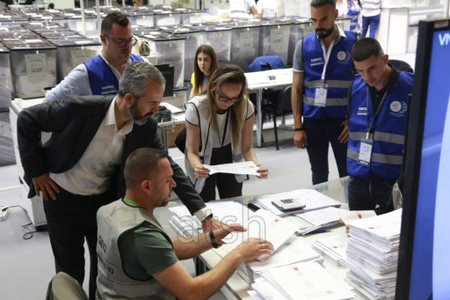
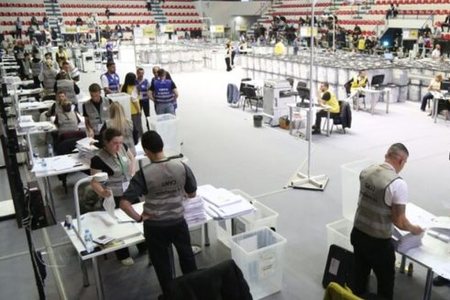
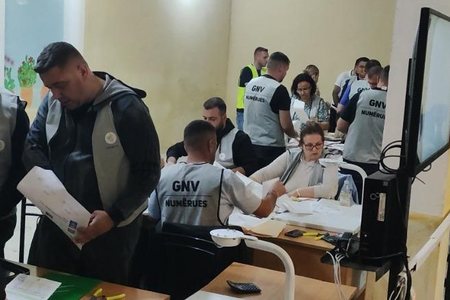
The vote counting process on Sunday has not yet been completed, but it is already clear that eight small parties out of eleven competitors have received around 140,000 votes domestically and around 15,000 from emigrants, for a total of 155,000 votes. The figures are not final because for domestic votes, another 2% of the ballot boxes remain to be counted, while for emigrant votes, over 70% remain to be counted. The process of counting emigrant votes is currently blocked. Although almost 48 hours have passed since the closing of the ballot boxes, the turnout figures are not yet available, but extrapolation of the declared data suggests that 1.66 million citizens voted domestically and abroad, and of these, 9.4% voted for one of the challenging parties.
Parliamentary mandates
Many individuals and groups have attempted in the past to break the duopoly established two decades ago in an agreement between Sali Berisha, then prime minister, and Edi Rama, then mayor and leader of the opposition Socialist Party.
Ben Blushi with the Libra party, after breaking away from the Socialist Party, received almost 20 thousand votes in the 2017 elections, but won zero parliamentary mandates. In 2021, the then newly created Nisma Thurrje received 10 thousand votes and zero mandates. Several independent candidates, three of whom were supported by the Kosovo Self-Determination Movement, did not even come close to a mandate.
The situation is expected to be very different these elections, where three of the small parties are expected to receive a minimum of 3 and a maximum of 7 mandates depending on the final result.
The “Albania Initiative Becomes” coalition has so far secured 3.5% of the votes within the country and 8.4% of the votes of emigrants. This party has so far secured one mandate in Tirana. It is still holding out hope for a second mandate in Fier, for which it is close, and one in Vlora. The hopes for mandates in these two districts seem to depend on the better performance that this party has among emigrants from these two districts. NSHB has received 13% of the votes from emigration that have been counted so far for the Vlora district and 10% for the Fier district. In contrast, in the votes within the country, it has received 5.4 and 4.6% respectively.
Businessman Agron Shehaj's "Mundësia" party has so far secured one mandate in the Tirana Region, while a second mandate is still in the running. Mundësia has so far received around 42,000 votes, which are expected to increase by the end of the counting.
"The Together Movement" has so far received over 20 thousand votes at the national level. It is close to winning a mandate in the Tirana Region, where it has received almost 2.7% of the votes. It will take many more days to learn the final result because about 150 thousand votes from emigration remain to be counted.
Legal duopoly
Since 1991, the two main parties, the Socialist Party, heir to the Labor Party, and the Democratic Party, which in a significant number of its leaders broke away from the Labor Party, have managed power with the help of several parties on each wing, small parties used sometimes as bait for dissatisfied voters and other times as electoral machines. In 2001, when the then Socialist leader, Fatos Nano, expressed dissatisfaction with the small parties allied to the SP, he described them as “taxi parties”, meaning ordinary tools used according to the needs of the big parties in return for a payment.
Throughout the elections that followed, the DP and SP and their formal allies, who changed names, managed the country's electoral processes and usually denied parties that emerged outside their will, whether people who broke away from them or new political initiatives, a fair and equal competition.
The peak, however, was in 2008, when an agreement between the DP and the SP installed a regime of multiple disadvantages for small parties in general, targeting the Socialist Movement for Integration in particular. In one of the ugliest elements of the agreement, it was required that, in case a group of people wanted to create a new political party, they had to collect notarized declarations from 20 thousand citizens. Given that notarized declarations have a legal cost of 200 lek, the cost of establishing a new party was thus set at almost 40 thousand euros.
Dizavantazhi kryesor u krijua nga ndarja e vendit në 12 rajone zgjedhore me përmasa të ndryshme, në shumicën e të cilave, partitë e vogla nuk kishin shanse reale të fitonin mandate. Krahas ndarjes në fjalë, u imponua edhe detyrimi që çdo parti të garonte në të gjitha qarqet dhe me lista të plota kandidatësh. Detyrimi përgjysmohej, pra partitë e vogla nevojiteshin të garonin me 70 kandidatë dhe jo me 140, në rast se ato pranonin të garonin si pjesë e koalicioneve të dy partive të mëdha.
Absurditeti i skemës u vu re në vitin 2017, kur MEGA, një parti e minoritetit grek në Shqipëri, u detyrua të garojë në të gjithë territorin e vendit dhe mbushi listat me çfarë të mundej ndërkohë që shpresonte për mandat vetëm në disa zona të kufizuara ku banon komuniteti që kjo parti synonte të përfaqësonte.
Diskretitimi i thellë i dy forcave të mëdha politike nga skandalet e njëpasnjëshme korruptive si dhe lufta e shumë aktivistëve kundër padrejtësive sistemike duket se krijoi dritaren e vogël, përmes të cilës, tre parti të reja po hyjnë në parlament.
Më pak mandate nga sa u takon
Sipas Kushtetutës së Republikës së Shqipërisë, përfaqësimi në parlament duhet të jetë sa më i përafërt me votën popullore, ndonëse gjerësisht pranohet se kjo nuk është e mundur 100 për qind. Sistemi i zgjedhur nga PD-PS në fakt ka shkaktuar që nga ajo kohë “vota të djegura”, vota që praktikisht nuk janë përfaqësuar në parlament. Zgjedhjet e së dielës nuk ndryshojnë nga të shkuarat në këtë drejtim, ndonëse në të shkuarën, “viktima” të sistemit kanë qenë partitë makineri elektorale të llojit LSI apo PDIU.
Të tetë partitë e vogla sfiduese në zgjedhjet e së dielës, (pra garuesit pa PS, PD e aleatë dhe PSD), pritet të marrin brenda vendit 142 mijë vota, të cilat përbëjnë rreth 10% të votave dhe teorikisht duhej të prodhonin rreth 14 mandate. Por fakti është që këto parti pritet të marrin minimumi 3 dhe maksimumi 7 mandate për shkak të padrejtësisë sistemike. Votat e papërfaqësuara të këtyre shqiptarëve u kalojnë si mandate dy partive të mëdha. Kështu, Partia Socialiste, e cila mori 52% të votës popullore, pritet të marrë 82 mandate ose gati 56% të parlamentit, ndërsa opozita kryesore pritet të marrë 50 mandate ose 36% të parlamentit, ndërsa ka marrë 35% të votave. Me pak fjalë, nga të 11 mandatet që PS dhe PD ia ka mohuar të vegjëlve me sistemin e proporcionalit rajonal, 10 duket se janë fituar nga Partia Socialiste dhe një nga Partia Demokratike. Në rast se sistemi do të ishte proporcional i pastër kombëtar, PS do të merrte 73 mandate, PD 49, Nisma Shqipëria Bëhet 4.9 mandate, Mundësia 4.3 dhe Bashkë afërisht 2 mandate. Me sistem proporcional kombëtar, Koalicioni Euroatlantik, që mori 1.36% të votave e kishte të sigurt një mandat.
Tirana goditi të mëdhenjtë
Zgjedhjet e së dielës duket se kishin përcaktues votuesit e Qarkut Tiranë. Partitë e vogla morën sëbashku afërsisht 143 mijë vota në rang kombëtar ose 10% të votave të vlefshme në rang kombëtar, por në Tiranë morën 13.7% të votave.
In Sunday's elections, approximately 435,000 votes were cast in Tirana, almost 50,000 fewer than four years ago. The Socialist Party lost 26,000 votes while the Democratic Party lost 35,000 votes on its own. The 28,000 votes that the LSI received in 2021 in Tirana and that theoretically should have been in the bag of the Greater Albania Coalition are nowhere to be seen. The DP and LSI together have lost almost 64,000 votes. Small parties taken together in Tirana have received almost 80,000 votes. Four years ago, small parties, including the Weaving Initiative, or Democratic Consent, had received a combined 15,000 votes.
Another model
The small window to Parliament, opened by small parties in Sunday's elections, is likely to mark the start of a different kind of politics than we have seen over the past two decades. Because, starting in 2009, when the SMI crossed the political rainbow and entered a governing alliance with the DP, the dominant policy has been that of maximum use of state economic resources to secure votes, manipulation of the media, cooperation with organized crime to buy votes and blackmail voters. In short, starting initially with small parties, clientelistic politics expanded to the large parties, the DP and the SP, until it completely fossilized, which has been observed throughout the last three electoral campaigns for parliamentary elections, campaigns that international observers describe as "rather low-key," a figurative expression that in this case means the absence of real political debates.
In this context, the small parties, with 10% of the valid votes and with every vote secured thanks to the citizens' demand for representation outside the clientelistic politics or identity politics inherited from the communist tyranny and the massive violation of human rights by the first post-communist government, suggest that a new beginning has been marked in Sunday's elections, a beginning that has been slightly overshadowed by the sensational victory of the Socialists or the numerous electoral violations observed by locals and internationals. It is likely that the new parties entering parliament will have the opportunity to demonstrate their capabilities, giving citizens more choices in the upcoming elections.
The other big change seems to be internal democracy. The Albania Is Made Initiative competed with open lists, which it imposed on itself, while the Together Movement placed Redi Muçi, an activist and not the chairman Arlind Qori, first on the Tirana list, through a vote within the party structures. A number of citizens appeared in public for the first time with the policy of physical presence, from the parties that are entering parliament and from others that did not enter, with face-to-face communications, with a confrontation of ideas and away from the model of the irreconcilable enemy installed by the major parties or of the voter as an institutionalized client with the patronage system./Reporter.al



Lini një Përgjigje