


 Shkruar nga Pamfleti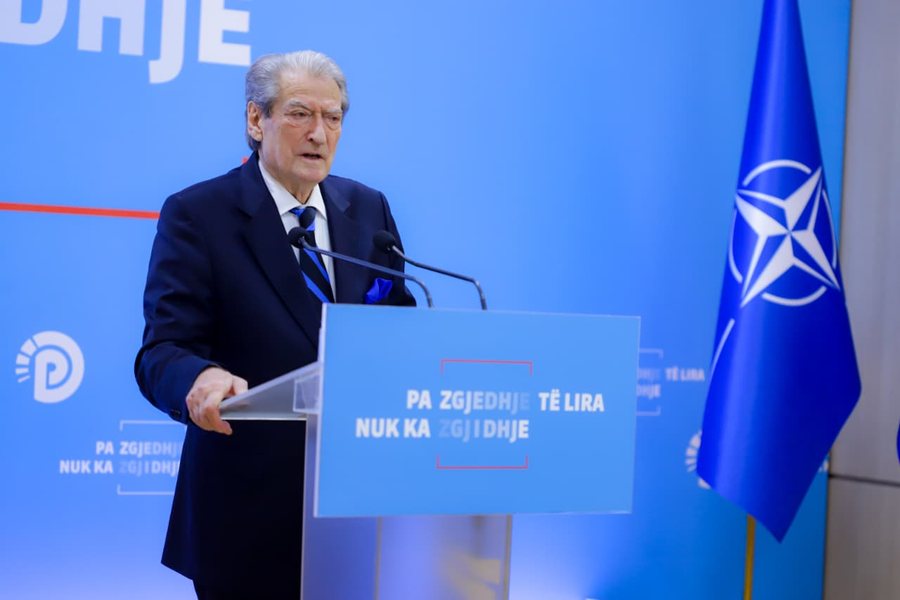
Every time he gets the chance, he pulls a name out of the drawer and confirms it. He could do the same with the position of Ombudsman…
The Democratic Party has been facing positive pressure for several weeks to refresh its leadership pyramid, a process that is also accepted by Sali Berisha.
A movement initiated by Ervin Salianji and joined by many of those who received the most votes in the DP primaries, or by those who competed on the open lists in the May 11 elections and collected many more votes for the names that make up the leadership, consists precisely in its refreshing, as well as in the opening of the DP to new elements.
In principle, all parties agree, and even Berisha himself, as the leader of the DP, considers reform and opening up a priority, although so far it has remained at the level of declarations.
And it is precisely those who today identify as part of Ervin Salijanj's movement who ask Berisha to lead the DP by making reality what is said as a statement from the party's pulpit or from the television studio.
But practice has shown that Berisha is inclined to recycle the same names, perhaps because he has previously tested them and built trust. Or given the fact that the opposition is in a position today, recycling can also be seen as a gesture, a "returned honor" for the loyalty they have shown him over the years. He does the same with positions both in the party and in the parliamentary group.
Every time he gets the chance, he pulls a name out of the drawer and confirms it. He can do the same with the position of Ombudsman, where after supporting a dozen names with signatures, on the last day he withdrew his support for the list that had been circulating not only in the media, but also in the offices of the Parliament for more than two weeks.
Some of the names on that list were young people who, in one way or another, had managed to obtain the necessary support with the signatures of deputies to become candidates for a race that at the end of the day is decided by the will of Edi Rama's deputies.
On almost the same day that he withdrew support for the candidates running for Ombudsman, Berisha managed to find consensus with the socialists for the new Commissioner for the Supervision of the Civil Service, who has a mandate for a five-year term. The name voted is Lefterie Lleshi, former chairwoman of the CEC, proposed by Berisha while he was prime minister.
A short time ago, Berisha reinstated Arben Ristan, appointing him to the Regulatory Commission of the CEC, as one of the members and representatives of the DP. Ristan was the Chairman of the CEC and one of Berisha's close associates at the time.
And perhaps this practice of recycling names and 'qoka' will continue whenever the opportunity arises. He did the same thing during his time as Prime Minister (2005-2013). In key positions, he chose to appoint his former collaborators from before 1997, or their family members, even though he used "KOP" as a make-up with new names and faces.
The difference today compared to when he was Prime Minister is that he has fewer leeway, but every time he reaches consensus with the Socialists, he pulls a name out of the drawer. /Pamphlet/


Lini një Përgjigje