


 Shkruar nga Pamfleti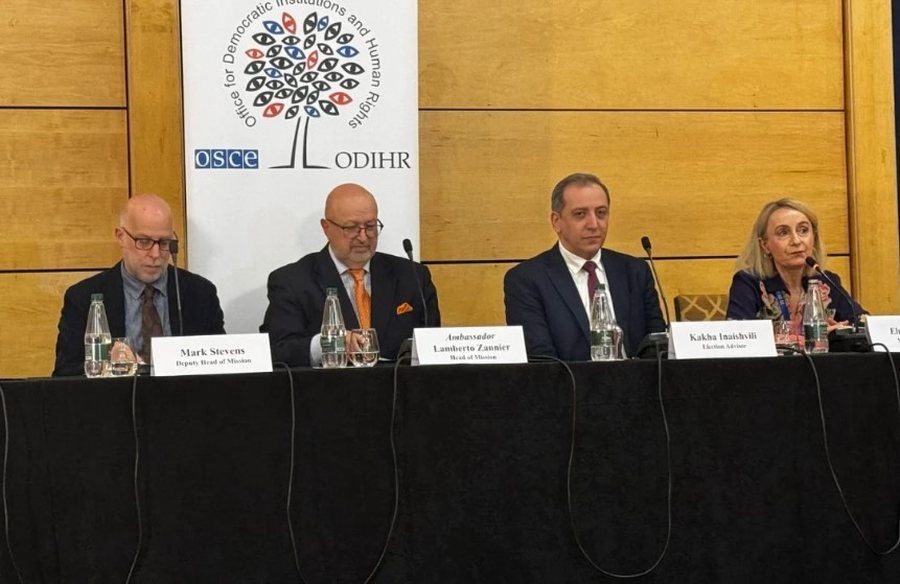
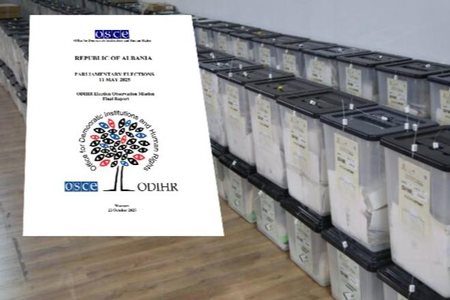
OSCE/ODIHR has published its final report on the parliamentary elections of May 11. According to the final report, the elections took place in a polarized political environment, while the participants in the competition did not enjoy a level playing field.
“Following an invitation to observe the parliamentary elections of 11 May 2025 and in accordance with its mandate, the OSCE Office for Democratic Institutions and Human Rights (ODIHR) established an Election Observation Mission (EOM) on 2 April. The mission, led by Ambassador Lamberto Zannier, consisted of a 12-member core team based in Tirana and 26 long-term observers (LTOs) who deployed on 10 April throughout the country.
The ODIHR EOM remained in Albania until 22 May to monitor post-election developments. On election day, the ODIHR EOM was joined by delegations from the OSCE Parliamentary Assembly (OSCE PA), the European Parliament (EP) and the Parliamentary Assembly of the Council of Europe (PACE) to form an International Election Observation Mission (IEOM). In its statement of preliminary findings and conclusions issued on 12 May 2025, the IEOM concluded that the elections “were competitive and professionally conducted, but took place in a highly polarized environment and the contestants did not enjoy a level playing field.
However, candidates were generally able to campaign freely, although some reported facing threats. The election administration managed the process in an inclusive and transparent manner.
Out-of-country voting, introduced for the first time for these elections, was well managed, despite the late political agreement and approval of this measure, as well as some organizational issues.
The ruling party benefited from extensive use of administrative resources during the campaign, creating an undue advantage for senior officials. There were also many accusations of pressure on voters, especially public employees.
Moreover, the electoral legislation and its narrow interpretation by the election administration did not prevent abusive practices. Concentration of media ownership that undermined the plurality of news sources, together with self-censorship among journalists and the two largest parties that dominate news coverage, limited the ability of voters to make an informed choice. The active use of online social networks by the contestants amplified the strong confrontational discourse, and no authority was designated to detect harmful manipulative content.
The new coordination mechanism between institutions to investigate and prosecute electoral crimes is a welcome development, but their follow-up is necessary to address ongoing concerns of electoral malpractice.
"Election day was generally calm and well-organized, but there was a frequent lack of respect for procedures and was marked by a number of incidents of voter intimidation and incitement and some procedural and transparency deficiencies in the vote count," the report states.





Lini një Përgjigje