


 Shkruar nga Pamfleti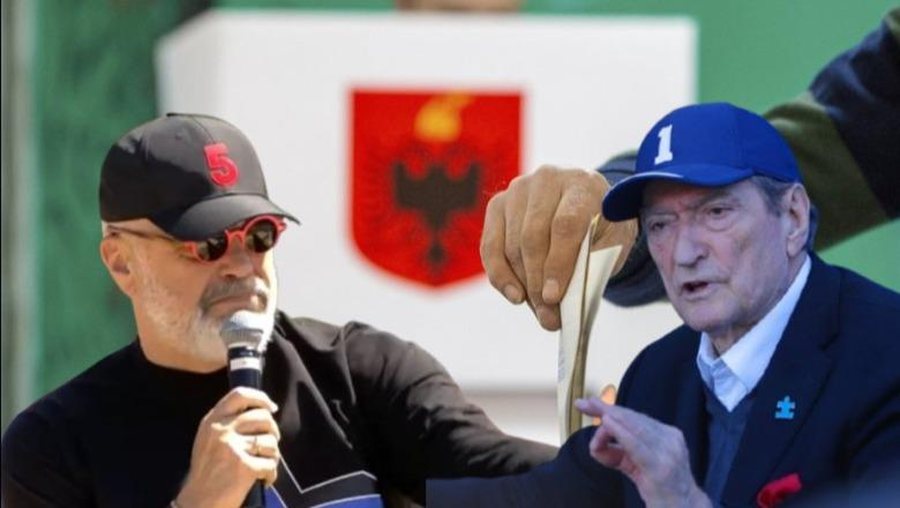
The May 11 elections will be closely monitored by 100 observers appointed by the OSCE Parliamentary Assembly. They are representatives from 31 countries who will be stationed in Albania...
Parliamentary elections will be held on May 11, where Edi Rama will aim for a fourth consecutive mandate, while Sali Berisha will return to government for the 3rd time, in 34 years of pluralism.
With a seemingly calm campaign, without significant incidents, the May 11 process seems to have set a 'record' for the lack of debates at any level between representatives of the two main parties, but also candidates of each political force.
Edi Rama has focused his campaign on the promise of Albania joining the EU by 2030. Rama has chosen to label the main opposition in the country, led by Sali Berisha, as a swamp, while calling the Democratic leader a 'swamp owl'. Meanwhile, he considers new parties as swamps and compared their leaders to some of the characters in pyramid schemes.
On the other hand, Berisha's Democrats, perhaps guided by the American strategist, Chris LaCivita, have focused on a program, mainly on economic points, making promises for salary and pension increases, determining the living wage, and there are contestations from Prime Minister Rama, who is trying from time to time to minimize any idea that is thrown from outside his 'political fence', considering them unrealizable.
But on the other hand, Berisha's Democrats, based on the latter's political experience, have prepared the ground to contest the elections, especially by bringing the international factor into play. A voluminous dossier that includes every denunciation has been translated into English and includes every document made or not made public, starting with the use of the administration, pressures, the use of state assets, the connections of officials with criminal elements, etc.
According to sources from the Democratic Party, the file contains about 150 names, officials of various levels, but also elements of the criminal world, who according to the Democrats, have committed electoral crimes. The names are even divided by districts, precisely where the Democrats claim that they act and exert pressure, with the aim of alienating the vote.
According to the Democrats' data, most of the names are engaged in the Tirana, Elbasan, Fier, Shkodër and Durrës Regions. "They are officials of various levels, who are acting in violation of the law, even with the support of criminal elements," say sources from the DP, who seem to be continuing to collect information, to further enrich what is expected to happen after May 11. Sources from the DP say that they have evidence of meetings between socialist officials or delegates with those considered to be the 'underworld', but also of the engagement of characters who are in prison, using their influences in certain areas, in favor of the majority.
Some names have been made public sporadically, but it seems that the DP's strategy is to present the file with evidence and facts, even with specific names, to international structures and chancelleries.
All information is collected by political leaders in the regions, who then compile their files that are forwarded to the DP headquarters, where another group merges, translates, and attaches them to the large file.
Sources from the DP state that in official and unofficial meetings, all the hot electoral areas have been made clear to international representatives, but also the schemes being used by Edi Rama in order to obtain a fourth mandate in government.
For the Democrats, the identified hot electoral areas are mainly the peripheral or rural areas in the municipalities of Tirana, Shkodër, Fier, Elbasan, Lezhë, Durrës, where there is a use not only of the administration, but also scenarios for vote buying.
It is not known whether the Democrats' scheme to denounce May 11 will be effective, but in the headquarters currently led by Sali Berisha there is optimism that a manipulated process will not receive international recognition.
About 100 observers from the OSCE Parliamentary Assembly
The May 11 elections will be closely monitored by 100 observers appointed by the OSCE Parliamentary Assembly. They are representatives from 31 countries who will be stationed in Albania. This marks the tenth time that the OSCE Parliamentary Assembly has observed elections in Albania since 1996.
The Special Coordinator and Head of the OSCE short-term observation mission will be Farah Karimi (Netherlands), who serves as the OSCE Parliamentary Assembly Special Representative for Central Asia and Head of the Netherlands Delegation. She has previously led other OSCE Parliamentary Assembly election observation missions, most recently in Serbia in 2023. The Head of the OSCE Parliamentary Assembly observer delegation will be Björn Söder (Sweden), who serves as Head of the Swedish Delegation to the OSCE Parliamentary Assembly.
The OSCE Parliamentary Assembly team will work closely with the OSCE/ODIHR Election Observation Mission, headed by Ambassador Lamberto Zannier (Italy), and partner delegations from the Parliamentary Assembly of the Council of Europe (PACE), headed by Simone Billi (Italy), and the European Parliament (EP), headed by Michael Gahler (Germany).
Observers will be fully briefed by representatives of the election administration and civil society, candidates, party representatives and experts on the situation before the elections, before being deployed to several regions of Albania to observe election day.
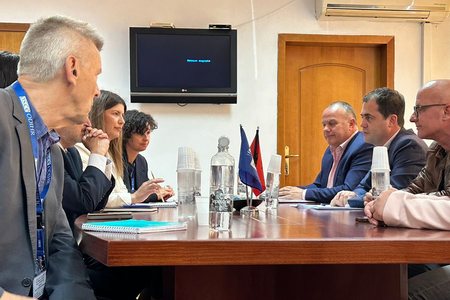
In early April, a delegation, led by Special Coordinator Farah Karimi, conducted a pre-election visit to Tirana to assess the electoral environment. During the visit, Karimi met with Ambassador Michel Tarran, Head of the OSCE Presence in Albania, representatives of political parties, civil society, the media, the Central Election Commission, the Special Structure against Corruption and Organized Crime, the Audiovisual Media Authority (AMA), and the OSCE/ODIHR election observation mission. The pre-election visit provided valuable insights into the political climate, media landscape, and civil society environment ahead of the elections.
“These parliamentary elections are taking place in a historic context, with Albania introducing voting abroad for the first time and implementing key changes to its electoral system,” said Special Coordinator Karimi.
“Our mission is to observe and report on whether the elections not only comply with the legal framework, but also reflect democratic values. Given the highly polarized political environment, it is essential that transparency and fairness are maintained throughout the process.”
The Head of the OSCE Parliamentary Assembly observer delegation, Björn Söder, stressed that these elections represent a crucial test for the development of Albania's democratic institutions and processes, especially in light of the country's ongoing accession talks with the European Union.
He underlined the importance of close scrutiny and strong cooperation with partner observer delegations. "Our mission is to work closely with the OSCE/ODIHR, the PACE and the European Parliament to assess whether the electoral process supports transparency, ensures the integrity of voting procedures, promotes a level playing field for all candidates, enables the media to act independently and guarantees accurate reporting of results," he stated.
The elections will be assessed against the democratic commitments included in the OSCE Copenhagen Document of 1990. /Pamphlet/



Lini një Përgjigje