


 Shkruar nga Philippe Jacque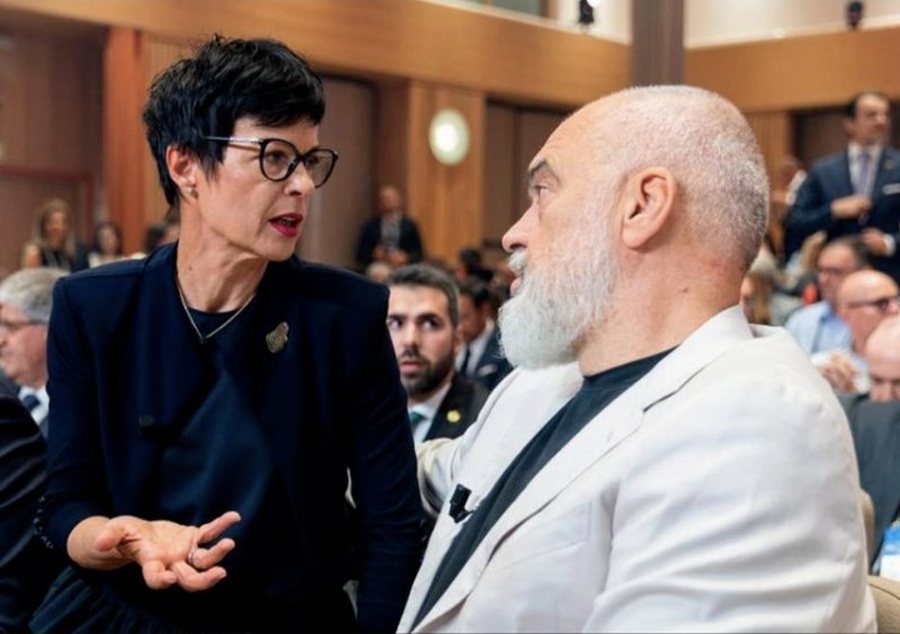
While Brussels welcomes the progress made by Montenegro and Albania, candidates for EU membership, such an enlargement remains hypothetical. Various ideas are being discussed to overcome the reservations expressed in some member states, such as implementing a phased accession process...
Since the beginning of the Russian invasion of Ukraine, the issue of European Union (EU) enlargement has once again become a political priority for the 27 member states. As Ursula von der Leyen, President of the European Commission, reiterated on Tuesday, 4 November, during the publication of the annual report on the readiness of the candidate countries: “we are more determined than ever to make EU enlargement a reality. Because a larger EU means a stronger and more influential Europe on the international stage.”
While Bosnia and Herzegovina, Serbia and North Macedonia are still far from achieving the required enlargement, and the EU has yet to officially open negotiations with Ukraine and Moldova, despite considerable progress, two countries are remarkably ahead: Montenegro and Albania. And for the first time in more than 15 years, the Commission considers enlargement "a realistic possibility".
However, numerous political barriers are currently preventing any significant progress.
First, the structure of the EU, as defined by the current treaties, is not adapted to the possibility of significant enlargement by 2030, especially with regard to decision-making. The requirement for unanimity and the preservation of a veto for each country in foreign policy matters, as well as the presence of a commissioner for each member state, are now major obstacles. While France, Germany, Portugal and Lithuania have launched several reform proposals in recent years, the European Commission has yet to present any internal proposals.
The issue is very politically sensitive. Enlargement is not well-received in some countries, particularly in France and Germany. Only 43% of French and 49% of Germans support it, compared to a European average of 56%, according to the latest Eurobarometer survey from September. In this context, how can the integration of new members be facilitated, while ensuring the support of both the populations and the leaders of the current member states?
The idea of gradual integration, discussed in various expert groups over the last decade, has returned to the spotlight.
"As enlargement becomes a priority, especially a political priority, the EU cannot remain in a binary system: either in or out. We need to find the stages of accession for candidate countries in a way that encourages these states and reassures those within the EU who fear that we are moving too fast," stresses Sébastien Maillard, scientific advisor at the Jacques Delors Institute.
Set a "commitment period"
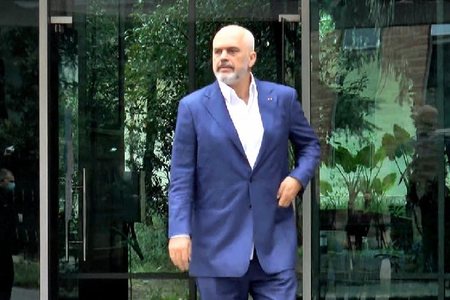
An idea, uncovered by the website Politico, has caused a stir in Brussels in recent weeks: that of admitting new states into the EU, depriving them of some of the rights enjoyed by current member states. A kind of discounted status. New members would gain all these rights only after the EU has reformed its operations. Edi Rama, the prime minister of Albania, declared in London on October 21 that he was not against the idea.
However, the Commission does not seem very interested in this idea.
"We should not create two different categories," Marta Kos, the Commissioner for Enlargement, insisted on Tuesday.
"The creation of second-tier member states is unacceptable. Depriving some new members of their veto power, for example on foreign affairs, is impractical," objected a European diplomat.
"Nothing serious" is on the table, a second diplomatic source added.
“This idea has not been particularly well received,” confirms Sébastien Maillard.
But other ideas are currently being debated in expert groups: such as the creation of a new status of EU-associated state. For candidates closer to the EU, this could be an acceptable step and would send a clear political signal outside Europe.
It would be like a period of engagement, a kind of gateway to full membership. In Germany, the CDU [Christian Democratic Union] and the SPD [Social Democratic Party], for example, included this idea in their governing coalition agreement.”
Moreover, "some candidate countries are already participating in EU policies as if they were part of them", Mr Maillard points out. For example, the Commission has included Montenegro in the Single Euro Payments Area (SEPA) and is preparing to integrate the country into the system that eliminates roaming charges for telecommunications.
Finally, “when candidate countries negotiate their accession treaties, the EU will be able to negotiate transition periods for certain sectors,” emphasizes Marta Kos.
“This is relatively common, at least since the accession of Spain,” adds Maillard.
When the countries of Central and Eastern Europe joined, member states imposed a transition period before welcoming workers from those countries into their markets. /Adapted from Le Monde/


Lini një Përgjigje