


 Shkruar nga Pamfleti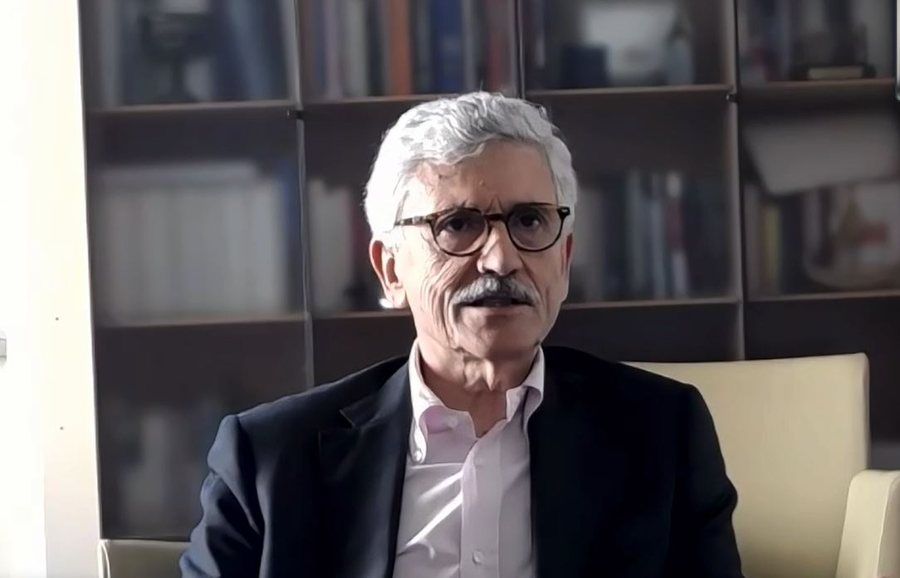
Former Italian Prime Minister Massimo D'Alema has revealed the difficult moments from the NATO countries' decision to intervene in Serbia after the bloody conflict that had caused thousands of innocent victims in Kosovo.
He said that the decision for a military operation, where there is always a risk of casualties among civilians, was difficult, adding that even today he is convinced that at that moment it was the right thing to do.
D'Almea revealed some behind-the-scenes talks between NATO countries before the decision was made to intervene militarily in Serbia, where one of the options was military intervention from the ground, which was not accepted by countries such as Italy, France, Germany.
For this reason, D'Alema remembers, the contingent that entered Kosovo was not from NATO, but from the United Nations, which were Russian.
"This is so true, even though it is not remembered, but I want to remember it, because it is the absolute truth, that the contingent that entered Kosovo was not of NATO, but a contingent of the United Nations. KFOR was a United Nations force. And the first military contingent that entered Kosovo was the Russians, who occupied the airport of Pristina, and not the Westerners, because this political behavior allowed, then the action of NATO took place, but then, the war ended with a resolution of the United Nations Security Council, and with a mandate of the United Nations, so in the end, the solution was found, let's say, within the framework of international law. And this became possible, because throughout the conflict we maintained a dialogue with Russia, agreeing with Clinton. I remember that the Russian envoy was the former prime minister of the time, Cernonerdin. Cernonerdin would come to Rome, we would call Bill Clinton at dinner, and after we had talked with Clinton, Cernonerdin would go to Belgrade the next day to discuss with Milosevic and the Serbs. So, I say this, because the military actions took place, but a strong political action took place as well, so that in the end such a solution was sought that would not leave an open wound in the end, let's say. Because, ultimately, our objective was peace. A peace that respects the rights of the Kosovar people, but a peace. And, in the end, there is a lot of talk about the war in Kosovo, meaning that we have fought a war. But let's say things as they are, a war was being fought, we didn't do it, it had already started before we intervened, it was a long war, but Kosovo was the last episode of a very long war in the Balkans . We intervened to stop the war, of course we intervened with force, but to create a peaceful balance, this was the objective of NATO's action and this was the reason for which we agreed", recalled the former prime minister in an interview for Euronews Albania.


Lini një Përgjigje