


 Shkruar nga Pamfleti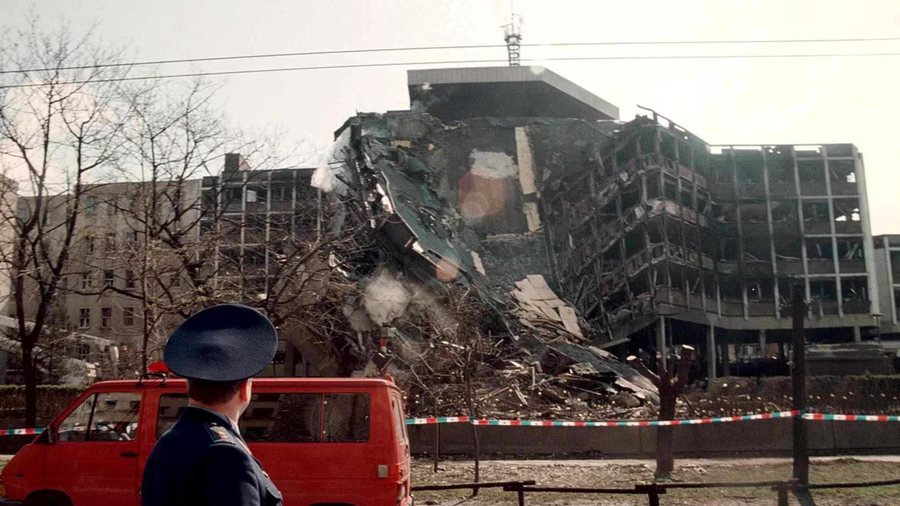
Today marks 25 years since the NATO bombing in Belgrade. March 24, 1999, shortly after 19:00 in the capital of Serbia, Belgrade, the first sirens are heard. They warn of the flight of NATO military planes over Serbia's cell.
Shortly before 21:00, a powerful explosion is heard at the "Lola Utva" airplane factory, in Pancevo, Serbia. Flames and smoke cover this location on the outskirts of Belgrade.
This moment marks the beginning of a 78-day bombing campaign against Yugoslavia. NATO planes bombed the territory of Serbia, Kosovo and Montenegro.
Amid dilemmas and objections from China and Russia, then NATO Secretary General Javier Solana, on March 23, 1999, at 10:17 p.m., ordered an air strike on the Federal Republic of Yugoslavia. The reason is that Serbia is not ready for a political solution to the Kosovo crisis
The airstrikes were launched without the approval of the United Nations Security Council. The decision to bomb was taken after the refusal of the then president of Yugoslavia, Slobodan Milosevic, to resolve the Kosovo crisis politically.
In 1999, it was estimated that there were about 40,000 Yugoslav military troops in Kosovo. In March 1999, the UNHCR estimated about 475 thousand displaced Kosovars after the offensive of the Serbian military and police forces.
This number continued to grow and by the end of the war, about one million Kosovars had left the country.
According to the data published by the Humanitarian Law Fund, during the war in Kosovo, in 1998-1999, more than 13,500 people were killed, 76 percent of whom are believed to have been civilians. The search continues for more than 1,600 people missing in the war.






Lini një Përgjigje